


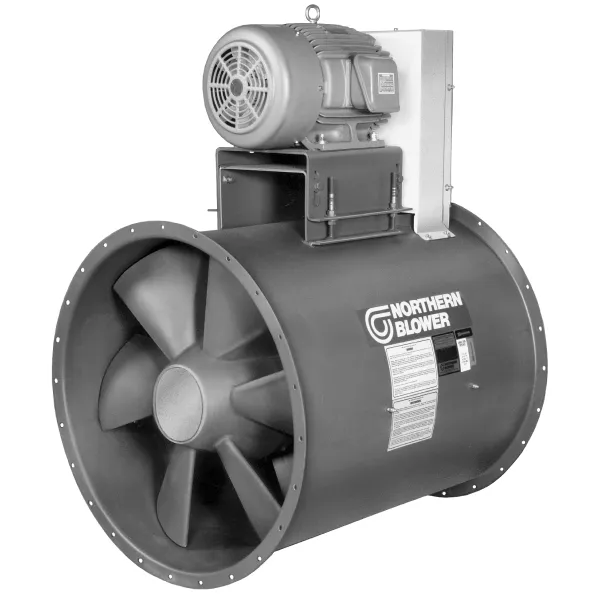
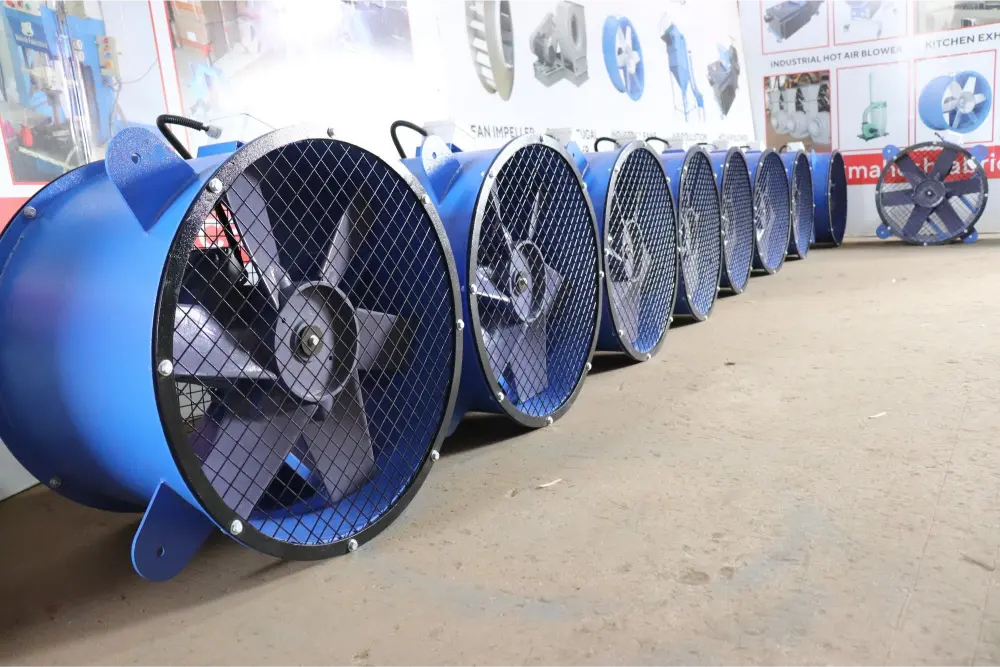
Lots of businesses wonder if their industrial fan are using up way too much electricity. It’s a fair question, especially when you’re trying to keep costs down and be more eco-friendly. We’re going to break down what goes into how much power these fans use, looking at different types and how they’re built. Understanding this stuff can really help you make better choices for your factory or workplace.
Key Takeaways
- The type of industrial fan, its size, how it’s used, and the motor’s efficiency all play a part in how much electricity it uses.
- Different fan designs, like centrifugal versus axial, have their own energy use profiles, and choosing the right one for the job matters.
- Modern motor technology and smart design features can significantly cut down on energy consumption.
- Regular checks and smart operation of your air systems can lead to big energy savings over time.
- Partnering with experts who focus on quality and efficiency, like VIMAX GLOBAL, helps ensure your air systems are reliable and cost-effective.
Understanding Industrial Fan Energy Consumption
When we talk about industrial fan, energy use is a big topic. It’s not just about buying a fan; it’s about how much power it uses day in and day out. This impacts your operating costs and your facility’s overall environmental footprint. At VIMAX GLOBAL, we focus on building fans that are not only powerful but also efficient, helping businesses like yours manage energy consumption effectively. We understand that for industrial buyers and engineers, reliability and cost-effectiveness go hand-in-hand.

Understanding Industrial Fan Energy Consumption
Factors Influencing Electricity Usage
Several things affect how much electricity an industrial fan uses. The size of the fan is obvious, but so is how hard it has to work. Things like the resistance in the ductwork, the density of the air, and even the altitude of your facility play a role. A fan that’s too big or too small for the job will likely use more energy than necessary. We engineer our fans to match specific airflow and pressure requirements, ensuring they operate at peak efficiency for your application. It’s about getting the right fit for your needs.
Comparing Fan Types and Efficiency
Not all fans are created equal when it comes to energy use. Centrifugal fans and axial fans, for example, have different strengths and weaknesses. Centrifugal fans are often used for higher pressure applications, like moving air through long duct systems, while axial fans are better for moving large volumes of air at lower pressures, such as in general ventilation. Choosing the right type of fan for your specific task is the first step toward energy efficiency. We offer a wide range of both centrifugal and axial fans, each designed with efficiency in mind. Understanding the performance curves and efficiency ratings is key to making an informed decision. For instance, a fan with a higher initial cost but better efficiency can save significant money over its lifespan. You can explore our industrial centrifugal fans and industrial axial fans to see the range of high-efficiency solutions we provide.
The Role of Motor Technology
The motor driving the fan is just as important as the fan itself. Modern motor technology, like high-efficiency motors and variable frequency drives (VFDs), can make a huge difference in energy consumption. VFDs allow you to adjust the fan’s speed based on demand, rather than running it at full power all the time. This can lead to substantial energy savings. We integrate advanced motor technologies into our fan systems to maximize performance and minimize power usage. This commitment to technology is part of our export readiness, ensuring our products meet global standards for efficiency and performance. If you’re looking to upgrade your existing systems or specify new ones, considering the motor technology is a smart move. We encourage you to inquire about our projects to see how we’ve implemented these technologies successfully.
Optimizing Industrial Fan Performance for Energy Savings
Making industrial fans work smarter, not harder, is key to cutting down on electricity use. It’s not just about picking the right fan; it’s about how it’s designed and applied. At VIMAX, we focus on precision engineering to make sure our fans deliver the airflow you need with the least amount of energy possible. This means looking at every detail, from the impeller shape to the motor efficiency.
Precision Engineering for Efficiency
Our approach to fan design starts with a deep dive into the specific airflow requirements of your operation. We use advanced tools like Computational Fluid Dynamics (CFD) simulations to model airflow patterns and identify areas where energy can be saved. This allows us to fine-tune blade profiles, housing designs, and inlet cones to minimize turbulence and pressure loss. The result is a fan that moves more air with less power.
Tailored Solutions for Specific Applications
We understand that a one-size-fits-all approach doesn’t work in industry. VIMAX partners with you to create custom fan solutions that match your exact needs. Whether it’s a high-temperature process, a dusty environment, or a cleanroom application, we engineer fans that perform reliably and efficiently in your specific conditions. This tailored approach means we don’t over-spec or under-spec your system, leading to better energy performance and longer equipment life.
The Impact of Fan Design on Energy Use
Small design choices can have a big impact on energy consumption. For example:
- Impeller Design: Different impeller types (like backward-curved, radial, or axial) have varying efficiency curves. Choosing the right type for your operating point is critical.
- Aerodynamic Losses: Smooth internal surfaces, optimized blade angles, and well-designed transitions reduce air resistance, lowering the energy needed to move air.
- Motor and Drive Efficiency: Pairing the fan with a high-efficiency motor and considering variable speed drives (VSDs) can lead to significant energy savings, especially in applications with fluctuating airflow demands.
Optimizing fan performance isn’t a one-time fix; it’s an ongoing process that starts with smart design and continues through proper installation and maintenance. By focusing on these areas, we help businesses reduce their operational costs and environmental footprint.
If you have a specific project in mind or want to discuss how VIMAX can help optimize your air systems, we encourage you to reach out. Let’s explore how our tailored solutions can benefit your operations.
Assessing the Energy Footprint of Industrial Air Systems
To truly understand the electricity consumption of industrial fans, we need to look closely at the energy demands of different system types. This involves a detailed evaluation of how various fan designs perform under real-world operating conditions. As a manufacturing partner with a focus on export readiness, VIMAX GLOBAL helps clients quantify and manage these energy footprints.
Evaluating Centrifugal Fan Energy Demands
Centrifugal fans are workhorses in many industrial settings, moving air against resistance. Their energy use is directly tied to the system’s static pressure requirements. Higher pressures mean more work for the fan, and thus, more electricity. Factors like ductwork design, filter loading, and the presence of dampers significantly impact this demand. Properly sizing a centrifugal fan for the specific application is key to avoiding oversizing, which leads to wasted energy. We engineer our centrifugal fans with high-efficiency impellers and robust motors to minimize energy draw.
Analyzing Axial Fan Power Requirements
Axial fans, often used for high-volume, low-pressure applications like general ventilation or cooling, have a different energy profile. Their power consumption is more closely related to the volume of air moved and the fan’s speed. While generally less power-intensive than centrifugal fans for similar airflow volumes in low-resistance systems, their efficiency can drop if operated outside their optimal design parameters. Our axial fan designs are optimized for durability and consistent performance, even in demanding environments. If you’re looking to improve airflow in large spaces, consider how high-volume, low-speed (HVLS) fans can offer significant energy savings installing HVLS fans in warehouses.

Analyzing Axial Fan Power Requirements
The Energy Implications of Ventilation Systems
Ventilation systems as a whole present a complex energy picture. The choice between different fan types, the integration of controls, and the overall system design all contribute to the total energy footprint. For instance, a system relying heavily on mechanical ventilation without heat recovery will naturally consume more energy than a well-designed system incorporating energy-saving features. VIMAX GLOBAL specializes in creating tailored solutions that consider the entire ventilation strategy, aiming for optimal performance and reduced environmental impact. We invite you to inquire about your specific project needs and how we can help you achieve your energy efficiency goals.
Collaborative Approaches to Energy Efficiency
Achieving optimal energy efficiency in industrial air systems isn’t a solo endeavor. It requires a partnership between manufacturers and end-users, built on shared goals for performance and sustainability. At VIMAX GLOBAL, we see ourselves as more than just a supplier; we are a collaborative partner dedicated to engineering solutions that reduce energy consumption and environmental impact.
Our approach centers on understanding the unique operational demands of each client. We work closely with your engineering teams to develop tailored fan systems that precisely match application requirements. This means moving beyond standard offerings to create custom designs, whether for dust collection, air filtration, or specialized ventilation needs. This collaborative design process is key to maximizing efficiency and minimizing energy waste.
We believe in transparency and data-driven decisions. Our engineering process includes advanced simulations like Finite Element Analysis (FEM) and Computational Fluid Dynamics (CFD) to predict performance and identify areas for energy optimization before manufacturing. This allows us to present clear data on expected energy savings and operational benefits.
Key aspects of our collaborative approach include:
- Joint Project Scoping: We start by thoroughly understanding your specific airflow, pressure, and environmental requirements.
- Custom Engineering: Developing bespoke fan designs and motor configurations to meet precise operational needs.
- Performance Validation: Utilizing advanced testing facilities to verify that the designed systems meet or exceed energy efficiency targets.
- Export Readiness: Ensuring all our solutions comply with international standards, making them suitable for global operations.
By partnering with VIMAX GLOBAL, you gain access to a manufacturing partner committed to your long-term success and sustainability goals. We invite you to inquire about your next project or explore potential partnerships to drive energy efficiency in your industrial air systems.
Ensuring Reliability and Longevity in Air Systems
When selecting industrial fans, the focus often shifts to initial performance metrics and energy consumption. However, the true value of an air system is realized through its sustained reliability and long operational life. At VIMAX GLOBAL, we build fans designed for the long haul, understanding that downtime and premature replacement are costly.
Global Standards in Manufacturing
Our commitment to quality starts on the manufacturing floor. We adhere to international standards, ensuring that every component and assembly meets stringent requirements. This global perspective means our fans are not only built to last but are also ready for export to diverse markets with varying regulations. We believe in creating products that perform consistently, regardless of the operating environment.
Rigorous Testing for Performance Verification
Before any VIMAX GLOBAL fan leaves our facility, it undergoes a series of demanding tests. This includes performance validation, structural integrity checks, and operational endurance trials. We utilize advanced testing equipment to simulate real-world conditions, confirming that each unit meets its specified performance targets and our own high benchmarks for durability. This meticulous process helps predict and prevent potential issues, giving you confidence in the equipment’s longevity.
Building Trust Through Quality Assurance
Trust is earned through consistent quality and dependable performance. Our quality assurance program is integrated into every stage of production, from material sourcing to final assembly. We aim to be more than just a supplier; we strive to be a trusted partner in your operations. If you’re looking to equip your facility with air systems that offer peace of mind and a long service life, consider reaching out to discuss your project needs.
Investing in well-engineered, durable industrial fan is a strategic decision that pays dividends over time through reduced maintenance, lower energy costs, and uninterrupted operations. It’s about building a foundation of reliability for your entire system.
We invite you to explore our range of industrial axial fans and discuss how our commitment to quality can benefit your next project or partnership. Let’s build a more reliable future together.
The Importance of Comprehensive Support
Choosing the right industrial fan is just the start. What really matters is the ongoing support that keeps your systems running efficiently and reliably. At VIMAX GLOBAL, we understand that industrial operations demand more than just a product; they need a partner committed to long-term success. Our approach covers the entire lifecycle of your air systems, from the initial idea to daily operation and maintenance.
From Ideation to Ongoing Maintenance
We work with you from the very beginning, helping to define your needs and engineer the best solution. This isn’t a one-size-fits-all process. We consider your specific application, whether it’s dust collection, air filtration, or specialized ventilation, to create a system that performs optimally. After installation, our commitment continues. We provide guidance on best practices for operation and offer maintenance schedules designed to prevent downtime and maximize the lifespan of your equipment. This proactive approach helps you avoid unexpected costs and keeps your production running smoothly. We believe in building systems that are not only powerful but also dependable, reflecting our dedication to industrial quality and export readiness.
Training and Auditing for Optimal Operation
To get the most out of your investment, your team needs to understand how to operate and maintain the equipment correctly. We offer training programs tailored to your staff, covering everything from basic operation to troubleshooting common issues. Regular audits of your air systems can also identify areas for improvement, ensuring your fans are always performing at their peak efficiency. This focus on operational knowledge helps maintain energy savings and system longevity. For businesses looking to improve their energy efficiency, exploring solutions like those offered by Kolostat can be a good step.
Securing Long-Term Partner Success
Our goal is to be more than just a supplier; we aim to be a trusted partner in your industrial journey. This means providing consistent support, readily available spare parts, and expert advice whenever you need it. We stand behind the quality and performance of our fans, which are built to meet global standards. By choosing VIMAX GLOBAL, you’re not just acquiring equipment; you’re gaining a partner dedicated to your operational excellence and sustainability goals. We invite you to inquire about your next project or explore potential partnerships with us.
Having the right help makes all the difference. When you need support, it’s important to get it from people who really know their stuff. We’re here to provide that kind of help. Visit our website to learn more about how we can assist you.
Making Informed Choices for Your Airflow Needs
So, does an industrial fan use more electricity? The answer really depends on the fan itself and how it’s used. Bigger fans, running at higher speeds, or those not designed efficiently, will naturally draw more power. But it’s not just about size; the design and quality matter a lot. When you’re looking for solutions, think about efficiency ratings and how well a fan is built to last. Choosing the right fan for the job and making sure it’s from a reliable manufacturer, can make a big difference in your energy bills and overall operational costs. We at VIMAX GLOBAL focus on creating fans that are not only powerful but also energy-conscious, built with precision for long-term performance. We invite you to explore our range of industrial fan and air systems to see how we can help your business operate more efficiently.
Read more: How Much Are Industrial Fans? A Comprehensive Cost Guide