


Ever wondered how factories keep their air clean, especially when there’s a lot of dust flying around? It’s not magic; it’s often thanks to something called a cyclone dust collection system. These systems are pretty cool because they use simple physics to get rid of tiny particles from the air. If you’re curious about how does a cyclone dust collection system work, you’re in the right place. We’re going to break down how these things operate, what makes them tick, and why they’re a go-to choice for many businesses, including those looking for reliable solutions from manufacturers like VIMAX GLOBAL.
Key Takeaways
- Cyclone dust collectors use spinning air to separate dust from clean air, kind of like a mini tornado.
- They’re good at handling lots of dust and don’t need a lot of upkeep once they’re set up right.
- These systems save money on energy and maintenance compared to some other dust removal methods.
- Getting the right size and design for your specific needs is a big deal for how well a cyclone works.
- Many different industries, from woodworking to mining, use cyclones to keep their air clean and safe.
The Fundamental Principles of Cyclone Separation
Inertial Separation Explained
Okay, so how do these cyclone separators actually work? It all starts with inertia. Think of it like this: when you’re driving and suddenly turn, things inside your car keep going straight until something stops them. That’s inertia in action. In a cyclone separator, we’re dealing with air and dust particles. The air is forced into a spiral, and because the dust particles have more inertia than the air molecules, they resist changing direction as easily. This difference in inertia is what allows the separation to occur.
Want to know more about how Vimax can help with your industrial fan products? Get in touch today.
Centrifugal Force in Dust Collection
Centrifugal force is the real workhorse here. It’s what pushes the heavier dust particles outwards towards the walls of the cyclone. The faster the air spins, the stronger the centrifugal force, and the better the separation. It’s like a washing machine spinning clothes to remove water – same principle, different application. The design of the cyclone is critical to maximizing this force. We’re talking about getting the angles right, the inlet velocity optimized, and the overall shape just perfect. If any of these are off, the whole system suffers.
Gravity’s Role in Particle Descent
Gravity plays a supporting role. After the centrifugal force throws the dust particles against the walls, gravity helps them slide down into the collection hopper. It’s a simple but important part of the process. Without gravity, the particles might just get caught in the airflow and recirculate. The design of the hopper is also important. It needs to be shaped so that the dust doesn’t build up and clog the system. Also, the cyclone separator needs to be emptied regularly to maintain optimal performance.
Think of it as a team effort: inertia gets the ball rolling, centrifugal force does the heavy lifting, and gravity cleans up the mess. All three work together to efficiently separate dust from the air stream.
Interested in partnering with Vimax on your next project? Inquire today.
Key Components of a Cyclone Dust Collector
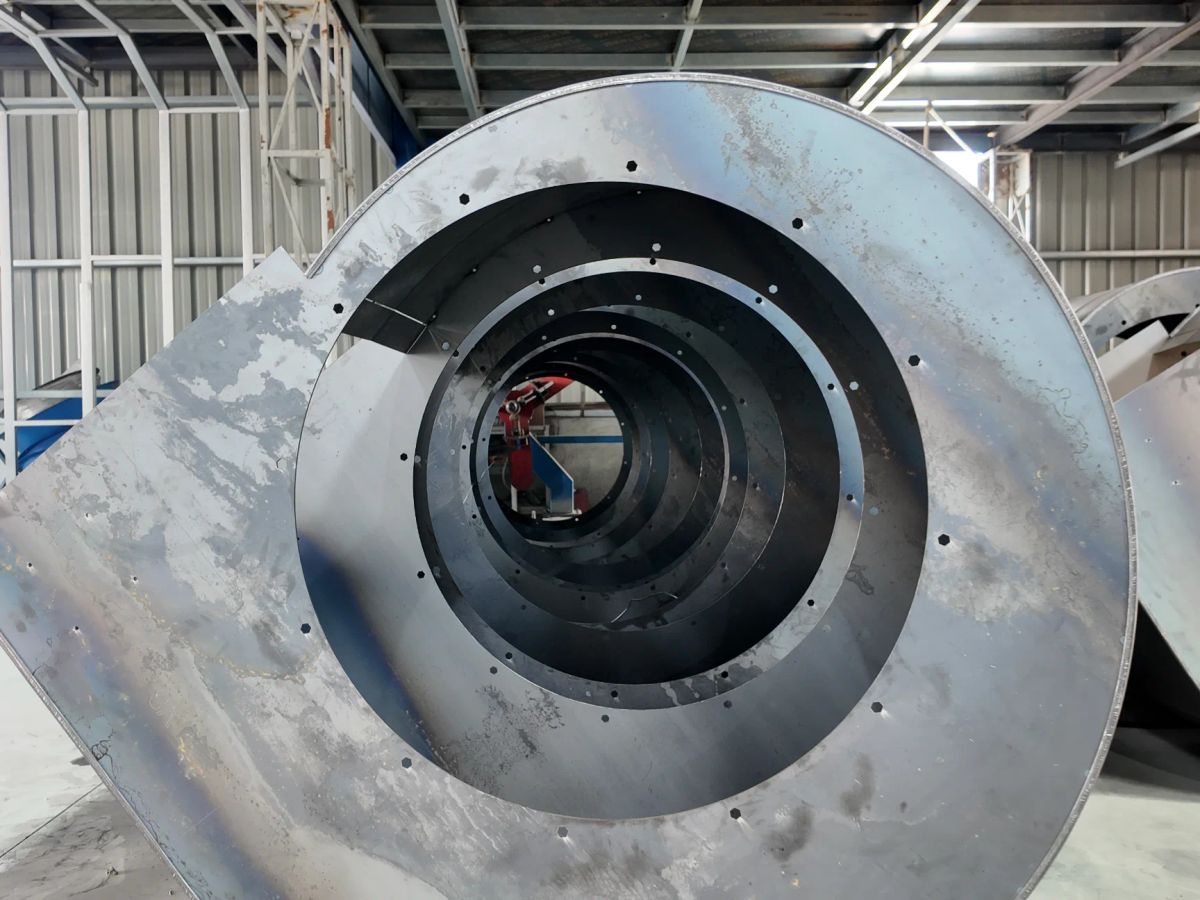
Cyclone dust collectors are pretty simple when you break them down. They don’t have a ton of moving parts, which is part of why they’re so reliable. But each part plays a big role in how well the whole system works. Let’s look at the main pieces.
Inlet Design and Airflow Dynamics
The inlet is where the dirty air first enters the cyclone. Its design is super important for setting up the right airflow pattern. If the inlet isn’t designed well, you won’t get that swirling action you need for good separation. The shape and size of the inlet affect how fast the air moves and how it’s distributed inside the cyclone. Vimax can help you design an inlet that maximizes efficiency for your specific application. dust collection system components are crucial for optimal performance.
The Conical Body and Vortex Formation
The conical body is the main part of the cyclone where the separation happens. It’s shaped like a cone, getting narrower towards the bottom. This shape helps create a vortex, like a tornado inside the cyclone. The dirty air spirals down the outside of the cone, and as it does, the dust particles get thrown to the walls. The cone’s angle and size are important for how well the vortex forms and how effectively the dust is separated. We can customize the conical body to handle different dust types and volumes.
Dust Collection Hopper and Airlock Systems
At the bottom of the cyclone is the hopper, where all the separated dust collects. It’s basically a container that holds the dust until you can remove it. An airlock system is often used to seal the bottom of the hopper. This prevents air from leaking back into the cyclone, which would mess up the airflow and reduce efficiency. Airlocks come in different designs, like rotary valves or double-dump valves. Choosing the right airlock depends on the amount of dust you’re collecting and how often you need to empty the hopper. Vimax offers robust hopper and airlock solutions for continuous operation. Consider axial fans for maintaining optimal airflow.
The Clean Air Outlet
The clean air outlet is where the cleaned air exits the cyclone. It’s usually located at the top of the cyclone, in the center. The design of the outlet is important for minimizing turbulence and ensuring that the clean air flows out smoothly. A well-designed outlet can also help prevent dust from being re-entrained into the clean air stream. The outlet’s size and shape need to be carefully considered to match the overall system design. Vimax can help you optimize your clean air outlet for maximum efficiency.
Getting the right components for your cyclone dust collector is key to its performance. Each part works together to separate dust from the air, and choosing the right design and size for each component is important for achieving the best results. Contact Vimax today to discuss your project requirements and explore partnership opportunities.
The Operational Process: How Does a Cyclone Dust Collection System Work
Initial Dust-Laden Air Entry
Okay, so the first thing that happens is the dirty air, full of dust and particles, gets sucked into the cyclone. It’s not just a gentle breeze; it’s usually forced in there at a pretty good speed. The design of the inlet design is important because it directs the airflow in a spiral pattern. This swirling motion is key to how the whole system works. Think of it like water going down a drain – that’s the kind of action we’re aiming for.
Creating the Outer Downward Vortex
Once the air is inside, that spiral motion turns into a vortex. This outer vortex is a powerful, swirling column of air that’s moving downwards. The shape of the cyclone, especially the conical part, helps to keep this vortex tight and strong. The faster the air spins, the better the separation will be. It’s all about creating enough centrifugal force to fling those dust particles outwards. If you’re looking for a manufacturing partner, Vimax can help optimize this process for your specific needs. Inquire about our industrial fans today.
Particle Separation and Wall Impingement
This is where the magic happens. As the air spins, the heavier dust particles get thrown outwards because of centrifugal force. They slam into the walls of the cyclone. Once they hit the wall, they lose their momentum and start to slide down towards the bottom of the cone. Gravity helps them along the way, making sure they end up in the collection hopper. It’s a pretty simple but effective way to separate the dust from the air.
The Inner Upward Vortex and Clean Air Exit
So, all the dust is sliding down, but what about the clean air? Well, as the outer vortex reaches the bottom of the cone, the air has nowhere else to go but up. This creates an inner vortex that spins upwards through the center of the cyclone. This cleaner air then exits through the outlet at the top. The design of the outlet is important to make sure that the clean air can escape without disturbing the dust that’s already been separated. It’s a continuous process, with dirty air coming in and clean air going out, all thanks to the power of the vortex.
The efficiency of this separation process depends on a few things, like the size and density of the particles, the speed of the airflow, and the design of the cyclone itself. Getting these factors right is key to making sure the system works effectively. We at Vimax can help you with dust collection solutions.
Advantages of Integrating Cyclone Technology
Energy Efficiency and Operational Cost Savings
Cyclone dust collectors are known for their relatively low energy consumption compared to other dust collection methods. This translates directly into lower operational costs over the lifespan of the equipment. They don’t rely on filter media that can clog and increase pressure drop, which means the system fan doesn’t have to work as hard. This is a big deal for facilities that run their dust collection systems constantly. Plus, the reduced energy demand can contribute to a smaller carbon footprint, which is increasingly important for businesses focused on sustainability. If you’re looking to reduce your facility’s energy bill, consider cyclonic filtration technology.
Low Maintenance Requirements
One of the biggest selling points of cyclone dust collectors is their simple design. Fewer moving parts mean less that can go wrong. This results in significantly lower maintenance requirements compared to baghouses or other more complex systems. There are no filters to replace regularly, which saves both time and money. Maintenance typically involves occasional inspections for wear and tear, and emptying the collection hopper. For industries where downtime is costly, this is a major advantage.
Here’s a quick comparison:
| Feature | Cyclone Dust Collector | Baghouse Dust Collector |
|---|---|---|
| Filter Replacement | No | Yes |
| Moving Parts | Few | More |
| Maintenance Cost | Low | High |
Suitability for High Dust Loads
Cyclone dust collectors excel in environments with high dust concentrations. They are designed to handle heavy loads of particulate matter without experiencing the same performance degradation as filter-based systems. This makes them ideal for industries like woodworking, mining, and agriculture, where large volumes of dust are generated. The ability to efficiently separate large particles also protects downstream filtration equipment, extending its lifespan and reducing the frequency of filter changes. If your facility deals with heavy dust loads, consider VIMAX GLOBAL as a manufacturing partner.
Pre-Filtration Benefits for Downstream Systems
Cyclone dust collectors are often used as pre-filters in multi-stage filtration systems. By removing the bulk of the particulate matter, they significantly reduce the load on downstream filters, such as baghouses or HEPA filters. This extends the life of these filters, reduces maintenance costs, and improves the overall efficiency of the entire filtration system. Using a cyclone as a pre-filter can also prevent damage to more sensitive and expensive filtration equipment.
Integrating a cyclone as a pre-filter is a smart move. It’s like having a bouncer at a club, keeping the riff-raff out so the VIPs can enjoy themselves. In this case, the "riff-raff" is the heavy dust, and the "VIPs" are your expensive downstream filters.
Here are some benefits of using a cyclone as a pre-filter:
- Extended lifespan of downstream filters
- Reduced maintenance costs
- Improved overall filtration efficiency
- Protection of sensitive equipment
Interested in exploring how cyclone technology can benefit your operations? Inquire about your project today, and let’s discuss how Vimax can help.
Factors Influencing Cyclone Performance
Particle Size and Density Considerations
Particle size and density are huge when it comes to how well a cyclone dust collector works. Larger, denser particles are easier to separate because they have more inertia. Think of it like trying to stop a bowling ball versus a ping pong ball – the bowling ball is going to keep going. If your dust is mostly fine particles, you might need a different kind of collector or a cyclone designed specifically for that.
Airflow Velocity and System Design
Airflow velocity is another big one. Too slow, and the particles won’t separate properly. Too fast, and you create turbulence that messes everything up and can even re-entrain the separated dust back into the airflow. The design of the system, including the inlet and outlet, also plays a big role. A poorly designed system will never perform well, no matter how good the cyclone itself is. Vimax can help you design a dust collection system that fits your needs.
Cyclone Dimensions and Efficiency Curves
The size and shape of the cyclone itself matter a lot. A taller, narrower cyclone might be better for smaller particles, while a shorter, wider one might be better for larger particles and higher dust loads. Efficiency curves show how well a cyclone performs at different particle sizes. These curves are usually provided by the manufacturer and can help you choose the right cyclone for your application. Here’s a simplified example:
| Particle Size (microns) | Efficiency (%) |
|---|---|
| 5 | 60 |
| 10 | 85 |
| 20 | 95 |
| 40 | 99 |
Getting the right cyclone for your specific needs is important. It’s not just about buying the biggest or the cheapest one. It’s about understanding your dust, your airflow, and your performance requirements. Contact Vimax today to discuss your project and how we can help you find the right solution. We’re ready for export and partnership opportunities.
Applications Across Diverse Industries
Cyclone dust collection systems aren’t just for one type of business. They show up all over the place because they’re good at handling different kinds of dust and particles. Let’s look at some common spots where you’ll find them.
Woodworking and Manufacturing Facilities
In woodworking shops and big manufacturing plants, there’s always a lot of sawdust, metal shavings, and other stuff floating around. Cyclone collectors are great for keeping the air clean and safe. They grab all that debris before it can cause problems for workers or mess up equipment. This helps companies meet safety rules and keep things running smoothly.
- Removing sawdust from cutting and sanding operations.
- Collecting metal chips from machining processes.
- Maintaining air quality to prevent respiratory issues.
If you’re looking for a reliable partner to supply industrial dust collectors for your facility, reach out to Vimax. We can help you find the right solution for your needs.
Mining and Mineral Processing
Mining and processing minerals kicks up a ton of dust. It’s a big challenge to keep that under control. Cyclone systems are used to capture dust from crushing, grinding, and screening operations. This not only protects workers but also helps recover valuable materials that would otherwise be lost as dust.
Using cyclone collectors in mining helps reduce environmental impact and improves overall efficiency. It’s a win-win for the industry.
Agricultural and Grain Handling Operations
Farms and grain elevators deal with a lot of grain dust, chaff, and other organic particles. These can be a fire hazard and cause health problems. Cyclone collectors are used to remove these particles from the air, making the environment safer for workers and preventing explosions. Vimax can provide export-ready solutions for grain handling operations worldwide. Inquire today about our partnership opportunities.
- Removing grain dust from conveying systems.
- Collecting chaff from harvesting processes.
- Preventing dust explosions in storage facilities.
Pharmaceutical and Chemical Processing
In the pharmaceutical and chemical industries, even tiny particles can mess up product quality or create safety risks. Cyclone collectors are used to capture these particles, ensuring that products are pure and the workplace is safe. This is super important for meeting strict regulations and keeping customers happy.
- Collecting powder from mixing and blending operations.
- Removing dust from tablet coating processes.
- Maintaining a clean environment to prevent contamination.
If you have a project in mind, contact Vimax to discuss how our cyclone technology can meet your specific needs.
Optimizing Your Cyclone Dust Collection System
Proper Sizing and Configuration
Getting the size right is super important. A cyclone that’s too small will clog up fast and won’t catch much dust. Too big, and the airflow slows down, letting particles escape. It’s a balancing act. The right size depends on the amount of air you’re moving and the type of dust you’re dealing with. Think about the dust load, particle size, and desired efficiency. Vimax can help you figure out the perfect setup for your specific needs. We’re ready to partner on your next project, so inquire about our cyclone separators today.
Regular Inspection and Maintenance Protocols
Keeping your cyclone in good shape means checking it regularly. Look for wear and tear, especially in high-abrasion areas like the inlet and cone. Make sure the airlock is working properly to prevent dust from escaping. A little maintenance goes a long way in preventing big problems down the road. Here’s a simple checklist:
- Check for leaks in the system.
- Inspect the airlock for proper sealing.
- Clean out the dust collection hopper regularly.
Neglecting maintenance can lead to reduced efficiency and increased downtime. A well-maintained system operates at peak performance, saving you money and headaches.
Integrating with Advanced Filtration Solutions
Sometimes, a cyclone alone isn’t enough. For really fine dust or strict air quality standards, you might need to add extra filters. A common setup is to use the cyclone as a pre-filter to remove the bulk of the dust, followed by a baghouse or HEPA filter to catch the rest. This combo extends the life of the more expensive filters and keeps your air clean. Contact Vimax to discuss filtration solutions for your facility.
Want to make your cyclone dust collector work even better? It’s not as hard as you might think! A well-tuned system means cleaner air and a safer workspace. We’ve got simple tips and tricks to help you get the most out of your equipment. Find out how to boost your system’s power and keep your air fresh. Visit our website to learn more about how to improve your dust collection.
Wrapping Things Up
So, that’s the basic idea behind how cyclone dust collectors work. They’re pretty good at keeping workplaces clean and safe by getting rid of dust and other small bits. Knowing how these systems operate can help you pick the right one for your needs. If you’re looking for reliable industrial air systems, VIMAX GLOBAL makes a lot of different fans and air solutions. We’re a Vietnamese company that works with businesses all over the world. We focus on making good quality products for export, so if you need something like this, we might be a good fit for your project.
Frequently Asked Questions
How does a cyclone dust collector actually separate dust from the air?
A cyclone dust collector works by spinning dusty air really fast inside a cone-shaped chamber. This spinning motion throws the heavier dust particles to the outside walls, where they slide down into a collection bin, while the cleaner air goes out the top.
Can these systems handle a lot of dust, or are they only for light dust loads?
Yes, absolutely! Cyclone dust collectors are great for handling lots of dust at once, and they work well with different types of materials, from wood chips to metal shavings. This makes them a smart choice for many businesses.
What are the main benefits of using a cyclone dust collection system?
One big benefit is that they save energy because they don’t have filters that clog up quickly, which means less power is needed to pull air through. They also need less cleaning and part replacement, saving you money and time on upkeep.
Are cyclone dust collectors effective at removing all sizes of dust particles?
While cyclones are very good at catching bigger dust particles, they might let some very tiny particles through. That’s why they are often used with other types of filters, like baghouses, to catch the super fine dust and make the air even cleaner.
How can I make sure my cyclone dust collection system works as well as possible?
To make sure your system works its best, you need to pick the right size for your needs, check it regularly for any problems, and clean it as needed. Sometimes, adding another filter system after the cyclone can also boost its performance.
Where can I find a reliable manufacturer for high-quality industrial dust collection systems?
VIMAX GLOBAL is a leading manufacturer from Vietnam, specializing in industrial fans and air systems, including top-notch dust collection solutions. We offer high-quality, reliable products designed to meet the needs of international buyers and distributors, ensuring your operations run smoothly and cleanly.