


Getting your workshop’s dust collection system just right can feel like a big job. It’s not always easy to figure out how to balance a dust collection system so it works its best. But if you get it right, you’ll have a cleaner, safer place to work. This guide will walk you through the basics, show you how to set things up, and even give you some tips for keeping it all running smoothly. We’ll cover everything you need to know to make your dust collector do its job well, keeping your air clean and your tools happy.
Key Takeaways
- Knowing how your dust collector works and what each part does helps you spot problems quickly.
- Planning where your tools and ducts go before you build anything saves you a lot of trouble later on.
- Using the right tools to check airflow and making small adjustments to gates can really improve how well your system cleans the air.
- Checking your system regularly and keeping filters clean means your dust collector will keep working well for a long time.
- For bigger workshops, thinking about things like variable speed fans can make your system more efficient and save energy.
Understanding the Fundamentals of Dust Collection Systems
Defining System Components and Their Functions
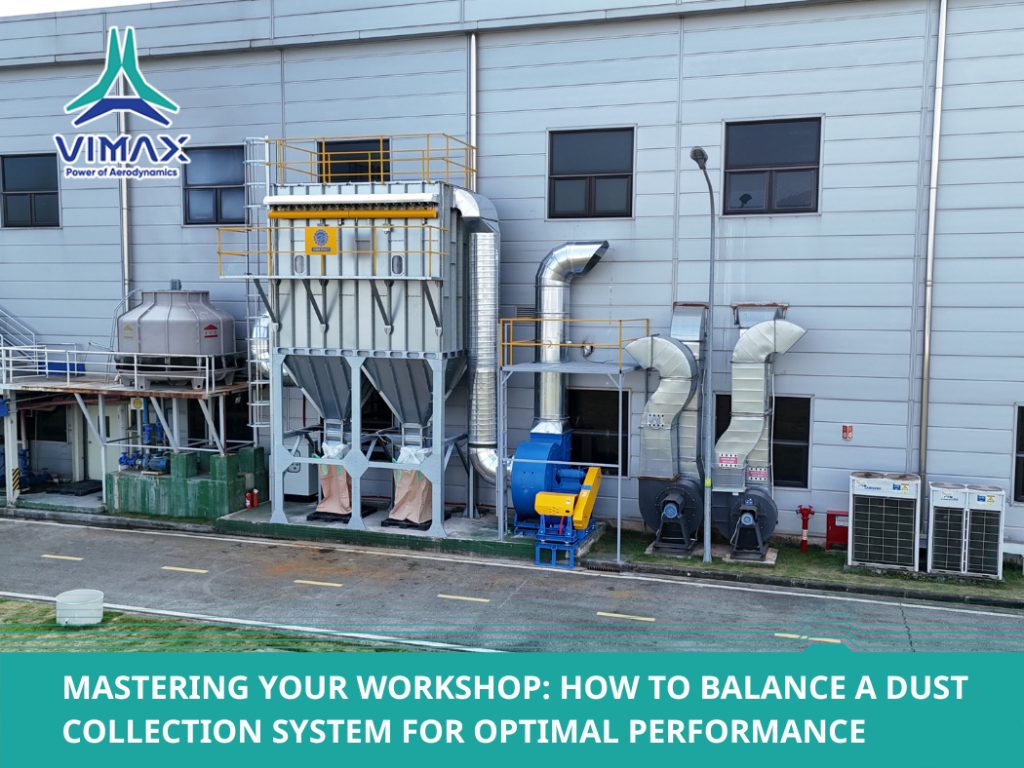
Okay, so let’s break down what makes up a dust collection system. It’s more than just a vacuum cleaner for your shop! You’ve got several key parts working together. First, there’s the dust collector itself, which is the heart of the system. This unit creates the suction needed to pull dust and debris away from your tools. Then you have the ductwork, which acts like the veins and arteries, carrying the dusty air. Blast gates are like valves, controlling airflow to different areas. Finally, there are filters, which trap the fine particles and keep the air clean. Understanding how each component functions is the first step to optimizing your system. VIMAX GLOBAL specializes in manufacturing high-quality dust collectors designed for industrial applications, ensuring durability and performance in demanding environments. Consider reaching out to our team to discuss your specific needs and explore our range of export-ready solutions.
Grasping Airflow Dynamics and Static Pressure
Airflow is the name of the game. It’s not just about having a powerful motor; it’s about how efficiently that power moves air through the system. We measure airflow in cubic feet per minute (CFM). Static pressure, on the other hand, is the resistance to that airflow. Think of it like this: CFM is how much air is moving, and static pressure is how hard the fan has to work to move it. A well-balanced system maximizes CFM while minimizing static pressure. Restrictions in your ductwork, like sharp bends or undersized pipes, increase static pressure and reduce airflow. Here’s a quick rundown:
- CFM (Cubic Feet per Minute): Measures the volume of air moving through the system.
- Static Pressure: Measures the resistance to airflow.
- Duct Diameter: Affects both CFM and static pressure; larger ducts generally improve airflow.
A common mistake is focusing solely on the horsepower of the dust collector. While power is important, a system with poorly designed ductwork will always underperform, regardless of motor size. It’s about the entire system working in harmony.
Identifying Common Imbalances in Workshop Environments
So, what does an imbalanced system look like in the real world? One common sign is uneven suction. Some machines might have great dust collection, while others struggle to pick up anything. This often happens when some blast gates are always open, hogging all the airflow. Another issue is excessive dust buildup in certain areas, indicating poor airflow in those zones. You might also notice the dust collector working harder than it should, running constantly or making excessive noise. These are all clues that your system needs some attention. VIMAX GLOBAL understands these challenges and can help you design a system that addresses the unique demands of your workshop. We’re ready to be your manufacturing partner, providing air filtration solutions that meet the highest standards of industrial quality and export readiness. Inquire today about how we can collaborate on your next project.
Strategic Planning for Optimal System Design
Assessing Workshop Layout and Tool Placement
Okay, so you’re thinking about setting up a dust collection system. First things first, walk around your shop. Really look at where your tools are. Where’s the table saw? The sander? The lathe? Think about how often you use each one and how much dust they kick up. This isn’t just about plugging in a hose; it’s about making a system that actually works for your space. Strategic tool placement minimizes ductwork length and maximizes collection efficiency.
- Consider the proximity of high-dust-producing tools.
- Plan for future tool additions or rearrangements.
- Optimize workflow to reduce unnecessary duct runs.
Think about the natural flow of your work. Are you constantly moving between two machines? Maybe they should be close together, with a shared dust collection point. It’s all about making your life easier and your shop cleaner.
Calculating Required Air Volume for Various Operations
Alright, now for some numbers. You need to figure out how much air each tool needs to get rid of the dust. This is measured in CFM (cubic feet per minute). Different tools need different CFM. A small sander might only need 300 CFM, while a big table saw could need 800 CFM or more. Check the tool’s manual or the manufacturer’s website. If you can’t find the exact number, there are charts online that give you a good estimate. Don’t guess! Getting this wrong means your system won’t work right. VIMAX GLOBAL can assist with industrial fan manufacturing to meet these specific airflow demands.
| Tool | Estimated CFM | Notes |
|---|---|---|
| Table Saw | 800 CFM | Depends on blade size and enclosure. |
| Sander | 300 CFM | Varies with sander type. |
| Planer | 600 CFM | Consider chip collection needs. |
Selecting Appropriate Ductwork and Fittings
Okay, you know how much air you need. Now you need to get it from the tool to the collector. That means ductwork. The size and type of ductwork matter a lot. Too small, and you’ll choke the airflow. Too long, and you’ll lose suction. Use smooth-walled ductwork whenever possible. Avoid flexible hoses unless you absolutely have to – they restrict airflow. Think about the fittings too. Every bend and branch reduces airflow. Use wide-angle fittings instead of sharp 90-degree elbows. For industrial applications, consider the gauge and material of the ductwork for durability and longevity. VIMAX GLOBAL offers export-ready dust collectors designed for optimal ductwork integration. If you’re unsure about the best setup for your workshop, reach out to us – we’re happy to help you design a system that fits your needs. Let’s talk about your project!
Implementing Effective Balancing Techniques
Balancing a dust collection system isn’t just about making it ‘good enough’; it’s about achieving optimal performance and extending the life of your equipment. A well-balanced system ensures each tool receives the correct airflow, preventing dust buildup and maintaining a clean, safe workspace. Let’s explore some techniques to get your system running smoothly.
Utilizing Airflow Measurement Tools for Precision
To truly balance your system, you need data. Guesswork won’t cut it. Invest in tools that provide accurate airflow measurements. An anemometer is a good start, but for more detailed analysis, consider a manometer to measure static pressure. These tools allow you to quantify the airflow at each collection point, revealing imbalances that need correction. Accurate airflow measurement is the cornerstone of effective dust collection system balancing.
Here’s a simple table illustrating how airflow measurements can guide your adjustments:
| Collection Point | Target CFM | Measured CFM | Adjustment Needed |
|---|---|---|---|
| Table Saw | 400 | 300 | Open blast gate further |
| Jointer | 500 | 600 | Close blast gate slightly |
| Sander | 200 | 200 | No adjustment needed |
Adjusting Blast Gates for Proportional Suction
Blast gates are your primary control mechanism for balancing airflow. The goal is to distribute suction proportionally based on the needs of each tool. Start by opening the blast gate for the tool requiring the highest CFM. Then, adjust the other blast gates to achieve the target airflow for each respective tool. This process often requires iterative adjustments and re-measurements. Remember, closing one blast gate increases suction at the others, so small changes can have a big impact. If you need dust collectors, VIMAX GLOBAL can help you find the right one for your needs.
Addressing Leakage and Airflow Restrictions
Even with perfectly adjusted blast gates, leaks and restrictions can sabotage your efforts. Inspect your entire ductwork system for any gaps, loose connections, or damaged sections. Seal any leaks with foil tape. Also, check for obstructions inside the ducts, such as accumulated dust or debris. Sharp bends in ductwork can also significantly reduce airflow. Replace these with gradual curves to minimize resistance. Remember, a small leak can drastically reduce overall system performance.
A common mistake is to overlook the impact of filter maintenance. A clogged filter creates significant backpressure, reducing airflow throughout the system. Regularly clean or replace your filters to maintain optimal performance. Consider upgrading to a higher-efficiency filter for improved air quality and reduced maintenance frequency.
By implementing these techniques, you can achieve a well-balanced dust collection system that protects your health, improves your workshop’s cleanliness, and extends the life of your equipment. Contact VIMAX GLOBAL today to discuss your specific dust collection needs and explore our range of industrial centrifugal fans and air solutions. We’re here to help you optimize your workshop environment. Consider VIMAX GLOBAL as your manufacturing partner for export-ready solutions.
Maintaining System Efficiency Through Regular Audits
It’s easy to set up a dust collection system and forget about it, but that’s a recipe for reduced performance and potential problems down the line. Regular audits are key to keeping your system running at its best. Think of it like preventative maintenance for your entire workshop’s air quality. Let’s explore how to keep things humming.
Establishing a Routine Inspection Schedule
Creating a schedule for checking your dust collection system is a simple way to avoid big problems. A consistent inspection schedule helps identify minor issues before they escalate into major malfunctions.
Here’s a basic schedule you can adapt:
- Daily: Check for obvious blockages at inlets and listen for unusual noises from the fan.
- Weekly: Inspect ductwork connections for tightness and look for signs of leaks. Empty dust collection bags or drums.
- Monthly: Examine filters for dust buildup and damage. Verify blast gate operation.
- Annually: Conduct a thorough system cleaning, including ductwork and fan components. Consider a professional inspection.
Cleaning and Replacing Filters for Sustained Performance
Filters are the lungs of your dust collection system. When they get clogged, the whole system struggles. Regular cleaning and timely replacement are non-negotiable.
- Cleaning: Many filters can be cleaned by shaking, brushing, or using compressed air. Always follow the manufacturer’s instructions.
- Replacement: Even with regular cleaning, filters eventually need to be replaced. Check the manufacturer’s recommendations for replacement intervals. Consider high-quality, export-ready air filtrations from Vimax Global for sustained performance.
- Filter Type: Make sure you’re using the right filter for the type of dust you’re collecting. Different materials require different filtration levels.
Troubleshooting Common Airflow Issues
Airflow problems can manifest in various ways, from reduced suction to increased dust accumulation. Knowing how to troubleshoot these issues is important.
Here are some common problems and how to address them:
- Reduced Suction: Check for clogged filters, blocked ductwork, or leaks in the system. Make sure blast gates are properly adjusted.
- Dust Accumulation: This could indicate a problem with the filter, insufficient airflow, or a leak in the system. Inspect your cartridge dust collector regularly.
- Unusual Noises: Grinding or rattling sounds from the fan could indicate a damaged impeller or motor bearing. Shut down the system and investigate.
- Overheating: If the motor is running hot, check for obstructions in the fan or ductwork. Make sure the motor is properly ventilated.
Regular audits are not just about maintaining performance; they’re about ensuring a safe and healthy working environment. A well-maintained dust collection system minimizes the risk of respiratory problems and fire hazards.
Partnering with a manufacturer like Vimax Global can provide access to high-quality components and expert support for your dust collection needs. Contact us today to discuss your project requirements and explore how our industrial fan manufacturing capabilities can benefit your operations.
Advanced Strategies for Complex Workshop Setups
For workshops with multiple tools and collection points, a more sophisticated approach to dust collection is needed. It’s not just about having a powerful fan; it’s about intelligently managing airflow and system demands. Let’s explore some advanced strategies to optimize your dust collection in complex environments.
Integrating Multiple Collection Points Seamlessly
Managing several dust collection points requires careful planning and execution. You can’t just slap on a bunch of hoses and expect it to work. Here’s what to consider:
- Prioritize Airflow: Determine which tools require the most airflow and design your ductwork accordingly. Tools like planers and wide-belt sanders will need more suction than smaller tools like miter saws.
- Strategic Duct Layout: Use the shortest, straightest duct runs possible to minimize friction loss. Avoid sharp bends, and use gradual transitions when changing duct sizes.
- Blast Gate Management: Implement a system for opening and closing blast gates to direct suction where it’s needed. This prevents wasted airflow to unused tools.
Balancing airflow across multiple machines is a challenge. It’s about understanding the needs of each tool and adjusting the system to meet those demands without sacrificing overall performance. Think of it as a carefully orchestrated symphony of air.
For complex setups, consider a manifold system where multiple smaller branches converge into a larger main duct. This can help distribute airflow more evenly. If you’re struggling with integration, reach out to VIMAX GLOBAL. We can help you design a system that meets your specific needs.
Optimizing Fan Performance for Diverse Demands
Selecting the right fan is only half the battle. You also need to ensure it’s operating at peak efficiency. Here’s how:
- Impeller Design: Understand the characteristics of different impeller types. Backward-inclined impellers are generally more efficient for dust collection applications than radial impellers.
- Motor Selection: Choose a motor that’s properly sized for your system. An undersized motor will struggle to provide adequate airflow, while an oversized motor will waste energy.
- Regular Maintenance: Keep your fan clean and well-maintained. Dust buildup on the impeller can significantly reduce its performance. Dust collectors are a great way to keep your shop clean.
Proper fan selection and maintenance are key to a high-performing dust collection system.
Consider the static pressure requirements of your system. Longer duct runs and more complex ductwork will increase static pressure, requiring a more powerful fan. VIMAX GLOBAL offers a range of industrial-grade fans designed for demanding applications. Our export-ready solutions ensure reliable performance, no matter where you are.
Considering Variable Frequency Drives for Energy Savings
Variable Frequency Drives (VFDs) offer a way to fine-tune your fan’s performance and save energy. Here’s why they’re worth considering:
- Adjustable Speed: VFDs allow you to adjust the fan speed to match the demands of your tools. This can significantly reduce energy consumption when you’re not using all your tools simultaneously.
- Soft Starting: VFDs provide a soft starting capability, which reduces stress on the motor and extends its lifespan.
- Improved Control: VFDs offer precise control over airflow, allowing you to optimize your system for different operations.
| Speed (%) | Power Consumption (%) |
|---|---|
| 100 | 100 |
| 80 | 51 |
| 60 | 22 |
As you can see, reducing fan speed even slightly can result in significant energy savings. VIMAX GLOBAL can help you integrate VFDs into your dust collection system for maximum efficiency. Our high-pressure HEPA cyclone dust collector is a great option for personal shops. Contact us today to discuss your project and explore how we can help you optimize your dust collection system for performance and energy savings.
Ensuring Safety and Compliance in Dust Management
Adhering to Industry Standards and Regulations
Navigating the world of dust collection means understanding and following the rules. There are many industry standards and government regulations that dictate how you should handle dust, especially combustible dust. Staying up-to-date with these guidelines is not just good practice; it’s the law. These standards cover everything from system design to maintenance, and they’re there to protect your workers and your facility. For example, designing systems for metal dust requires specific safety measures.
- Regularly review OSHA (Occupational Safety and Health Administration) guidelines.
- Consult NFPA (National Fire Protection Association) standards related to dust hazards.
- Maintain detailed records of inspections, maintenance, and training.
Mitigating Fire and Explosion Risks
Dust, when finely dispersed in the air, can become a serious explosion hazard. Preventing fires and explosions is a top priority. This means taking steps to control dust accumulation, manage ignition sources, and implement safety measures. Proper grounding, spark-resistant tools, and explosion venting are all important considerations. It’s also important to have a plan in place in case something does go wrong.
Dust collection systems are not just about cleanliness; they are about safety. A well-maintained system significantly reduces the risk of catastrophic events.
Promoting a Healthy and Safe Working Environment
Beyond preventing explosions, dust collection plays a big role in worker health. Breathing in dust can cause a range of respiratory problems, from mild irritation to serious lung diseases. A good dust collection system helps keep the air clean, protecting your employees and creating a more comfortable and productive work environment. Consider VIMAX GLOBAL’s dust collectors for a safer workspace.
- Implement a comprehensive respiratory protection program.
- Provide regular training on dust hazards and safety procedures.
- Monitor air quality to ensure compliance with exposure limits.
Interested in learning more about how VIMAX GLOBAL can help you meet safety standards and improve your dust management? Inquire about our industrial fan manufacturing capabilities and how we can partner on customized system designs.
Partnering with VIMAX GLOBAL for Superior Air Solutions
Leveraging Expertise in Industrial Fan Manufacturing
When it comes to industrial air solutions, choosing the right manufacturing partner is important. VIMAX GLOBAL brings years of experience in crafting high-performance industrial fans designed for demanding environments. Our focus is on delivering robust, reliable equipment that stands up to the rigors of continuous operation. We understand the intricacies of airflow dynamics and system design, allowing us to provide solutions tailored to your specific needs. We’re not just a supplier; we’re a partner invested in your success. Consider centrifugal fans for your next project.
Accessing High-Quality, Export-Ready Dust Collectors
Navigating international trade can be complex, but sourcing top-tier equipment shouldn’t be. VIMAX GLOBAL offers a range of dust collectors built to meet global standards, ensuring seamless integration into your operations, wherever you are. Our export-ready dust collectors are engineered for optimal performance and longevity, reducing downtime and maximizing efficiency. We handle the logistics, so you can focus on your core business. We can help you find the right dust extraction system.
Collaborating on Customized System Designs
Every workshop is unique, and off-the-shelf solutions don’t always cut it. VIMAX GLOBAL excels in collaborative design, working closely with you to develop customized dust collection systems that address your specific challenges. Our team of engineers will assess your workshop layout, airflow requirements, and operational demands to create a solution that maximizes efficiency and minimizes waste. We’re committed to providing innovative, tailored solutions that meet your exact needs. Inquire today about our air filtration systems.
VIMAX GLOBAL is dedicated to providing superior air solutions through collaboration and innovation. We believe that by working closely with our clients, we can develop systems that not only meet their current needs but also anticipate future challenges. Our commitment to quality, reliability, and customer satisfaction sets us apart as a trusted partner in the industrial air solutions industry.
Consider these points when evaluating your needs:
- System Requirements: What are your specific airflow and filtration needs?
- Budget Considerations: What is your budget for a new or upgraded system?
- Long-Term Goals: What are your long-term goals for dust collection and air quality?
Want to make sure your air systems are top-notch? Team up with VIMAX GLOBAL! We’re experts at making sure your air is clean and fresh. Check out our website to see how we can help you breathe easier.
Wrapping Things Up: Your Dust Collection System
So, we’ve gone over a lot about getting your dust collection system just right. It’s not always super easy, but taking the time to set things up correctly really pays off. A well-balanced system means a cleaner shop, better air for everyone, and your equipment will probably last longer too. Think of it as an investment in your workspace. If you’re looking for reliable parts or even a whole new system, VIMAX GLOBAL has a lot of options that can help. They make good stuff that lasts, and they’re ready to work with businesses like yours to get the right air solutions in place.
Frequently Asked Questions
What exactly is a dust collection system?
A dust collection system is a setup of machines and pipes that sucks up dust and tiny particles from the air in a workshop. It helps keep the air clean and safe for workers, and also protects machinery from dust buildup. Think of it like a giant vacuum cleaner for your whole workspace.
Why is it important to ‘balance’ a dust collection system?
Balancing your system means making sure that each machine or tool connected to the dust collector gets just the right amount of air suction. If it’s not balanced, some tools might not get enough suction, leaving dust behind, while others might pull too much air, wasting energy. Proper balance makes the whole system work its best.
What tools do I need to balance my system?
You’ll need special tools like an airflow meter (sometimes called an anemometer) to measure how much air is moving through your pipes. You’ll also use ‘blast gates’ – these are like little doors in the pipes that you can open or close to control the air going to each tool. It’s a bit like adjusting the vents in your home’s air conditioning.
How often should I check and maintain my dust collection system?
Regular checks are key! You should clean or replace filters often, check for any holes or cracks in your pipes (these are called ‘leaks’), and make sure your fan is running smoothly. A well-maintained system works better and lasts longer, saving you money in the long run.
Does a dust collection system really help with safety?
Absolutely! Dust can be a fire hazard, especially fine wood dust or metal particles. Also, breathing in dust for a long time can cause serious health problems. A good dust collection system keeps your workshop safe from fires and helps everyone breathe cleaner air, protecting their health.
How can VIMAX GLOBAL help me with my dust collection needs?
VIMAX GLOBAL is a top manufacturer from Vietnam that specializes in industrial fans and air systems, including high-quality dust collectors. We work with businesses worldwide, offering reliable, custom-made solutions for their air quality needs. If you’re looking for a trusted partner for your industrial air solutions, we’re here to help.
