


Working in an industrial setting often means dealing with dust. It’s just part of the job, right? But all that airborne dust can be a real problem for workers and equipment. That’s where industrial dust collectors come in. These machines are designed to clean up the air in factories and workshops. If you’ve ever wondered how they do that, you’re in the right place. We’re going to break down how industrial dust collectors work, from the basic ideas to the different types you might see.
Key Takeaways
- Industrial dust collectors pull dusty air from a workspace.
- They use different methods to separate dust from the air.
- Cleaned air is then released back into the environment.
- Common types include baghouses, cartridge collectors, and wet scrubbers.
- Proper system design and maintenance are key to good performance.
Understanding Industrial Dust Collection Systems
Industrial dust collection systems are vital for maintaining safe and productive work environments. At their core, these systems are designed to capture airborne particulate matter generated during various industrial processes, preventing it from contaminating the workspace or being released into the atmosphere. The effectiveness of any dust collection system hinges on a few key principles that govern how it operates. Understanding these fundamentals is the first step for any engineer or buyer looking to implement or upgrade their dust control solutions.
Core Principles of Dust Capture
The primary goal is to draw in contaminated air and separate the solid particles from the gas stream. This is achieved through a combination of mechanical and physical processes. The efficiency of capture depends on factors like particle size, density, and the velocity of the air carrying it. The entire process is a carefully managed interaction between airflow and particle behavior. For businesses focused on export readiness and industrial quality, selecting a system that reliably handles a wide range of dust types is paramount. Partnering with a manufacturer like VIMAX ensures that these core principles are engineered into every unit.
The Role of Airflow Dynamics
Airflow is the lifeblood of any dust collection system. It dictates how effectively dust-laden air is drawn into the collector, transported through its various stages, and how clean air is expelled. Understanding airflow dynamics, including velocity, pressure, and volume, is key to designing a system that performs optimally. Incorrect airflow can lead to inefficient capture, premature filter wear, or even system failure. This is where VIMAX’s engineering capabilities shine, as we meticulously calculate and manage airflow to maximize performance for your specific application.
Key Components in Operation
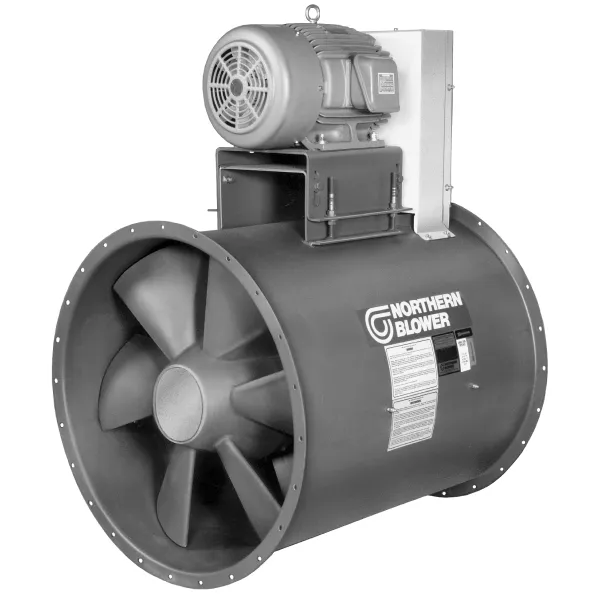
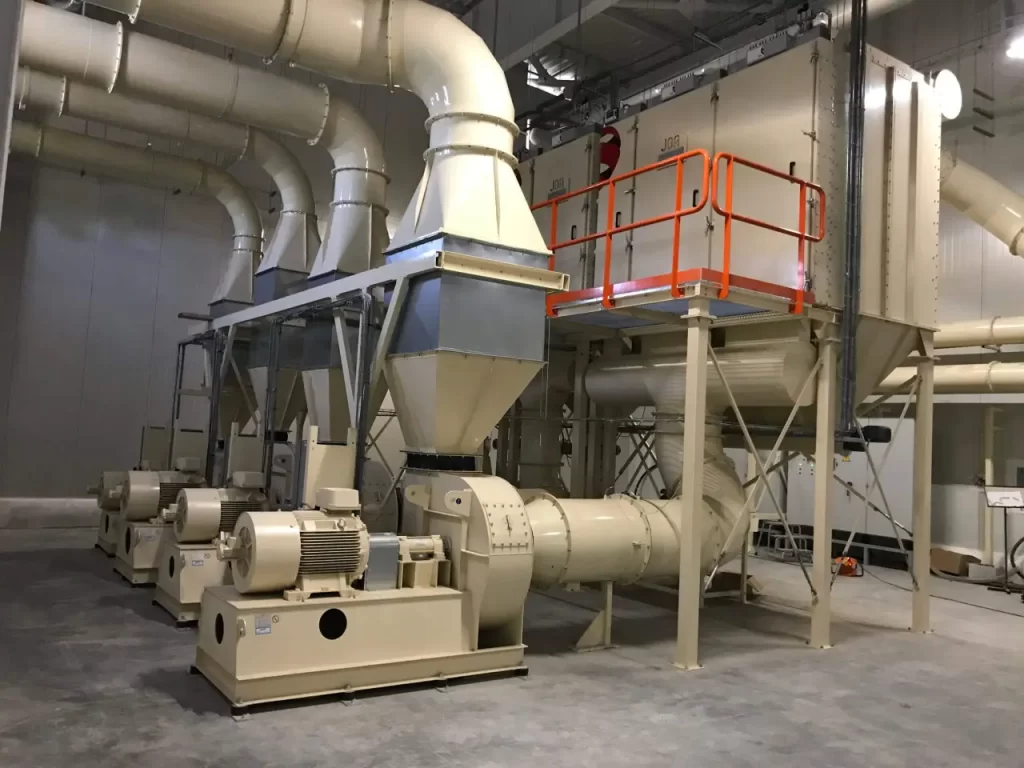
Industrial dust collectors are typically comprised of several interconnected components, each playing a specific role. These include an inlet for the dust-laden air, a mechanism for separating the dust (like filters or cyclones), a dust collection bin or hopper, and an outlet for the cleaned air. Fans are also a critical component, providing the necessary suction to move air through the system. The selection and integration of these components are what differentiate a standard unit from a high-performance, export-ready solution. We invite you to inquire about our tailored system engineering to see how these components work together for your facility.
Explore more: How Much Are Industrial Fans? A Comprehensive Buying Guide for 2025
Mechanisms for Particle Separation
Cyclonic Separation Techniques
Cyclonic separators are a workhorse in industrial dust collection, employing centrifugal force to separate particles from an air stream. As the dusty air enters the cyclone tangentially, it’s forced into a downward spiral. This motion pushes heavier particles outward against the cyclone’s wall. As they move down, they lose momentum and fall into a collection hopper. It’s a robust method, particularly effective for larger, heavier dust particles. We engineer these systems for maximum efficiency, ensuring they integrate seamlessly with your existing operations. For robust solutions in particle separation, consider our cyclone dust separators.
Cyclonic Separation Techniques
Filtration Media and Their Function
Filtration is a process where finer dust particles are captured. This involves passing the air through specialized media designed to trap contaminants. Common materials include woven fabrics, felt, and synthetic membranes, each chosen based on the characteristics of the dust and the required air purity. The media’s pore size, surface area, and durability are key factors. The effectiveness of filtration directly impacts the quality of the discharged air and the lifespan of the collector. Proper selection and maintenance of filter media are vital for consistent performance. We provide high-quality, export-ready filtration solutions tailored to your specific industrial needs.
Electrostatic Precipitation Principles
Electrostatic precipitators (ESPs) use electrical charges to remove fine particles from the air. The dust-laden gas passes through a high-voltage electric field. This field charges the dust particles. These charged particles are then attracted to and collected on oppositely charged plates. ESPs are highly efficient for very fine particulate matter and can handle large volumes of air. They are a sophisticated option for industries requiring the highest levels of air purity. As a manufacturing partner, VIMAX GLOBAL can help you engineer and implement ESP systems that meet stringent environmental standards. If your facility requires advanced particle removal, we encourage you to inquire about our tailored solutions.
The Journey of Contaminated Air
Industrial dust collection systems are designed to manage airborne contaminants, guiding them from their source to a point of safe disposal or collection. This process involves several key stages, each critical for the system’s overall effectiveness and the protection of your workspace. Understanding this flow helps in appreciating the engineering behind these vital machines.
Inlet and Airflow Management
The process begins at the point where dust is generated. Hoods and ductwork are strategically placed to capture dust-laden air as close to the source as possible. The design of these inlets is paramount; they must create sufficient airflow velocity to draw particles into the system without causing excessive turbulence that could allow dust to escape. Proper duct sizing and layout are essential for maintaining consistent air velocity throughout the system, preventing dust from settling prematurely within the ducts. This initial capture phase is where the efficiency of the entire dust collection operation is largely determined. For robust solutions in this area, consider exploring VIMAX’s engineered systems.
Particle Trapping and Collection
Once the contaminated air enters the collector, it passes through a separation mechanism. This could involve cyclonic action, filtration media like bags or cartridges, or electrostatic precipitation. The goal is to separate the solid particulate matter from the air stream. The collected dust then accumulates in a hopper or collection bin at the bottom of the unit. The efficiency of this stage directly impacts the quality of the discharged air and the lifespan of the filtration media. Different types of collectors employ distinct methods, each suited to specific dust characteristics and operational requirements.
Clean Air Discharge
After the particles have been removed, the now-cleaner air is expelled from the system. This discharge point is typically located at the top of the collector, often through a fan outlet. The air released must meet environmental regulations and workplace safety standards. The effectiveness of the particle separation stage dictates the cleanliness of this discharged air. Regular monitoring and maintenance of the collector’s components, such as filter bags or cartridges, are necessary to maintain optimal performance and compliance. Partnering with a manufacturer like VIMAX ensures that your system is designed for reliable, compliant operation, meeting export readiness standards.
We pride ourselves on creating tailored solutions that address unique industrial challenges. If you’re looking to optimize your dust collection process or need a partner for your next project, we encourage you to inquire about our services.
Types of Industrial Dust Collectors
Selecting the right dust collector is key to maintaining a safe and productive work environment. Different industrial processes generate varying types and sizes of particulate matter, necessitating specialized equipment for effective capture. At VIMAX, we engineer robust, export-ready solutions tailored to these diverse needs. As your manufacturing partner, we focus on delivering industrial quality that stands the test of time.
Baghouse Collectors Explained
Baghouse collectors, also known as fabric filter collectors, are a workhorse in industrial dust collection. They function by drawing contaminated air through a series of fabric bags. These bags act as filters, trapping dust particles while allowing cleaner air to pass through. The collected dust builds up on the outside of the bags and is periodically removed through a cleaning mechanism, such as pulse-jet or shaker systems. Baghouses are highly effective for capturing a wide range of particle sizes, particularly finer dusts, making them suitable for applications like cement production, metalworking, and grain handling. Their modular design allows for scalability, and VIMAX provides durable, high-performance baghouse systems designed for continuous operation and easy maintenance. Inquire about our baghouse solutions for your facility.
Cartridge Collector Technology
Cartridge collectors utilize pleated filter cartridges instead of fabric bags. These cartridges offer a larger surface area for filtration within a more compact housing compared to traditional baghouses. The dust is collected on the exterior of the cartridges, and cleaning is typically achieved through a pulse-jet system that blows compressed air onto the filters, dislodging the dust into a collection hopper. Cartridge collectors are often favored for their ease of maintenance, as replacing cartridges is generally simpler than replacing bags. They are particularly well-suited for capturing fine to sub-micron dust particles, common in pharmaceutical manufacturing, chemical processing, and food production. VIMAX offers advanced cartridge collector technology, built for efficiency and longevity. Let’s discuss how our cartridge systems can meet your specific dust control requirements.
Wet Scrubber Systems Overview
Wet scrubbers, or wet collectors, use a liquid (usually water) to capture dust particles. Contaminated air is brought into contact with the scrubbing liquid, causing the dust to become wetted and agglomerate. This mixture then moves to a separation stage where the dust-laden liquid is removed. There are several types of wet scrubbers, including venturi scrubbers, spray towers, and packed bed scrubbers, each employing different methods of liquid-gas contact. Wet scrubbers are particularly effective for capturing combustible dusts, sticky or gummy materials, and fumes, as they can also cool hot gases and absorb soluble pollutants. While they require a water supply and wastewater treatment, they eliminate the risk of dust explosions and can handle high-temperature, corrosive environments. VIMAX provides robust wet scrubber systems engineered for demanding applications where safety and material properties are primary concerns. Contact us to explore tailored wet scrubbing solutions for your operations.
Optimizing Performance and Efficiency
Getting the most out of your industrial dust collection system isn’t just about initial setup; it’s about continuous attention to detail and smart operational choices. VIMAX GLOBAL understands that peak performance translates directly to a safer workspace, better product quality, and reduced operational costs. We focus on engineering solutions that are not only effective but also built for the long haul, ready for export and integration into your existing facility.
System Design Considerations
When we engineer a dust collection system, we look at the whole picture. This includes:
- Airflow Management: Ensuring consistent and adequate airflow is key. Too little, and the dust won’t be captured effectively. Too much, and you waste energy and potentially stress components.
- Component Sizing: Each part, from the fan to the ductwork and filters, needs to be correctly sized for the specific dust type and volume. Oversizing can lead to inefficiency, while undersizing leads to poor capture.
- Material Compatibility: The materials used in the collector must withstand the abrasive nature of the dust and any chemical properties it might have. This is where our industrial quality shows.
- Energy Efficiency: We design systems with energy consumption in mind. This might involve using variable frequency drives (VFDs) on fans or optimizing ductwork to reduce pressure drop, helping to lower your energy costs.
Maintenance for Longevity
Regular maintenance is non-negotiable for keeping your dust collector running efficiently and safely. Neglecting it can lead to breakdowns, reduced performance, and safety hazards. Key maintenance tasks include:
- Filter Inspection and Replacement: Filters are the heart of particle separation. Checking them regularly for wear, damage, or clogging and replacing them on schedule is vital.
- Component Checks: Inspecting fans, motors, seals, and ductwork for wear, leaks, or damage prevents small issues from becoming major failures.
- Dust Discharge System: Ensuring the system for removing collected dust is functioning correctly prevents buildup that can impede airflow or create fire hazards.
- System Audits: Periodic professional audits can identify potential issues before they impact performance or safety.
Energy Consumption Factors
Understanding what drives energy use in your dust collection system allows for targeted improvements. Several factors play a significant role:
- Fan Efficiency: The type and condition of the fan motor are major determinants. High-efficiency motors and proper fan speed control (like VFDs) can make a big difference.
- Pressure Drop: The resistance to airflow within the system. This is influenced by ductwork design, filter loading, and the presence of any blockages. Minimizing pressure drop means the fan works less.
- System Operation: Running the system only when needed, rather than continuously, can yield substantial energy savings. Automated controls can help manage this.
- System Loading: The amount of dust being processed. While you can’t always control this, understanding its impact helps in planning and system sizing.
As your manufacturing partner, VIMAX GLOBAL is committed to providing robust, export-ready dust collection solutions. We invite you to inquire about tailored system engineering for your specific operational needs or discuss potential partnerships to optimize your facility’s air quality and efficiency.
Collaborative Solutions for Your Facility
Tailored System Engineering
At VIMAX, we understand that a one-size-fits-all approach doesn’t work for industrial dust collection. Our engineering process starts with a deep dive into your specific operational needs. We utilize advanced tools like Finite Element Analysis (FEM) for structural integrity and Computational Fluid Dynamics (CFD) for aerodynamic performance to design systems that are not only effective but also built to last. Our commitment is to create solutions that integrate seamlessly with your existing infrastructure and processes. We focus on precision and performance, ensuring that every system we design meets the unique challenges of your facility. Explore our capabilities in custom commercial dust collectors to see how we tailor solutions.

Tailored System Engineering
Meeting Specific Industry Needs
Different industries face distinct dust collection challenges. Whether you’re in food processing, manufacturing, or power generation, the type of dust, required airflow, and environmental regulations vary significantly. VIMAX GLOBAL has experience across a wide range of sectors, allowing us to develop specialized systems. We consider factors such as particle size, concentration, temperature, and any potential chemical properties of the dust to select the most appropriate separation technology, whether it’s advanced filtration media, cyclonic separation, or other methods. Our goal is to provide a system that is compliant, efficient, and optimized for your specific application.
Ensuring Workspace Safety and Compliance
Maintaining a safe and compliant work environment is paramount. Our dust collection systems are engineered to meet stringent safety standards and environmental regulations. We help you achieve cleaner air, reduce the risk of combustible dust hazards, and ensure your facility operates within legal requirements. Regular system audits and performance testing are part of our support, helping you maintain optimal operation and compliance over time. We also integrate with Building Information Modeling (BIM) for precise system placement, optimizing airflow, and overall efficiency within your facility’s layout BIM integration. Partner with VIMAX for reliable, compliant, and safe dust collection solutions. We are ready to discuss your project requirements and explore potential partnerships.
Work together to improve your facility with our smart solutions. We offer ways to make your building run better and more efficiently. Ready to see how we can help? Visit our website today to learn more about our offerings and how they can benefit your operations.
Partnering for Cleaner Air
Understanding how industrial dust collectors work is a big step toward improving workplace safety and air quality. These systems are not just machines; they are key to maintaining a healthy environment for your workers and meeting regulatory standards. At VIMAX GLOBAL, we specialize in creating these vital air solutions. We work closely with businesses like yours to design and build systems that fit your specific needs, whether that’s in manufacturing, food processing, or any other industry. We believe in collaboration and are ready to help you find the right dust collection setup. Let’s work together to create a cleaner, safer future for your operations.
Read more: Where to Buy Industrial Fans: Your Ultimate Guide
