When a fire breaks out in a commercial or industrial facility, fire itself is only part of the danger. Statistically, thick toxic smoke, blinding heat, and suffocating gases pose an immediate threat to human life long before flames spread. This is where high-efficiency smoke control systems become non-negotiable.
As a critical component of building safety infrastructure, emergency ventilation depends entirely on selecting the right equipment. In this comprehensive guide, Vimax Global breaks down the primary types of smoke exhaust fans and their strategic applications to help you make informed engineering and compliance decisions.
What is a Smoke Exhaust Fan?
Unlike standard commercial ventilation units that circulate ambient air, smoke exhaust fans are heavy-duty, emergency standby systems. They are explicitly engineered to run flawlessly under extreme, high-temperature conditions to clear evacuation corridors, maximize visibility for rescue teams, and prevent structural collapse by venting intense thermal loads.
To guarantee performance during a fire, these fans must comply with strict international fire safety regulations (such as EN 12101-3 standards), which verify their ability to operate under temperature thresholds ranging from 200°C up to 400°C for hours at a time.
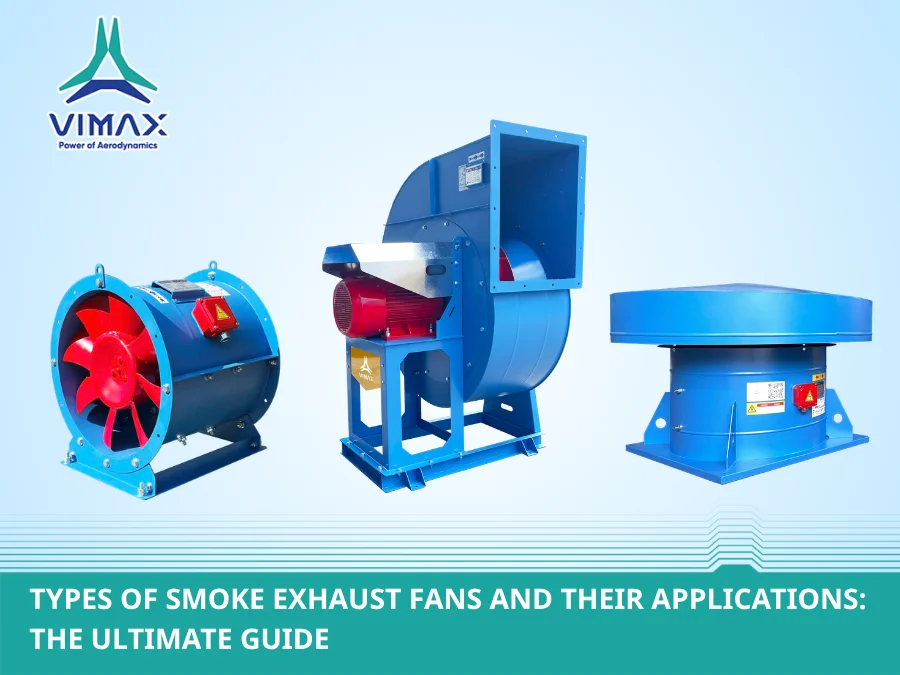
3 Primary Types of Smoke Exhaust Fans and Their Applications
Different building layouts present unique structural challenges. A deep stairwell requires a completely different ventilation approach than a sprawling logistics warehouse. Understanding how these mechanical configurations differ is essential for choosing the right system.
1. Axial Smoke Exhaust Fans
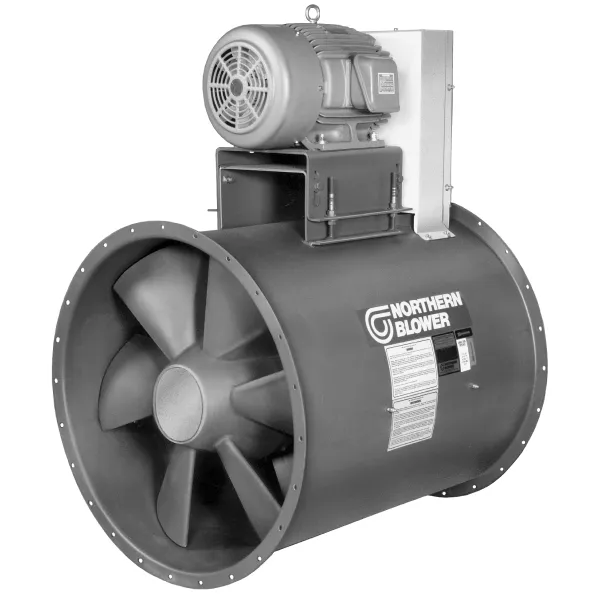
Axial fans feature propeller-like blades that move massive volumes of air parallel to the fan shaft. They are highly efficient at moving large volumes of air quickly but are best suited for layouts with low static resistance.
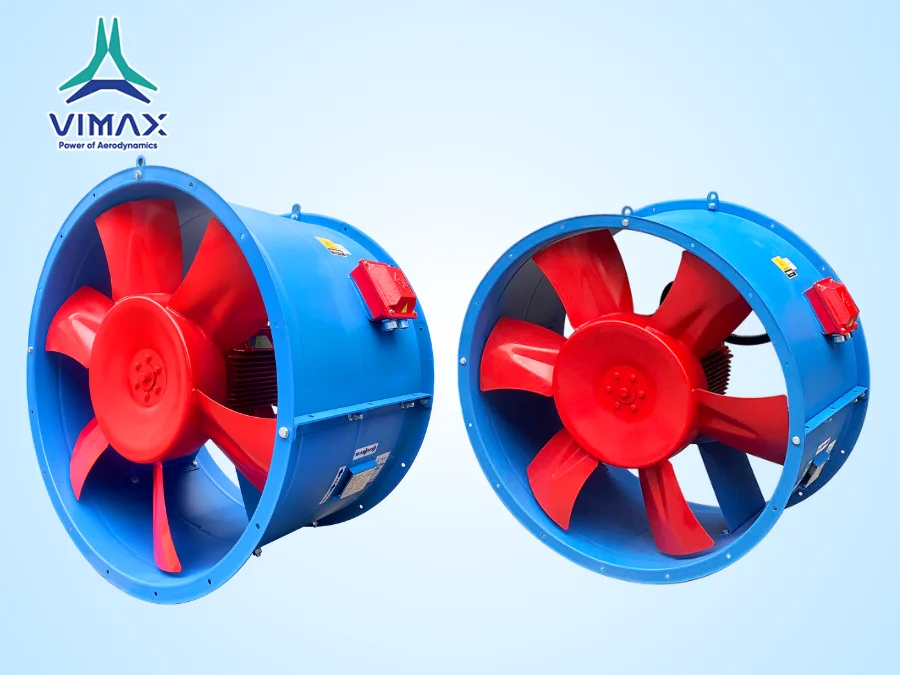
- How They Work: Air enters and exits the fan in a straight line, minimizing directional friction losses within the housing itself.
- Primary Applications: Axial smoke exhaust fans are the industry standard for enclosed multi-story parking garages, logistics warehouses, large manufacturing floors, and straight-line industrial duct networks. Because they handle high airflow volume efficiently, they can rapidly clear open-concept spaces during an emergency.
Key Models: VMA-FF-No (Direct-drive heat-resistant axial), VMA-SF-No (Two-speed emergency smoke axial).
2. Centrifugal Smoke Exhaust Fans
Centrifugal fans utilize a rugged internal impeller wheel to draw smoke into the center of the fan housing, rotating the air stream 90 degrees before exhausting it via centrifugal force.
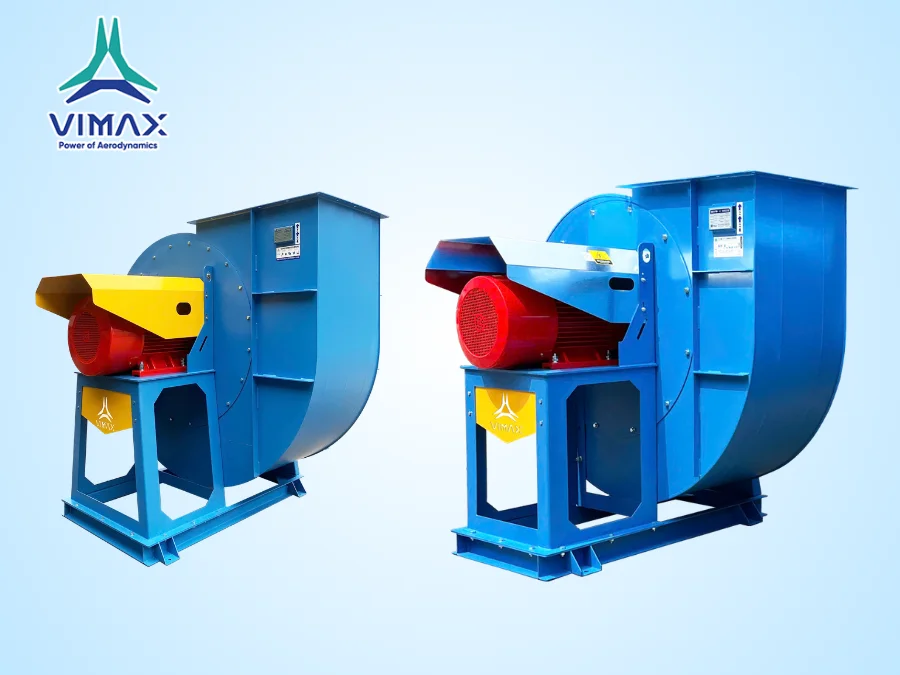
- How They Work: This mechanical configuration generates exceptionally high static pressure, meaning the fan can forcefully push air through tight spaces without stalling or dropping efficiency.
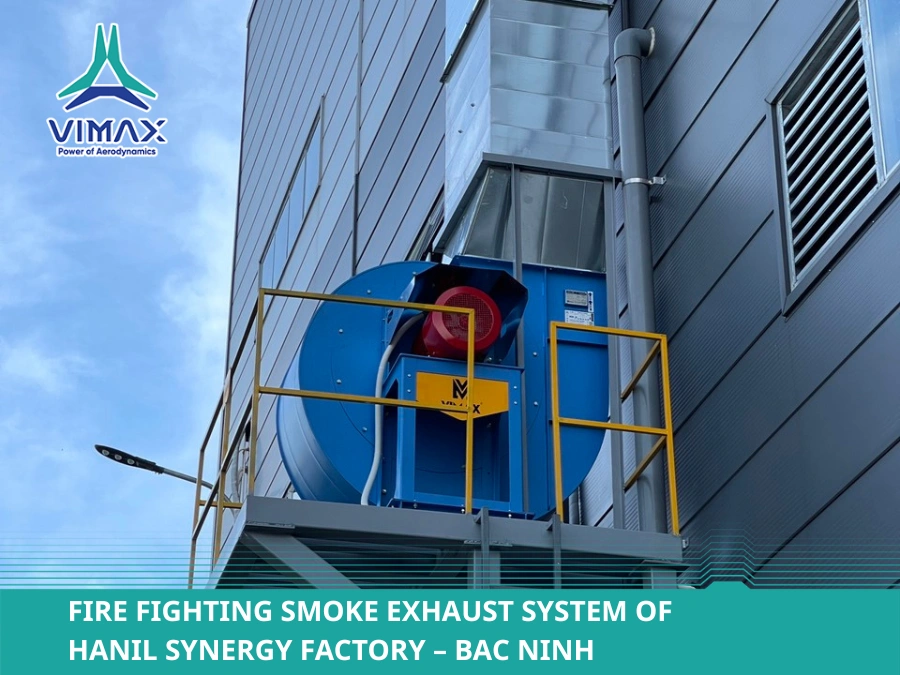
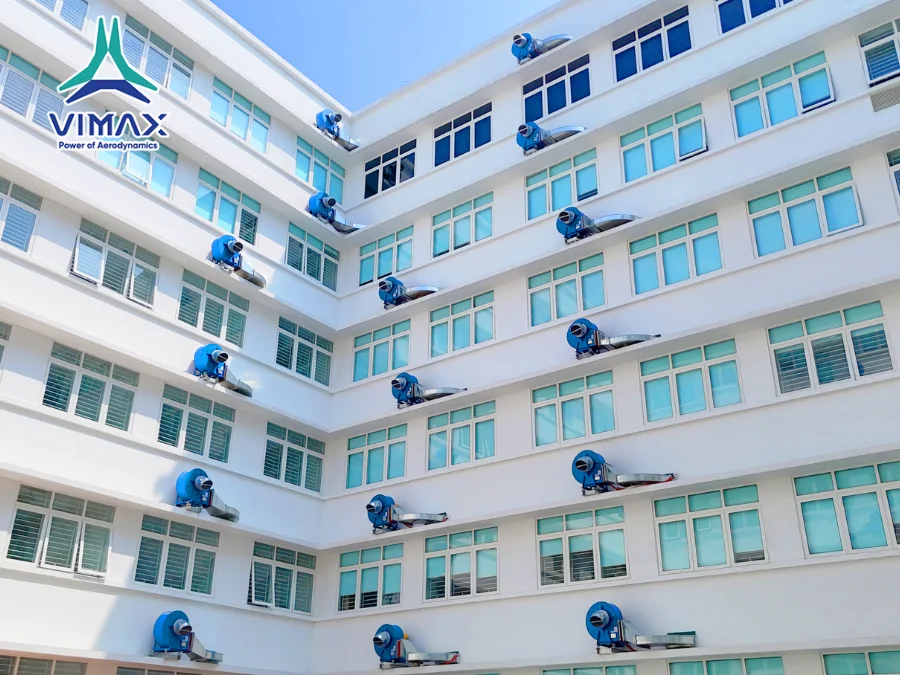
- Primary Applications: Centrifugal smoke fans are built for complex architectural layouts. They are the ideal choice for multi-story high-rise commercial offices, shopping malls, hospitals, and hotels where smoke must travel through long, winding duct networks, fire dampers, and filtration systems before safely discharging outdoors.
Key Models: VMC-FF-No (High-temperature centrifugal unit), VMC-SF-No (Dual-speed smoke exhaust centrifugal fan).
3. Roof-Mounted Smoke Exhaust Fans
Roof-mounted units are weather-resistant fans permanently fixed to the building exterior. They capture rising heat and smoke, venting them vertically straight into the atmosphere.
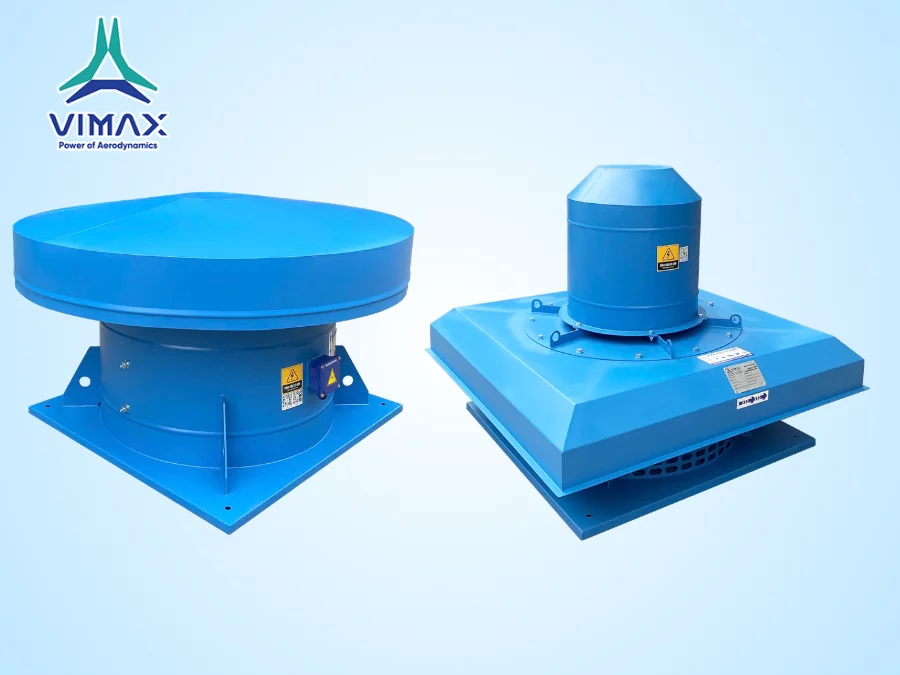
- How They Work: They operate at the highest physical point of a building, leveraging natural thermal buoyancy (hot air rising) to maximize exhaust speed.
- Primary Applications: These units excel in expansive, single-story facilities or massive open vertical spaces. They are heavily utilized in airport terminals, sports arenas, hypermarkets, and industrial atriums where standard horizontal ducted systems are impractical.
Key Models: VMC-RF-No (Centrifugal roof exhaust), VMA-RF-No (Axial roof exhaust).
Specialized Smoke Control Systems: Pressurization Fans
While exhausting smoke out of a building is crucial, keeping it away from critical escape routes is equally important. Stairwell and elevator shaft pressurization fans work inversely compared to exhaust fans.
Instead of pulling toxic air out, they inject large volumes of clean, outdoor air into emergency stairwells and exit paths. This creates positive air pressure inside the stairwell. When a fleeing occupant opens an emergency door, the higher air pressure forces the smoke backward into the fire zone, keeping the evacuation path pristine and smoke-free.
Technical Specifications: Fire Resistance Classes
When selecting among the various types of smoke exhaust fans, choosing the appropriate fire rating based on your facility’s hazard level is legally required. Fans are classified by their certified temperature endurance limits:
- Class F200: Built to withstand 200°C for up to 120 minutes. Best for lower-occupancy commercial properties.
- Class F300: Engineered to operate at 300°C for 60 to 120 minutes. This is the standard baseline benchmark for underground public car parks and retail spaces.
- Class F400: Built to endure severe 400°C temperatures for 120 minutes. This rigorous tier is mandatory for high-risk heavy industrial manufacturing plants, oil and gas processing facilities, and chemical storage hubs.
4. Key Factors When Selecting Smoke Exhaust Fans
Choosing the correct fire smoke exhaust fan requires more than comparing airflow ratings.
Airflow Capacity
The required airflow must be determined through smoke control calculations based on the building geometry, design fire scenario, smoke zones, and applicable regulations.
Static Pressure
The selected fan must overcome resistance from ductwork, dampers, fittings, and other system components while delivering the required airflow.
Temperature Resistance
Smoke exhaust fans must meet the temperature and operating-duration requirements specified for the project.
For example, EN 12101-3 addresses powered smoke and heat control ventilators, including relevant performance testing and classification requirements.
Installation Conditions
Engineers should evaluate installation space, mounting orientation, maintenance access, structural support, and the location of smoke discharge outlets.
System Integration
Smoke exhaust fans must operate correctly with fire alarm systems, emergency power arrangements, smoke control dampers, and the building’s control strategy.
Proper testing and commissioning are essential to verify coordinated operation.
Why Choose Vimax Global for Your Smoke Ventilation Needs?
Designing an emergency ventilation system requires balancing architectural constraints, safety compliance, and energy efficiency. At Vimax Global, we manufacture and supply industrial-grade smoke exhaust fans engineered to meet the highest international safety standards.
From robust high-pressure centrifugal fans to high-volume axial units, our technical team works alongside MEP contractors and building engineers to design bespoke, fully compliant ventilation systems tailored precisely to your project’s blueprint.
Ensure your next building project is completely protected. Contact Vimax Global today to discuss your technical requirements and find the optimal smoke exhaust solution for your facility.