


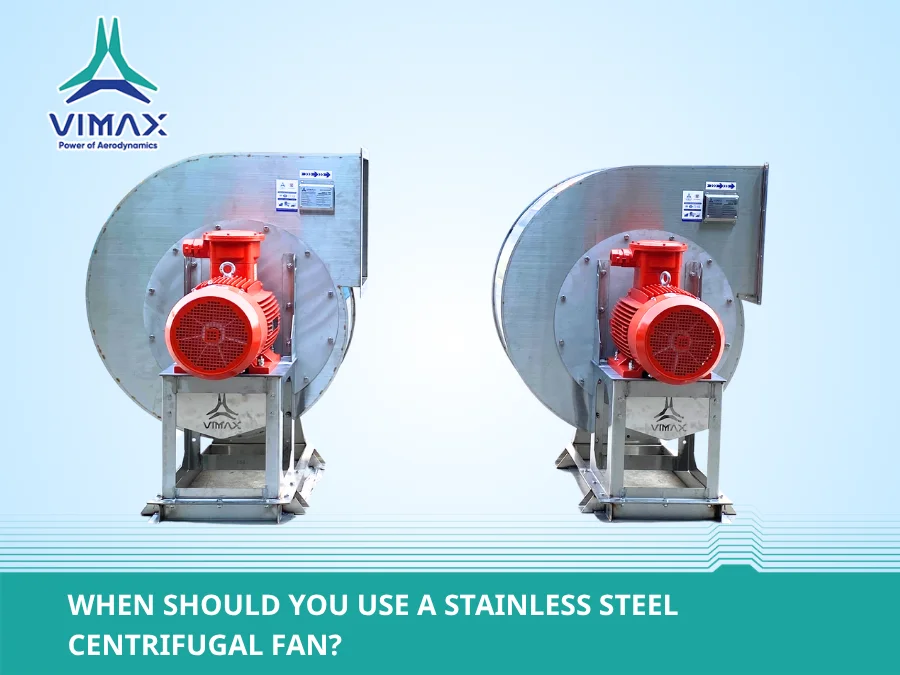
In industrial ventilation and dust extraction systems, the centrifugal fan is widely considered the “heart” that drives the entire operation. In today’s market, a stainless steel centrifugal fan typically costs 2 to 3 times more than a standard carbon steel (SS400) or galvanized fan. This significant price gap leaves many facility owners and Mechanical & Electrical (M&E) engineers wondering: When is it truly necessary to use a stainless steel centrifugal fan? Is investing in this premium equipment a smart long-term financial move, or is it an unnecessary budget drain?
This article provides a practical engineering perspective alongside a product lifecycle cost analysis to help you make the most informed decision for your facility.
1. What Is a Stainless Steel Centrifugal Fan and What Is Its Core Advantage?
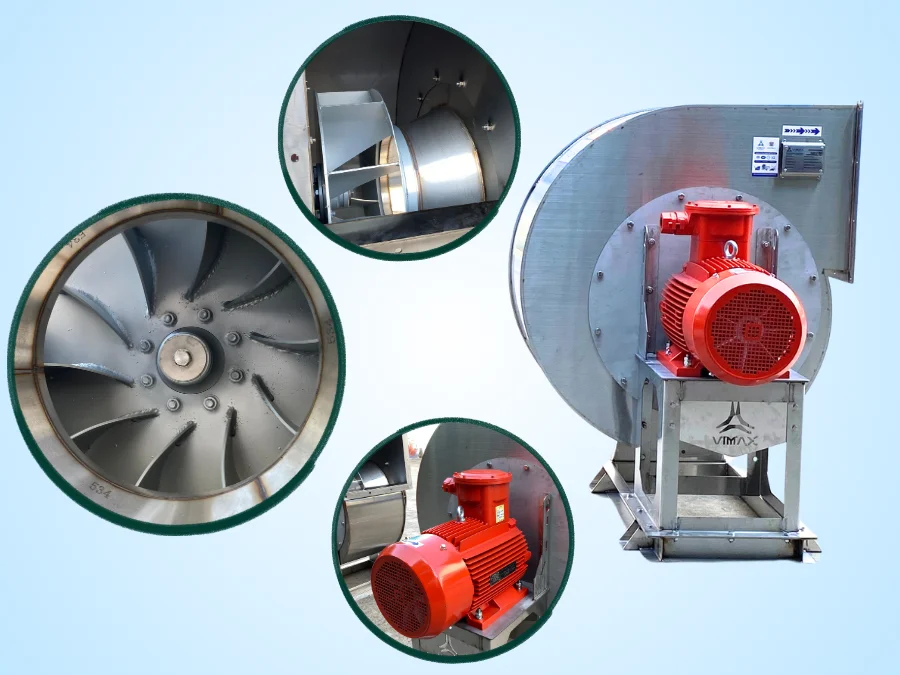
A stainless steel centrifugal fan is an industrial exhaust fan whose housing, impeller system, and structural components are fabricated entirely from stainless steel (most commonly Grade 304 or Grade 316).
In terms of operation, it generates high pressure using centrifugal force to pull and push airflow through a ductwork system. However, what makes stainless steel worth its premium price compared to standard steel or galvanized materials comes down to three core mechanical properties:
- Oxidation Resistance: It does not rust or corrode when continuously exposed to moisture, chemicals, or salt air.
- High-Temperature Tolerance: It maintains mechanical integrity and resists deformation in environments moving hot air streams.
- Anti-Sticking Surface: Stainless steel features a highly smooth surface finish. This minimizes the buildup of sticky dust, grease, and grime, ensuring the impeller maintains its dynamic balance over the long run.
2. 4 “Golden” Scenarios Where Stainless Steel Centrifugal Fans Are Mandatory
Not every environment requires stainless steel. However, if your facility falls into any of the following four scenarios, utilizing a stainless steel centrifugal fan is compulsory to prevent system failure within just a few months of operation:
2.1. Extremely high humidity or direct moisture exposure
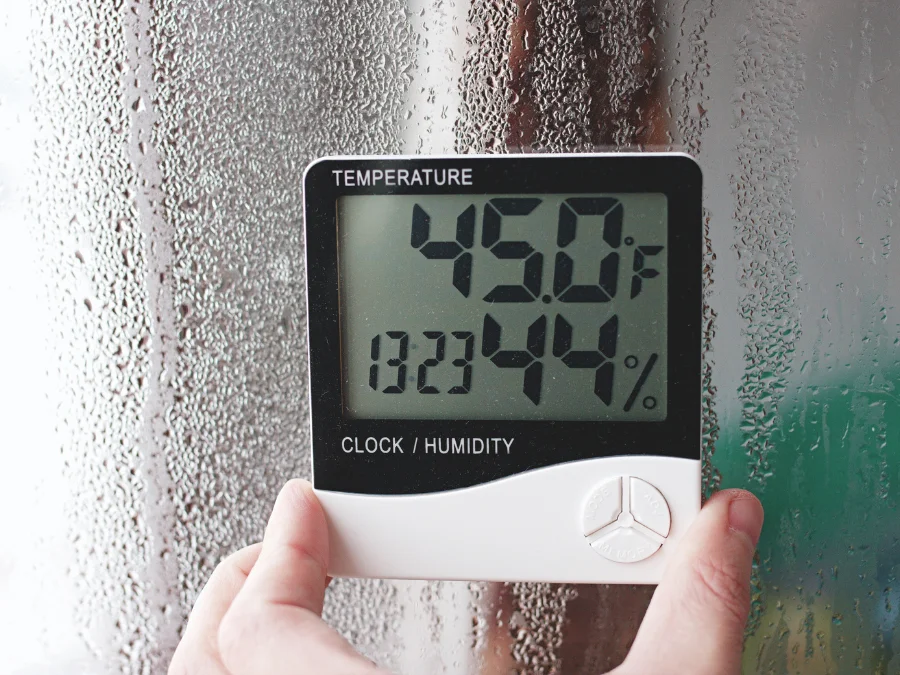
In seafood processing plants, textile dyeing and steaming workshops, or boiler exhaust systems, the air stream continuously carries a massive amount of moisture. If a standard steel fan is used, high humidity quickly destroys the external powder coating. This leads to housing rust and thins the impeller blades, creating a high risk of blade breakage at high rotational speeds. Stainless steel completely eliminates this risk.
2.2. Exhaust systems handling corrosive chemicals
In electroplating workshops, chemical manufacturing plants, electronic component factories, and laboratories, the discharged air contains heavy concentrations of acid fumes, alkalis, or dissolved solvents. These are the “number one enemies” of standard metals. A standard steel centrifugal fan can corrode to the point of structural failure or develop holes in its housing within 3 to 6 months. Conversely, Grade 304 or 316 stainless steel remains completely inert against most common industrial chemicals.
Read more: Types of Smoke Exhaust Fans and Their Applications: The Ultimate Guide
2.3. Industries with strict hygiene standards (Food & Medical)
For production lines handling dairy, confectionery, pharmaceuticals, or hospital cleanrooms, preventing contamination is the top priority. Standard steel or painted fans can peel over time, releasing rust flakes into the air stream and contaminating the products. A smooth, bright stainless steel surface is easy to wipe down, can withstand harsh chemical disinfectants, and guarantees zero toxic byproduct emissions during production.
2.4. Environments moving high-temperature gas streams
In kilns, metallurgical foundries, or industrial hot air extraction systems, air stream temperatures can reach anywhere from 150°C to 300°C. Standard steel softens when exposed to high heat, which reduces its mechanical strength and causes the impeller blades to warp. This warpage destroys the fan’s dynamic balance, leading to severe vibration. Stainless steel retains excellent stiffness and structural stability under high temperatures.
3. The Financial Equation: Standard Steel vs. Stainless Steel
To give you a comprehensive overview before approving an equipment budget, here is a direct comparison of costs and features between the two materials in harsh environments:
| Comparison Criteria | Standard Steel Centrifugal Fan (SS400) | Stainless Steel Centrifugal Fan (304 / 316) |
| Initial Investment Cost | Low (1x) | High (2x – 3x) |
| Lifespan in Humid/Chemical Areas | Short (Only 6 months to 3 years) | Very Long (10 to 15 years) |
| Maintenance & Repair Frequency | Constant (Repainting, structural welding, re-balancing) | Minimal (Mainly motor and bearing maintenance) |
| Risk of Production Downtime | High (Costly facility shutdowns to replace failed fans) | Virtually non-existent |
| Scrap / Resale Value | Low value when rusted through | Retains high value due to the inherent cost of stainless steel |
Financial Analysis from Experts:
If you choose a standard steel fan priced at $1,000 for an acid fume extraction environment, you will likely need to replace it every 1 to 2 years. This does not account for the labor costs of removal and installation, or the massive financial losses incurred by shutting down your entire production line for repairs.
On the other hand, investing $2,500 in a stainless steel centrifugal fan upfront guarantees an operational system for up to 10 years. Looking at the Total Cost of Ownership (TCO), stainless steel actually emerges as the far more cost-effective choice for your business.
Other post: Industrial Fan Operation & Maintenance: The Ultimate Guide to Maximizing Lifespan and Efficiency
4. Hard-Earned Lessons from Shop Floors: Avoiding Costly Pitfalls
Once you have decided on a stainless steel fan, keep these three critical pointers in mind to avoid falling into “cheap price” traps or purchasing incorrect specifications:
- Verify the Stainless Steel Grade: Some suppliers offer incredibly low quotes because they use Grade 201 stainless steel. This grade still rusts rapidly in humid or chemical environments. Always check the CO/CQ (Certificate of Origin/Certificate of Quality) and demand clear commitments: Choose Grade 304 for general humidity, mild chemicals, or commercial kitchen hood exhausts. Only upgrade to Grade 316 if your system handles saltwater air (coastal regions) or highly concentrated acids.
- Watch Out for the “Motor Trap”: Do not be fooled by a shiny exterior housing. If the fan comes with a standard motor lacking proper protection ratings, moisture and acid fumes will corrode the internal windings. This causes the motor to burn out even while the stainless steel shell looks brand new. Always prioritize cast-iron motors with an ingress protection rating of IP55 or higher, or opt for a belt-driven (indirect) centrifugal configuration to isolate the motor completely from the toxic gas stream.
- Design for Easy Cleaning: For kitchen exhaust hoods or systems handling sticky dust, grease will inevitably accumulate on the impeller blades over time, causing imbalance. Request that the manufacturer include a quick-release inspection door on the fan housing and a bottom drain valve. This allows maintenance teams to easily wash and service the fan without dismantling the entire ductwork system.
A stainless steel centrifugal fan is not a luxury expense; it is a strategic engineering and financial investment for harsh manufacturing environments. Choosing the correct material from day one ensures that your facility’s ventilation system remains uninterrupted. Ultimately, this optimizes your operational costs and eliminates the risk of unexpected breakdowns that halt production.
Still unsure which stainless steel grade fits your application, or what airflow and static pressure specifications your layout needs?
Leave your details or contact VIMAX GLOBAL’s engineering team today to receive a complimentary site survey and an optimized quote tailored entirely to your facility!
