


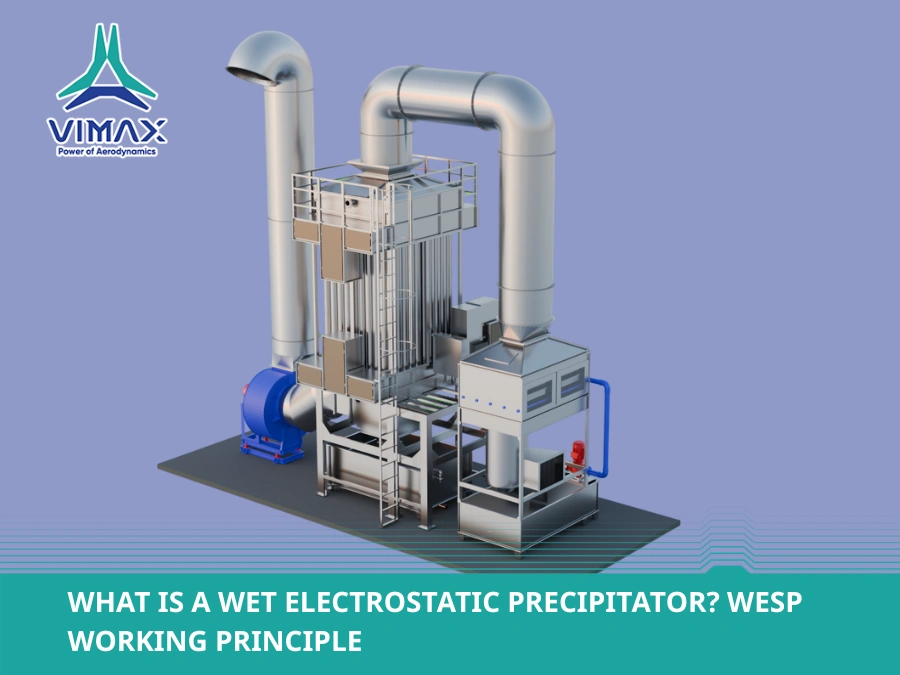
An Industrial Wet Electrostatic Precipitator (WESP) system is an advanced air pollution control device designed to remove sub-micron particulate matter, acid mists, toxic heavy metals, and organic aerosols from industrial exhaust gas streams. Unlike dry electrostatic precipitators (ESPs) that rely on mechanical rapping to clean collection plates, a WESP uses water to continuously flush away collected pollutants. This specific mechanism makes it highly effective for treating high-humidity, sticky, or corrosive gas streams.
What is a Wet Electrostatic Precipitator (WESP)?
An industrial wet electrostatic precipitator is a specialized filtration device that leverages electrostatic forces to separate fine particulate matter from industrial flue gas. It serves as a final polishing stage in air pollution control systems.
Industries often deploy WESPs when dry ESPs or fabric filters fail. Standard filters clog or blind when exposed to wet, sticky, or oily particulates. Because WESPs utilize a continuous or intermittent water wash, they eliminate the risk of particulate re-entrainment and hammer-induced dust clouds. This makes them essential for meeting strict environmental standards like those outlined by the US Environmental Protection Agency (EPA).
What are the Main Components of a WESP System?
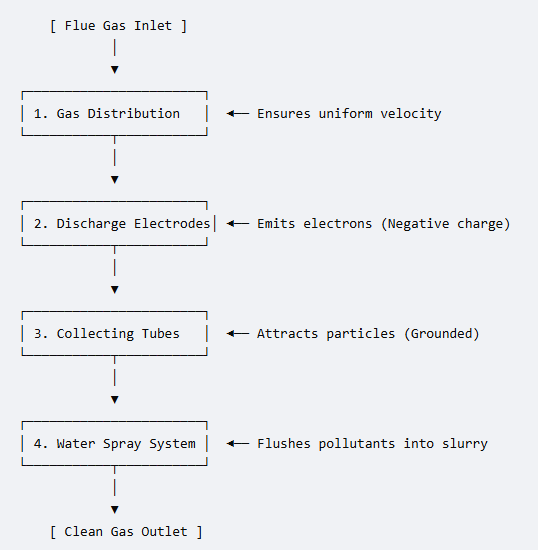
A WESP system features a robust, corrosion-resistant architecture designed to handle wet and aggressive chemical environments. The system consists of five primary structural modules.
1. Housing and Gas Distribution System
The outer shell is typically fabricated from high-grade corrosion-resistant alloys, stainless steel, or fiber-reinforced plastics (FRP) to withstand acidic condensation. Inside the inlet, gas distribution grids or perforated plates ensure the incoming flue gas flows uniformly across the entire cross-section of the precipitation zone.
2. Discharge Electrodes (Rigid Masts or Wires)
Positioned in the center of the gas flow channels, these electrodes connect to a high-voltage Direct Current (DC) power source. They feature sharp geometries, spikes, or star shapes designed to maximize the localized electrical field intensity and generate a highly stable corona discharge.
3. Collecting Electrodes (Tubes or Plates)
Surrounding the discharge electrodes are the grounded collecting surfaces. WESPs generally utilize two main geometries:
- Honeycomb/Tubular Design: Hexagonal or circular tubes bundled together. Gas flows vertically (upward), maximizing space efficiency.
- Plate Design: Flat parallel plates where gas flows horizontally. This design is common for larger volumetric flow rates.
4. High-Voltage Power Supply (TR Sets)
Transformer-Rectifier (TR) sets convert low-voltage Alternating Current (AC) into high-voltage DC (typically ranging from 40kV to 90kV. Modern systems utilize high-frequency switch-mode power supplies (SMPS) to provide a stable spark response and maximize electrical power input.
5. Water Wash and Irrigation System
This system features a network of spray nozzles positioned above the collecting electrodes. Depending on the design, it provides either a continuous thin film of water running down the collection surfaces or intermittent high-pressure flushes to wash accumulated slurry into a bottom drainage hopper.
How Does a WESP Work?
The operating principle of a wet electrostatic precipitator relies on three sequential physical phases: gas ionization, solid/liquid particle charging and migration, and wet surface collection.
Phase 1: Corona Discharge and Gas Ionization
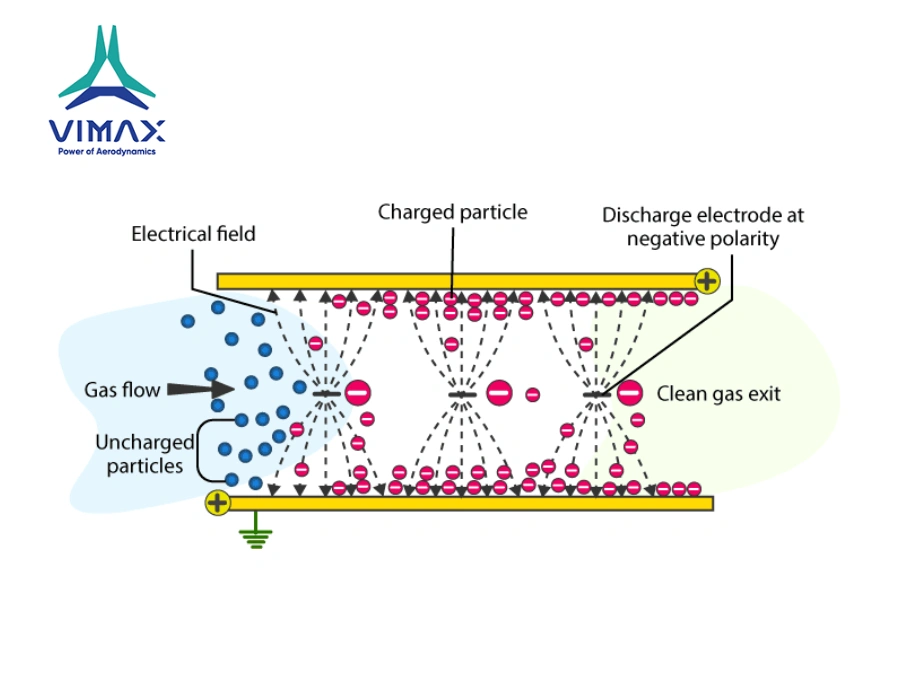
High-voltage DC power feeds into the discharge electrodes, establishing a strong negative electrical field between the discharge mast and the grounded collecting tube. As the voltage surpasses the dielectric breakdown strength of the surrounding gas, a visible blue glow called a corona discharge forms. This corona strips electrons from the gas molecules, creating a dense cloud of negative ions moving toward the grounded collection wall.
Phase 2: Particle Charging and Migration
As the dirty flue gas passes through this intense ionization zone, the sub-micron dust particles and acid mist droplets collide with the negative ions. This process, known as field charging, transfers a strong negative charge to the pollutants.
Once charged, the particles experience a powerful electrostatic force governed by Coulomb’s Law:
This force drives the negatively charged contaminants laterally away from the central electrode toward the grounded collecting walls.
Phase 3: Collection and Water Flushing
Upon contacting the grounded collecting electrode, the particles surrender their charge. In a dry ESP, these particles would build up a dry layer. In a WESP, the collecting surface is covered by a continuous film of water or is periodically sprayed. The liquid encapsulates the captured particles, neutralizing any electrical resistivity issues. Gravity then pulls the water-pollutant mixture down into the collection hopper as a slurry, leaving the collecting surface clean and ready for continuous operation.
Technical Comparison: WESP vs. Dry ESP
| Feature | Wet ESP (WESP) | Dry ESP |
| Primary Target | Sub-micron particulates, acid mists, sticky aerosols | Coarse dust, dry fly ash, large particulates |
| Cleaning Mechanism | Water wash / Continuous film irrigation | Mechanical rapping hammers |
| Particulate Re-entrainment | Zero (particles are trapped in fluid) | Moderate to High (dust clouds form during rapping) |
| Gas Temperature Limit | Treats saturated gases 40°C – 80°C | Treats high-temperature gases up to 400°C |
| Corrosion Resistance | Extremely high (uses alloys, FRP, plastics) | Standard carbon steel construction |
| Back Corona Risk | None | High (when handling high-resistivity dusts) |
Which Industries Strictly Need a Wet Electrostatic Precipitator?
WESP systems excel in industrial settings where exhaust gases are wet, saturated, or contain highly hazardous sub-micron aerosols:
- Power Generation & Utility Boilers: Placed downstream of wet flue gas desulfurization (WFGD) scrubbers to eliminate blue plume (sulfuric acid mist) and fine PM2.5.
- Metallurgical & Smelting Operations: Captures heavy metal fumes like lead, arsenic, and cadmium from copper, zinc, and iron smelting processes.
- Chemical & Petrochemical Refining: Cleans exhaust streams from sulfuric acid plants, hazardous waste incinerators, and catalyst regeneration units.
- Wood Products Manufacturing: Removes sticky wood resins, terpenes, and organic condensables emitted from particleboard and engineered wood dryers.
Vimax Global – Your Strategic Partner in Emission Control Technology
In summary, a Wet Electrostatic Precipitator (WESP) is far more than just a standard pollution control device. By utilizing continuous water washing and electrostatic forces, it stands as the ultimate solution for treating the most challenging industrial emissions – from sticky tars and acid mists to sub-micron particulate matter. Understanding its working principle is the first step toward optimizing your plant’s environmental compliance and operational efficiency.
However, successfully implementing WESP technology requires precise engineering and a design tailored specifically to your facility’s exhaust gas profile.
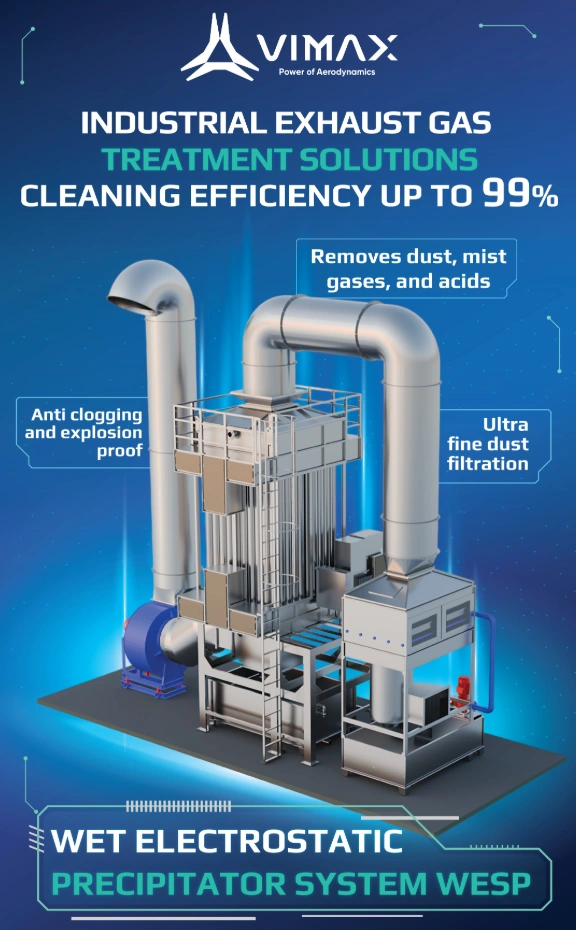
Don’t let outdated filtration systems cause unexpected downtime or compliance issues. Discover how Vimax Global can custom-engineer a high-performance WESP system that perfectly fits your production line.
- In-depth Consultation: Our expert engineers thoroughly analyze your exhaust gas composition prior to drafting any design.
- Modern Technology: We transfer and apply the most advanced international technologies and manufacturing standards.
- Turnkey Solutions (EPC): We accompany you through every step – from design and fabrication to installation, operation, and maintenance.
- Long-term Warranty: We are committed to standing by your plant throughout the entire lifecycle of the project.
Let Vimax Global help you solve the most complex exhaust gas problems at the most optimal cost. Contact our expert team today for a free technical consultation and preliminary solution design!
