


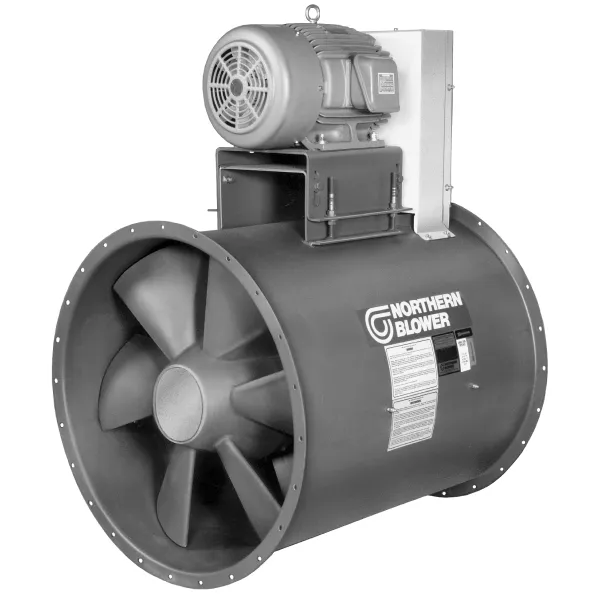

When you’re dealing with big industrial jobs, you need serious air-moving power. That’s where industrial fans come in. They aren’t like the fans you use at home to cool off a room. These are built tough for heavy-duty work. This article will break down what an industrial fan is and why they’re so important for different businesses. We’ll look at how they work, the different types you can get, and what to think about when you need one for your operation. Basically, we’re talking about serious ventilation solutions here.
Key Takeaways
- Industrial fan are powerful machines designed for demanding ventilation and air movement tasks in commercial and factory settings.
- Unlike regular fans, they are built with robust materials to handle harsh conditions and continuous operation.
- They play a big role in making industrial processes run smoother and safer.
- There are different types, like centrifugal and axial fans, each suited for specific jobs.
- Choosing the right fan involves considering the airflow needs, the environment in which it will be used, and its energy consumption.
Understanding The Core Functionality Of An Industrial Fan
Defining Industrial Fans: Purpose and Scope
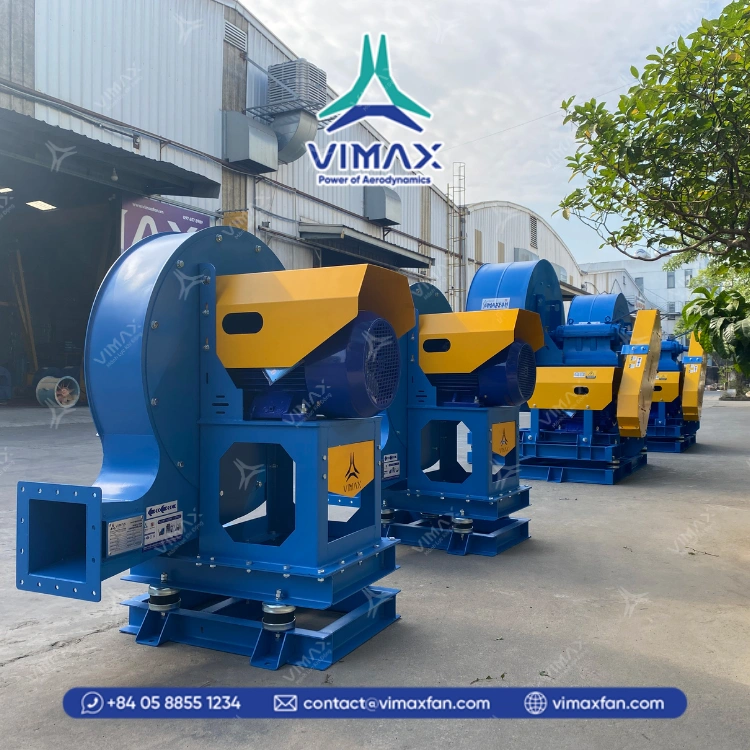
Industrial fans are specialized pieces of equipment built for heavy-duty air movement in demanding environments. Unlike the fans you might find in a home or office, these are designed for continuous operation, high volumes of air, and often, challenging conditions. Their primary purpose is to manage airflow for various industrial processes, including ventilation, dust collection, material handling, and cooling. Think of them as the workhorses of air management in factories, power plants, chemical facilities, and similar settings. They are engineered to move large quantities of air efficiently, whether it’s to remove heat, supply fresh air, or transport materials.
Key Differentiators from Standard Fans
Several factors set industrial fans apart from their smaller, consumer-grade counterparts. For starters, the materials used are much more robust. We’re talking about heavy-gauge steel, specialized alloys, and coatings designed to resist corrosion, abrasion, and high temperatures. The motors are also built for industrial use, often with higher horsepower and designed for continuous duty cycles.
Here’s a quick look at some key differences:
- Construction: Heavy-gauge steel, robust frames, and durable coatings.
- Motor: Industrial-grade, continuous-duty motors with higher power ratings.
- Performance: Designed for high airflow (CFM) and pressure (inches w.g.) over extended periods.
- Environment: Built to withstand harsh conditions like dust, chemicals, and extreme temperatures.
- Customization: Often custom-engineered to meet specific application requirements.
The sheer scale and robustness of industrial fans are their most defining characteristics. They are not just about moving air; they are about moving it reliably and powerfully in environments where standard fans would quickly fail.
The Role of Industrial Fans in Process Optimization
Proper air management is often a hidden but critical factor in optimizing industrial processes. Industrial fans play a direct role in this. For example, in manufacturing, they can help maintain consistent temperatures around machinery, preventing overheating and ensuring product quality. In processes involving dust or fumes, they are essential for capturing and removing airborne contaminants, creating a safer working environment, and meeting regulatory standards.
Consider these areas:
- Temperature Control: Maintaining optimal operating temperatures for equipment and products.
- Air Quality: Removing hazardous fumes, dust, and odors.
- Material Transport: Moving bulk materials like sawdust, grain, or plastic pellets.
- Combustion Air: Supplying air to boilers and furnaces.
By ensuring the right amount of air is moved to the right place, industrial fans contribute directly to operational efficiency, safety, and the overall success of complex industrial operations. If you have a specific process that requires precise air movement, it’s worth inquiring about how our tailored solutions can help optimize your operations.
Exploring Diverse Industrial Fan Designs
Industrial environments demand ventilation solutions that are as varied as the processes they serve. The type of fan selected directly impacts airflow volume, pressure, and overall system efficiency. At VIMAX GLOBAL, we engineer a range of fan designs to meet these specific operational needs, ensuring optimal performance and durability.
Centrifugal Fan Configurations for Airflow Control
Centrifugal fans are workhorses in industrial settings, known for their ability to move air against resistance. They achieve this through a rotating impeller that imparts kinetic energy to the air, which is then directed outwards. Different impeller designs cater to specific airflow and pressure requirements:
- Forward-Curved Impellers: These fans offer high airflow at lower pressures and are generally quieter. They are suitable for applications like HVAC systems and general ventilation where moderate air movement is needed.
- Backward-Curved/Inclined Impellers: Designed for higher efficiency and pressure capabilities, these are ideal for processes requiring significant airflow against moderate to high resistance, such as dust collection systems or industrial dryers.
- Radial Blade Impellers: Known for their robustness and ability to handle particulate-laden air, radial blade fans are used in heavy-duty applications like material handling and conveying systems.
Axial Fan Applications for High-Volume Movement
Axial fans move air parallel to the axis of rotation, making them excellent for applications requiring large volumes of air at low pressures. Their design is simpler and often more compact than centrifugal fans.
- Propeller Fans: Commonly used for general ventilation in large spaces like warehouses or factories, they provide high airflow but low static pressure.
- Tubeaxial Fans: These fans are housed within a cylinder, which helps to increase static pressure capabilities compared to simple propeller fans. They are often used in ducted applications.
- Vaneaxial Fans: Featuring guide vanes to straighten the airflow and improve efficiency, vaneaxial fans can generate higher pressures than tubeaxial fans, making them suitable for more demanding ducted systems.
Specialized Fan Designs for Unique Challenges
Beyond standard centrifugal and axial designs, specialized fans address unique industrial challenges, such as extreme temperatures, corrosive environments, or the need for explosion-proof operation. VIMAX GLOBAL collaborates with clients to develop custom solutions, including:
- High-Temperature Fans: Constructed with materials that can withstand elevated temperatures, these are vital for processes like ovens, kilns, and exhaust systems.
- Corrosion-Resistant Fans: Built with specialized alloys or coatings, these fans are designed for environments with corrosive gases or chemicals.
- Explosion-Proof Fans: Engineered to meet stringent safety standards for hazardous locations, these fans prevent ignition sources in environments with flammable materials.
Understanding these diverse designs is the first step in selecting the right ventilation solution for your industrial needs. We invite you to explore our range of industrial fan types or contact us to discuss your specific project requirements.
Critical Considerations For Selecting Industrial Ventilation
Assessing Airflow Requirements and Pressure Needs
Selecting the right industrial fan starts with a clear understanding of your facility’s ventilation needs. This isn’t a one-size-fits-all situation. You need to pinpoint the exact volume of air that needs to be moved (airflow, often measured in cubic feet per minute or CFM) and the resistance the fan will encounter (static pressure, typically in inches of water gauge or in. w.g.).
Consider these factors:
- Process Requirements: What specific operations are taking place? Are there heat-generating processes, dust-producing activities, or chemical fumes that need removal? Each will dictate different airflow rates.
- Ductwork and Filtration: The presence and design of ductwork, filters, dampers, and other system components add resistance. A more complex system requires a fan capable of overcoming higher static pressure.
- Room Volume and Air Changes: How large is the space, and how many times per hour does the air need to be completely replaced? This is a common metric for general ventilation.
Understanding these parameters precisely is key to avoiding underperformance or overspending on a system that’s too powerful.
Material Durability for Harsh Environments
Industrial settings often expose equipment to challenging conditions. The materials used in fan construction directly impact their lifespan and reliability.
- Corrosive Atmospheres: For environments with acids, alkalis, or other corrosive agents, consider fans constructed from stainless steel (e.g., 304 or 316L) or specialized alloys. Coatings like epoxy or specialized paints can also offer protection.
- High Temperatures: Processes involving high heat require fans built with materials that can withstand elevated temperatures without deforming or losing structural integrity. This might include specific steel grades or alloys designed for thermal resistance.
- Abrasive Particulates: If your process generates abrasive dust or particles, impeller coatings, hardened steel components, or specific blade designs can help resist wear and tear.
At VIMAX, we engineer solutions with materials chosen for longevity in your specific operational context. We understand that export readiness means building equipment that performs reliably across diverse global conditions.
Energy Efficiency and Operational Longevity
While initial cost is a factor, the long-term operational expenses, particularly energy consumption, are critical for industrial buyers. An efficient fan not only saves money but also contributes to sustainability goals.
- Motor Efficiency: Look for fans equipped with high-efficiency motors (e.g., IE3 or IE4 standards). These motors consume less power for the same output.
- Aerodynamic Design: The shape and pitch of fan blades significantly influence how efficiently they move air. Optimized designs reduce turbulence and energy loss.
- Variable Speed Drives (VSDs): Implementing VSDs allows you to adjust fan speed based on actual demand, rather than running at full power constantly. This can lead to substantial energy savings.
We focus on designing fans that offer both robust performance and extended operational life, minimizing downtime and maximizing your return on investment. If you’re looking to optimize your facility’s ventilation and reduce energy costs, we invite you to inquire about our tailored solutions.
The Engineering and Design Process
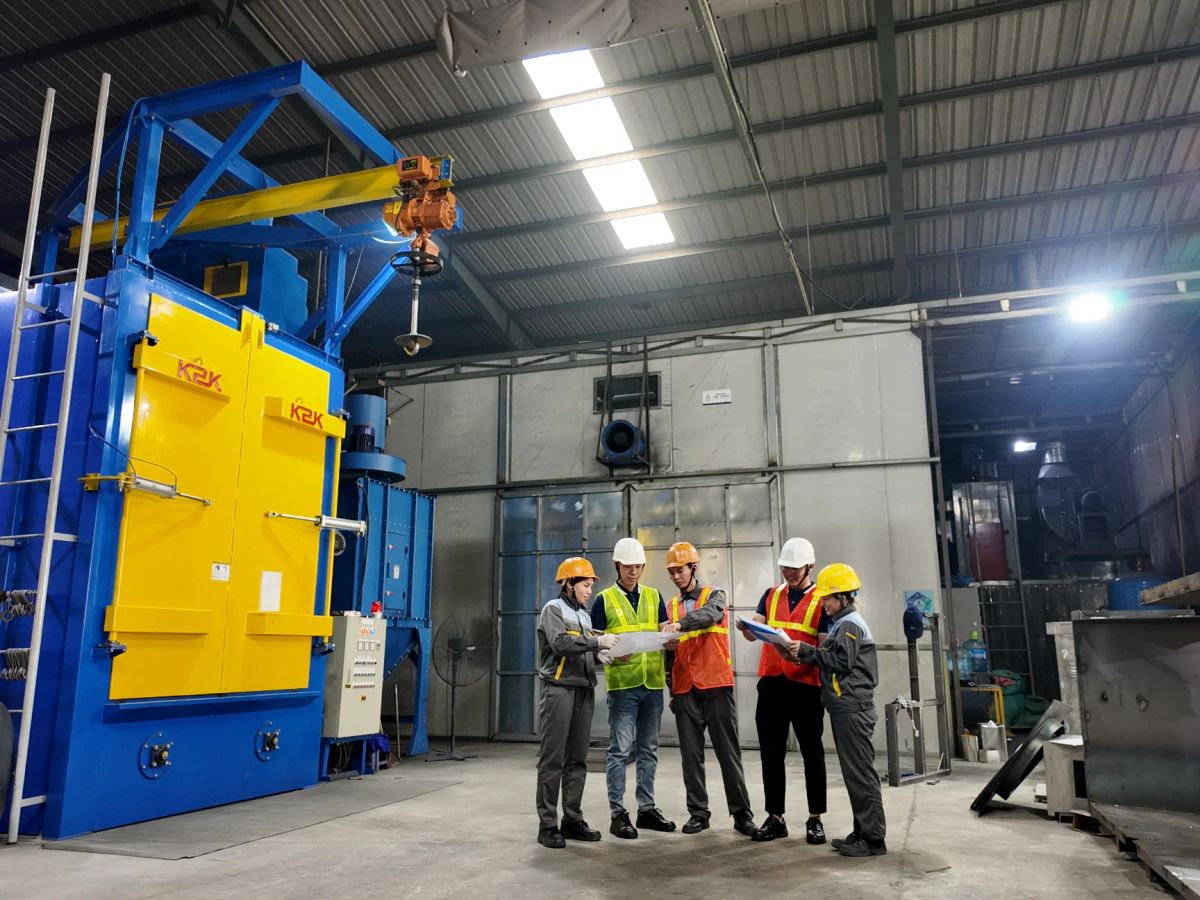
At VIMAX GLOBAL, we transform your air movement requirements from initial concepts into fully realized, high-performance industrial fan systems. Our approach is built on precision, collaboration, and a deep understanding of industrial applications. We don’t just build fans; we engineer solutions tailored to your specific operational challenges.
The Engineering and Design Process of Industrial Fan
From Concept to Custom-Engineered Solutions
Every project begins with a thorough consultation to understand your unique needs. Whether you require a standard configuration or a completely bespoke design, our team works closely with you to define performance parameters, environmental conditions, and integration requirements. This collaborative process ensures that the final product is perfectly suited for its intended application, whether it’s for dust collection systems or specialized process ventilation.
Leveraging FEM and CFD for Performance
To guarantee optimal performance and structural integrity, we employ advanced engineering tools. Finite Element Analysis (FEM) allows us to predict and analyze the structural behavior of fan components under various loads, ensuring durability and reliability. Computational Fluid Dynamics (CFD) simulations enable us to study airflow patterns and aerodynamic performance virtually. This means we can test multiple design iterations and optimize efficiency before any physical prototypes are created. This rigorous simulation process is key to developing solutions that meet demanding industrial standards and are ready for export.
Rigorous Testing for Verified Performance
Our commitment to quality extends to our state-of-the-art testing facilities. Each fan undergoes comprehensive testing to verify its performance against the specified design parameters. We conduct tests for airflow, pressure, noise levels, and vibration to confirm that our products meet or exceed international quality benchmarks. This meticulous testing phase is critical for providing you with reliable, high-quality industrial fans that perform consistently in harsh environments. We invite you to inquire about our manufacturing process and how we can partner on your next project.
Partnering for Advanced Air Solutions
When standard solutions don’t quite fit, collaboration becomes key. At VIMAX GLOBAL, we see ourselves as more than just a supplier; we aim to be a true partner in developing the most effective air movement systems for your specific industrial needs. This means working closely with your engineering teams from the ground up, understanding the unique pressures, temperatures, and material requirements of your operation.
Collaborative Development for Specific Needs
We pride ourselves on our ability to create custom-engineered solutions. This isn’t just about tweaking existing designs; it’s about a deep dive into your process to engineer a fan that performs optimally. Our process often involves:
- Initial Consultation: Discussing your project’s goals, operational environment, and any specific challenges.
- Design & Simulation: Utilizing tools like Finite Element Analysis (FEM) for structural integrity and Computational Fluid Dynamics (CFD) for aerodynamic performance to create and refine designs.
- Prototyping & Testing: Building and rigorously testing prototypes in our advanced facility to validate performance against your requirements.
- Manufacturing & Delivery: Producing high-quality, export-ready fans built to last.
Global Standards in Manufacturing Excellence
Our commitment to quality is unwavering. Every fan we produce adheres to strict international manufacturing standards. This ensures that whether your project is domestic or international, you receive a product that is reliable, durable, and built for demanding industrial use. We understand the importance of consistency and performance, especially in critical applications. For example, our industrial centrifugal fans are designed for high-efficiency air circulation in tough settings.
Comprehensive Support Throughout the Lifecycle
Our partnership doesn’t end when the fan is delivered. We offer ongoing support to help you maintain peak performance and longevity. This can include:
- Installation Guidance: Providing clear instructions or on-site assistance.
- Maintenance Recommendations: Offering best practices for upkeep.
- Troubleshooting: Assisting with any operational issues that may arise.
We believe that a strong partnership is built on trust and continuous support. If you have a challenging air movement project or are looking for a reliable manufacturing partner with global reach, we encourage you to reach out and discuss your needs with our team.
Sustainability in Industrial Air Movement
In today’s industrial landscape, efficiency and environmental responsibility go hand-in-hand. At VIMAX GLOBAL, we recognize that robust ventilation isn’t just about moving air; it’s about doing so in a way that minimizes energy consumption and environmental impact. Our commitment to sustainability is built into every fan we design and manufacture, from initial concept to final export. We aim to help our clients meet their operational goals while also achieving their green targets. We engineer solutions that are built to last, reducing waste and the need for frequent replacements.
Reducing Environmental Impact Through Design
Our approach to sustainable fan design focuses on several key areas:
- Material Selection: We prioritize durable, recyclable materials that can withstand harsh industrial conditions, extending the lifespan of our equipment and reducing landfill waste. For specific corrosive environments, consider solutions like those offered by Plasticair Environmental.
- Aerodynamic Efficiency: Through advanced computational fluid dynamics (CFD) simulations and rigorous testing, we optimize blade designs and housing configurations to move the maximum amount of air with the least amount of energy.
- Motor Technology: We integrate high-efficiency motors that consume less power, directly translating to lower operational costs and a reduced carbon footprint for your facility.
Achieving Green Goals with Efficient Systems
Implementing an energy-efficient industrial fan is a direct pathway to meeting environmental regulations and corporate sustainability objectives. Our fans are designed to offer:
- Lower Energy Consumption: Compared to standard models, our high-efficiency units can reduce electricity usage by a significant margin, often between 15-30% depending on the application.
- Reduced Emissions: By consuming less energy, our fans indirectly contribute to lower greenhouse gas emissions associated with power generation.
- Extended Equipment Life: Durable construction means less frequent replacement, minimizing the environmental impact associated with manufacturing and disposal.
Innovating for a Sustainable Industrial Future
We are continuously exploring new materials and design methodologies to further improve the sustainability of our industrial air movement solutions. This includes research into:
- Advanced composite materials for lighter, stronger fan components.
- Smart control systems that optimize fan operation based on real-time demand.
- Closed-loop manufacturing processes to minimize waste.
We believe that industrial progress and environmental stewardship can, and must, coexist. If you’re looking for ventilation partners who share this vision and can provide export-ready, high-quality solutions, we encourage you to reach out and discuss your project needs.
Making industrial air movement better for the planet is a big deal. We focus on creating systems that use less energy and last longer, which helps businesses save money and reduce their environmental footprint. It’s all about smart design and using the right materials to make a difference. Want to learn how we’re leading the way in clean air solutions? Visit our website today to see our latest innovations!
Moving Forward with Industrial Air Solutions
So, we’ve looked at what makes an industrial fan tick and why they’re so important for keeping workplaces running smoothly. It’s not just about moving air; it’s about creating the right conditions for safety, productivity, and even product quality. When you’re looking for these kinds of heavy-duty solutions, it really pays to work with a manufacturer that understands the details and can offer reliable, well-made equipment. Finding the right partner means you get systems that perform well and last, which is good for your operations and your bottom line. We hope this overview helps you make informed choices for your ventilation needs.
Read more: How Much Are Industrial Fans? A Comprehensive Cost Guide
