


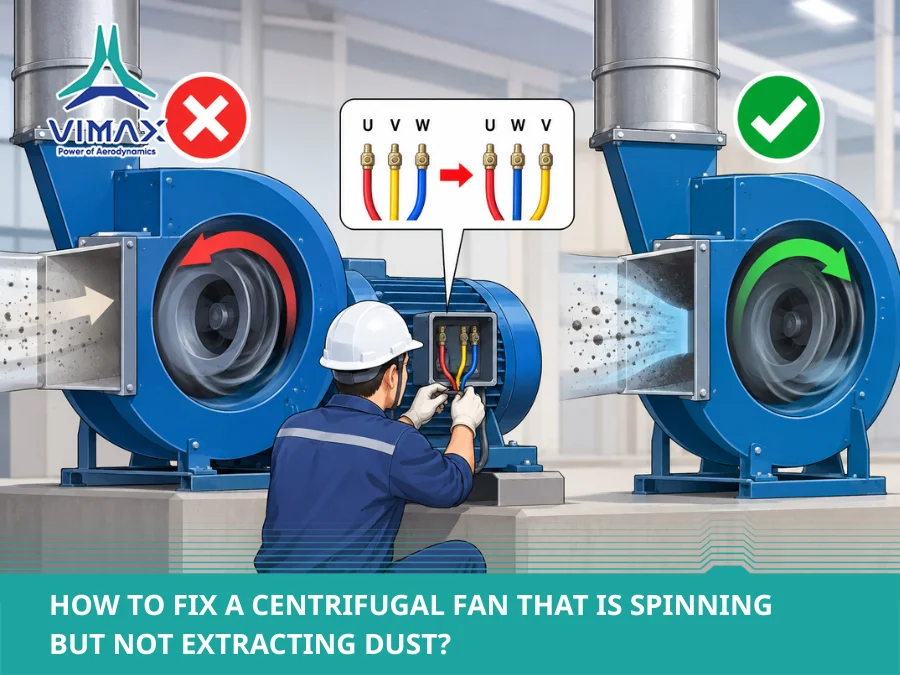
Centrifugal fans are the heart of any factory dust extraction system. When this system fails, all fine dust, wood shavings, or hazardous airborne particles remain uncollected. This leads to workspace pollution and directly threatens workers’ health. One of the most common yet confusing issues for operators is when the centrifugal fan keeps running and the motor hums as usual, but the suction pressure at the hoods drops to zero.
Many people mistakenly assume that as long as the motor is running, the fan must be drawing air. In reality, a spinning motor does not guarantee that the fan blades are generating the correct technical airflow and static pressure. This article provides an in-depth analysis of the technical root causes and offers a step-by-step troubleshooting guide for a centrifugal fan that spins but fails to extract dust.
How to test if a centrifugal fan is actually drawing air in 3 minutes
Before dismantling heavy mechanical parts or ductwork, operators can use a quick, simple trick to check the airflow status of the system:
Place a thin piece of paper (such as an A4 sheet or newspaper) directly in front of the suction hood inlet.
- If the paper is pulled tightly against the hood: The fan still maintains suction. The dust extraction failure may be due to the hood being placed too far from the dust source, or an insufficient design airflow rate.
- If the paper remains completely still or is pushed away from the hood: The system has lost negative pressure entirely. The fan is either running with zero workload or the airflow is trapped in an internal loop.
Once you confirm a total loss of suction, proceed to investigate the following 4 critical technical causes.
Read more: 6 Questions Businesses Must Prepare Before Requesting a Dust & Air Filtration System Quotation
4 Critical causes of a spinning centrifugal fan with zero suction and how to fix them
Incorrect motor phase wiring causing reverse fan rotation
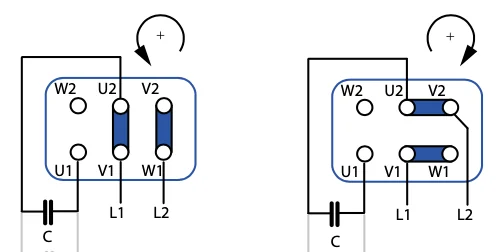
This classic error accounts for over 50% of suction failures following factory electrical repairs, control panel upgrades, or fan relocations. Due to the specific blade design of centrifugal fans (especially forward-curved or paddle-wheel types), a fan spinning in reverse will still move a tiny amount of air. However, its pressure and airflow capacity drop by 70% to 80%. This leaves it unable to overcome duct resistance and pull dust particles through.
- How to fix: Shut off the main power supply. Swap any two of the three power phase wires inside the motor terminal box (for 3-phase power systems). Restart the fan and verify that the impeller rotates in the direction of the arrow sticker placed on the fan housing (volute).
Total drive belt slippage or fractured pulley keyways
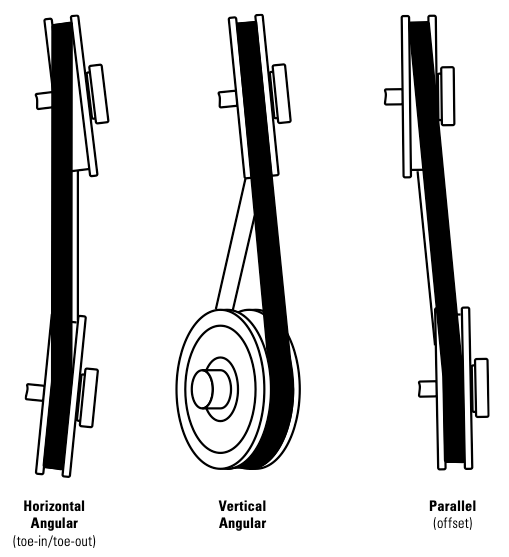
For indirect-drive centrifugal fans connected via belts, cases where the outer components spin while the internal fan remains idle are quite common. Operators looking from a distance see the motor shaft or bearing block spinning rapidly and assume the fan is working fine. However, if the drive belt is loose or snapped, zero rotational force transfers from the motor to the fan shaft. Another complex issue is a fractured or worn keyway (parallel key) connecting the pulley to the shaft. This allows the pulley to spin freely around the shaft while the internal impeller stands completely still.
- How to fix: Turn off the machine and remove the belt guard. Check the belt tension. If the belts are stretched or frayed, replace them and adjust the motor base to restore proper tension. If the belts are intact, gently rock the impeller by hand to check for a loose or broken shaft keyway and replace it if necessary.
Total ductwork blockage from heavy dust accumulation
Over long periods of operation, moisture-laden dust (such as green wood dust, paint mist, or sticky chemical residues) accumulates along the inner duct walls. Over time, this dust layer thickens into a solid mass that completely chokes the duct cross-section. This issue is most severe at 90-degree elbows, Y-junctions, or long horizontal duct runs. Once the ductwork is blocked, the fan cannot draw air from the hoods, halting all airflow.
- How to fix: Inspect the duct run by tapping gently along the exterior walls to locate sections producing a dull, heavy thud—a clear sign of thick dust buildup. Open the pre-designed clean-out doors on the ducts to scrape out and clear the blockage. If the system lacks clean-out doors, you must disconnect the flanged joints or elbows to clean inside the pipe.
Severe system air leaks or excessive inlet cone clearance
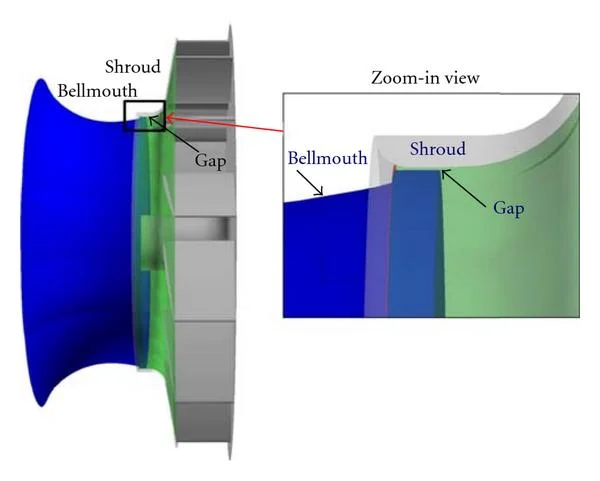
A deeper technical cause of lost suction is the drop in negative pressure before the airflow even reaches the collection hoods. This occurs when duct joints break open, or when the discharge gates of a Cyclone separator or the airlocks of a fabric baghouse filter leak air. External air gets sucked into these openings because they are closer to the fan, completely wiping out suction at distant hoods. Additionally, if a mechanic reassembles the fan after a repair and leaves too wide a gap between the inlet cone and the impeller inlet shroud, the air will recirculate internally within the fan housing instead of being forced down the discharge duct.
- How to fix: Use smoke testing or visual inspection to locate and seal holes and leaks along the ductwork. Check and tightly seal the dust discharge valves at the bottom of the Cyclone. For impeller clearance, readjust the shaft bearing blocks until the radial gap matches the manufacturer’s specification (typically less than 1% of the impeller diameter).
A critical mistake in operating centrifugal dust collection systems
Aside from mechanical and structural issues, a frequent mistake made by factory operators is neglecting to empty the dust collection bins beneath the recovery equipment (Cyclones or baghouses).
When the collected dust inside the hopper exceeds its capacity and rises to the discharge throat of the Cyclone, or blinds the fabric filter bags entirely, the backpressure within the system spikes to a maximum. At this point, the centrifugal fan enters an aerodynamic stall. The airflow can no longer penetrate the thick dust layer to escape through the exhaust stack. Consequently, the fan continues to draw electrical current and the impeller keeps spinning, but it fails to generate any suction at the inlet. Running a system in this stalled state for prolonged periods overheats the motor and eventually burns out the stator windings.
Read more: Industrial Fan Operation & Maintenance: The Ultimate Guide to Maximizing Lifespan and Efficiency
5-Step preventive maintenance checklist to prevent suction failure
To keep your centrifugal dust extraction system running reliably and avoid factory production downtime, VIMAX GLOBAL advises your maintenance team to perform routine checks according to the following standard checklist:
| Inspected Items | Frequency | Standard Target Status |
| Check drive belt tension | Weekly | Belts must not sag; pressing down mid-span should yield a deflection of no more than 10-15mm. |
| Clean fan blades and inlet cone | Monthly | Impeller must be clean of caked dust, free of abrasive wear, and spin without abnormal noises. |
| Empty Cyclone / Baghouse hoppers | Daily | Clear out the dust collection bins after every work shift; do not allow dust to fill past 1/2 of the hopper volume. |
| Check ductwork airtightness | Quarterly | Flexible connections and rubber gaskets at flanged joints must be free of tears and air leaks. |
| Measure motor running current (Amps) | Monthly | Operating current should be stable and must not exceed the rated current stated on the motor nameplate. |
Troubleshooting a centrifugal fan that spins but fails to draw dust requires a holistic system analysis, ruling out causes one by one from mechanical drive transmission to duct pressure. As a leading manufacturer of industrial ventilation and filtration systems, Vimax Global emphasizes that strict adherence to electrical phase verification and routine filter maintenance remains the only way to sustain peak dust extraction efficiency for your facility.
