


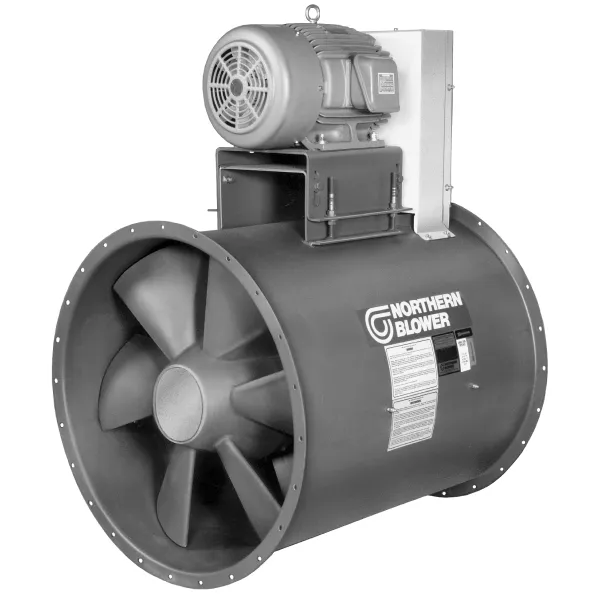
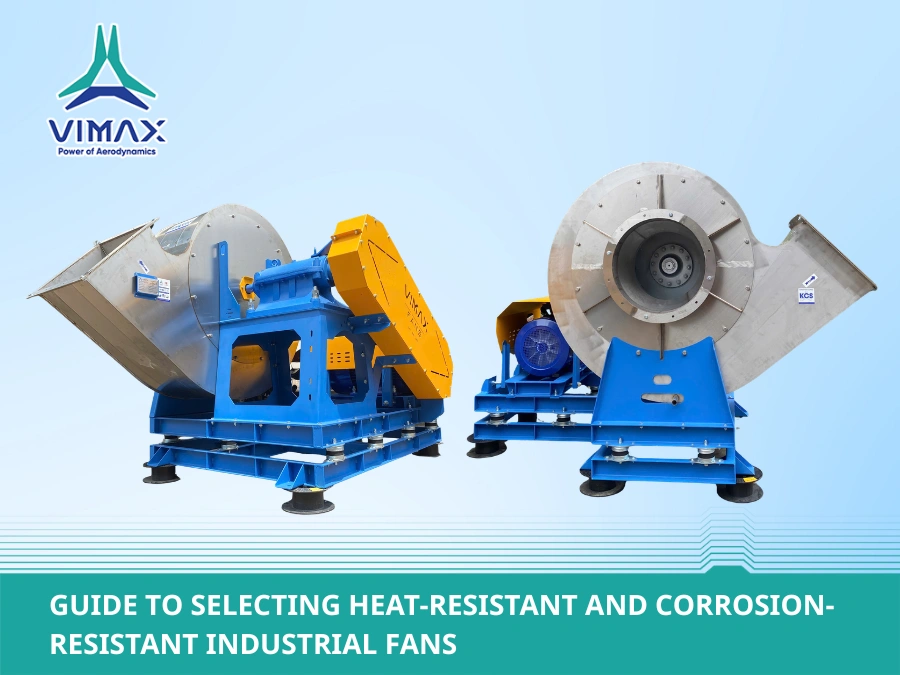
When selecting industrial fans, many businesses focus primarily on airflow, pressure, and motor power. While essential, these parameters alone cannot ensure stable operation in demanding production environments. If the airstream reaches high temperatures or contains moisture, acids, alkalis, salts, solvents, or reactive chemicals, the equipment may suffer from deformation, reduced durability, excessive vibration, or sudden failure.
A proper design must simultaneously account for airstream temperature, ambient temperature, chemical composition, humidity, abrasive dust, operating hours, and the positioning of the motor, bearings, and shaft seals. In other words, rather than simply asking“What is the fan’s capacity?”, you must determine“What type of gas will the fan handle, at what temperature, and for how long?”
1. Common Mistakes When Selecting Industrial Fans
- Providing only average temperatures: This overlooks thermal peaks, thermal cycling, and temperature discrepancies between the airstream and the bearings or motor.
- Selecting stainless steel by habit without chemical data: 304 stainless steel, 316 stainless steel, and high-performance alloys offer different levels of corrosion resistance; real-world performance depends on concentration, temperature, chlorides, humidity, and condensation risks.
- Upgrading only the housing material: Neglecting minor components like bolts, welds, seals, gaskets, and the shaft can create weak links that become the initial point of system failure.
- Overlooking maintenance: Fans operating under thermal and corrosive stress require scheduled monitoring for vibration, bearing temperatures, coating integrity, seal tightness, and signs of wear.
2. Evaluating Temperature Before Selection
Nominal vs. Actual Operating Temperature
Technical specifications provided to the manufacturer must include more than an average value. A complete technical profile should define at least four parameters: continuous operating temperature, peak temperature, duration of peak exposure, and start/stop frequency.
For example, a fan running continuously at 180°C that occasionally handles 230°C for 20 minutes requires a completely different design from one running continuously at 230°C. Thermal exposure duration directly impacts thermal expansion, material degradation, lubricants, gaskets, and protective coatings.
Common Failures Caused by High Temperatures
High temperatures can triggerthermal creep—the slow, permanent deformation of the impeller or load-bearing components. A deformed impeller alters running clearances, disrupts dynamic balance, and generates severe vibration. Thermal expansion can also bow or crack the shaft, often leading to bearing failure before total shaft fracture.
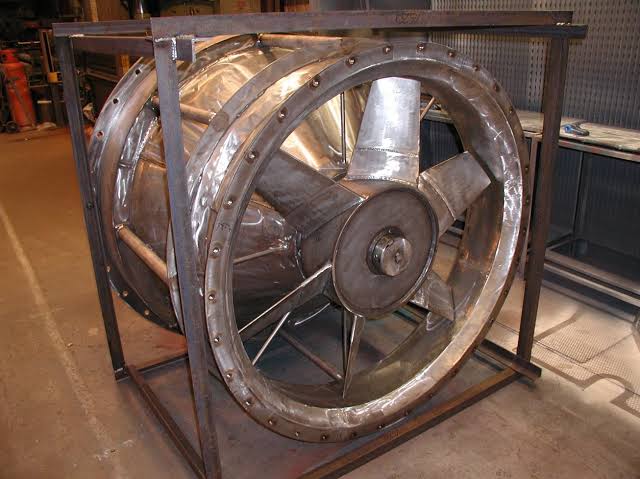
The housing must be designed with appropriate expansion clearances:
- Axial fans: Tip clearance may need to be expanded at elevated operating temperatures.
- Centrifugal fans: Clearances between the impeller and the inlet cone must be calibrated to thermal conditions.
Note: Clearances that are too tight risk blade rubbing; clearances that are too loose degrade aerodynamic efficiency.
Read more: Centrifugal Fan vs. Axial Fan: Choosing the Right Industrial Solution
Verifying Motor Limits
Under extreme conditions, the electric motor is the most vulnerable component. Verifying motor operating limits ensures long-term reliability and serves as a vital safety barrier for plant fire and explosion prevention.
- Temperature Limits & Insulation Class:
- Class F (155°C): The standard benchmark for modern industrial fans.
- Class H (180°C): Required for hotter environments or emergency fire/smoke extraction fans.
- Rule of thumb: Operating 10°C above the rated insulation limit cuts motor insulation life in half.
- Ingress Protection (IP Rating) in Corrosive Environments:
- IP55: Dust-protected and resistant to water jets; suitable for standard plant environments.
- IP65 / IP66: Essential for environments with dense chemical dust or regular washdown requirements to prevent corrosive moisture from entering the core windings.
- Starting Frequency and Duty Cycle:
- Identify whether the fan runs continuously 24/7 (S1 duty) or intermittently (S2, S3, etc.).
- Motors generate high inrush heat during startup. Frequent cycling requires high thermal capacity designs or Variable Frequency Drives (VFDs) for soft starts to prevent overheating and electrical stress.
3. How Corrosion Impacts Industrial Fans
Corrosion extends far beyond visible surface rust. In ventilation and exhaust systems, it thins impeller blades, pits surfaces, weakens structural welds, seizes mechanisms, degrades seals, and causes dynamic imbalance. When paired with elevated heat, moisture, or dust, degradation accelerates exponentially.
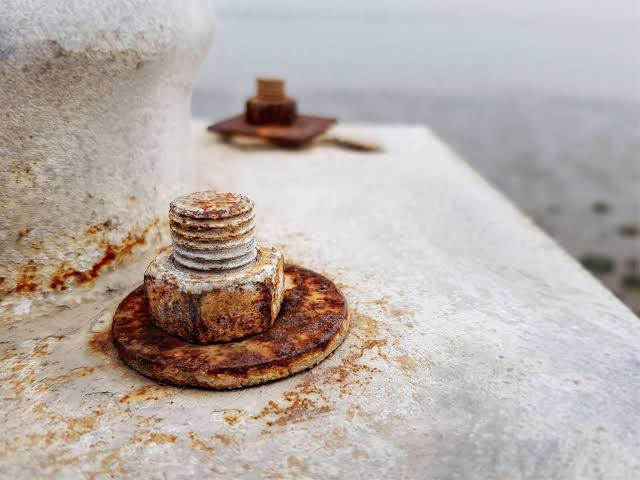
Common Corrosive Agents:
- High Humidity & Steam: Accelerates rust formation on standard carbon steel.
- Chemical Fumes & Acids: Chemical processing, fertilizer manufacturing, and pickling operations release strong acids (HCl, H_2SO_4) and alkalis.
- Marine & Coastal Atmospheres: Airborne salt carrying chlorides aggressively attacks standard metals.
- Combustion Byproducts: Flue gases containing sulfur dioxide ($SO_2$) and nitrogen oxides (NO) condense into highly corrosive acids.
Types of Corrosion in Fans:
- Uniform Corrosion: Attacks the entire surface evenly; predictable but causes severe material loss over time.
- Pitting Corrosion: Produces localized pinholes and cavities that can penetrate deep into blades before detection during visual inspections.
- Galvanic Corrosion: Occurs when dissimilar metals (e.g., aluminum and stainless steel) contact each other in the presence of an electrolyte.
- Stress Corrosion Cracking (SCC): The combined effect of tensile stress (from high-speed rotation) and a corrosive medium, causing sudden mechanical failure.
Read more: Is Industrial Fan High in Electricity Consumption? Understanding the Energy Draw
4. Material Selection Guide
| Material | Temperature Limit | Corrosion Resistance | Best Use Cases |
| Carbon Steel | Up to 750°F (399°C) | Low | Clean, dry air; dust collection; standard industrial ventilation. |
| Aluminum | Up to 300°F (149°C) | Moderate pH (Moisture resistant) | Spark-resistant applications; marine environments (marine-grade alloys). |
| 304 Stainless Steel | Up to 1200°F (649°C) | High | Food processing, chemical fume exhaust, moderate thermal applications. |
| 316 Stainless Steel | Up to 1200°F (649°C) | Very High (Chloride resistant) | Pharmaceuticals, wastewater treatment, highly acidic environments. |
| Fiberglass (FRP) | Up to 250°F (121°C) | Maximum (Chemicals) | Laboratory fume hoods, chemical plants with aggressive acid fumes. |
| Specialty Alloys (Inconel, Monel, Hastelloy) | Up to 1800°F+ (982°C+) | Extreme | Large-scale petrochemical processing, extreme-temperature incinerators. |
5. Protective Coatings and Engineering Solutions
When specialty alloys are cost-prohibitive, protective surface treatments and smart engineering features provide excellent resistance to heat and chemical attack.
Specialty Coatings:
- Epoxy Coatings: Outstanding protection against alkalis, salts, and moisture; limited to moderate temperatures.
- Phenolic Coatings: Superior resistance to acids and solvents; rated up to 300°F–400°F.
- Galvanization: Sacrificial zinc barrier protecting steel from atmospheric rust and outdoor exposure.
Engineering Design Features:
- Shaft Seals & Gas Purge Systems: Prevent hazardous or corrosive gases from leaking past the housing into external bearings or drive motors.
- Housing Drains: Humid airstreams cause condensation; a dedicated drain at the lowest point of the housing prevents corrosive liquid pools from collecting.
- Thermal Insulation Blankets: Keep the fan housing above the acid/moisture dew point, eliminating condensation-driven corrosion altogether.
Selecting high-temperature and corrosion-resistant industrial fans must begin with airstream parameters rather than nominal motor capacity. Define continuous and peak temperatures, chemical composition, moisture levels, condensation risks, abrasive particulates, operational duty, and plant safety standards. Work closely with the manufacturer to configure compatible materials, impellers, shafts, bearings, seals, drive arrangements, and insulation systems.
An engineered-to-order fan guarantees reliable uptime, minimizes unexpected downtime, and optimizes total cost of ownership.Vimax Global is your trusted partner for high-performance heat- and corrosion-resistant industrial fans. For specialized technical consultations or custom configurations tailored to your process, contact our engineering team today for guidance and a formal quotation.
Frequently Asked Questions
Is 316 stainless steel suitable for all corrosive environments?
No. While 316 stainless steel performs exceptionally well in humid, saline, and moderately chemical environments, it is not universally resistant. Chemical type, concentration, operating temperature, moisture content, and condensation risk must all be evaluated before specifying 316 SS.
At what airstream temperature is a specialized fan required?
There is no single universal threshold. A specialized configuration is required as soon as operating temperatures degrade standard impellers, shafts, bearing grease, seals, or motors. Exact limits depend on the fan model, rotational speed, metallurgy, and specific operating conditions.
Can standard fans handle hot gases for short durations?
Short durations should not be handled on assumptions alone. Peak temperature, exposure duration, thermal cycling frequency, and component ratings must be strictly analyzed and certified by the manufacturer to ensure safe operation.
Should I choose a centrifugal fan or an axial fan?
The choice depends on airflow, static pressure, system resistance, temperature, and gas composition. Centrifugal fans are generally preferred for higher pressures and extensive material customization options; axial fans excel in high-volume, lower-pressure installations. The selection should be driven by the actual operating point and process demands rather than fan type alone.
