


Industrial fans are the unsung heroes of manufacturing plants, processing facilities, and HVAC systems worldwide. When functioning optimally, they ensure precise ventilation, process cooling, and material transport. However, operational oversight or a lack of routine maintenance can quickly lead to unexpected downtime, costly repairs, and catastrophic system failures.
By implementing industry-validated industrial fan operation and maintenance protocols, facilities can extend equipment lifespans from a meager 3 to 5 years up to 15+ years of continuous service.
This comprehensive guide breaks down the core operational rules, preventative maintenance schedules, and troubleshooting strategies designed to maximize your system’s uptime.
1. Core Principles of Safe Industrial Fan Operation
Operational excellence begins long before maintenance checks. It starts with operating your heavy-duty fans within their engineering thresholds.
Respect Manufacturer Design Limits
Every industrial fan is engineered for a specific performance envelope. Never exceed the maximum design parameters specified in your manufacturer’s Installation, Operation, and Maintenance (IOM) manual. Running a fan beyond its rated maximum speed (RPM), static pressure, or temperature limits will cause immediate structural fatigue, material degradation, and aerodynamic stall.
Manage Thermal Transitions Gradually
For high-temperature applications—such as exhaust gas recirculation or kiln ventilation—sudden thermal shocks can be devastating.
- Startup: Allow the fan to warm up gradually. Introducing a cold rotor to high-temperature gas can warp the wheel or crack the housing.
- Shutdown: Never shut down a hot fan abruptly. Keep the fan rotating at a reduced speed or let the system purge cool air until the bearing and housing temperatures stabilize.
Enforce Strict Lockout/Tagout (LOTO) Protocols
Safety is paramount. Before inspecting or servicing any fan, enforce a strict Lockout/Tagout (LOTO) procedure to isolate all electrical, hydraulic, and pneumatic energy sources. Never open access doors, remove safety guards, or reach inside a housing while the wheel is spinning or capable of freewheeling.
2. The Ultimate Industrial Fan Maintenance Schedule
A proactive, tiered maintenance strategy keeps minor mechanical anomalies from escalating into catastrophic mechanical failures.
Monthly to Quarterly Tasks
1. Precision Precision Cleaning (Impeller & Housing)
Particulate buildup, dust, and grime are the primary causes of fan imbalance. Even a few ounces of unevenly distributed debris on a spinning impeller can cause massive centrifugal force imbalances. Regularly clean the fan blades, scroll housing, and motor compartments. Removing particulate accumulation can prevent airflow efficiency losses of up to 40%.
2. Drive Component Inspections
For belt-driven industrial fans, power transmission health dictates system performance:
- Tensioning: Use a specialized tension gauge to ensure V-belts are properly tensioned. Loose belts slip, generate heat, and reduce RPM, while over-tightened belts accelerate bearing wear.
- Alignment: Check pulley alignment using a straight edge or laser alignment tool. Misaligned sheaves cause rapid belt fraying and premature shaft failure.
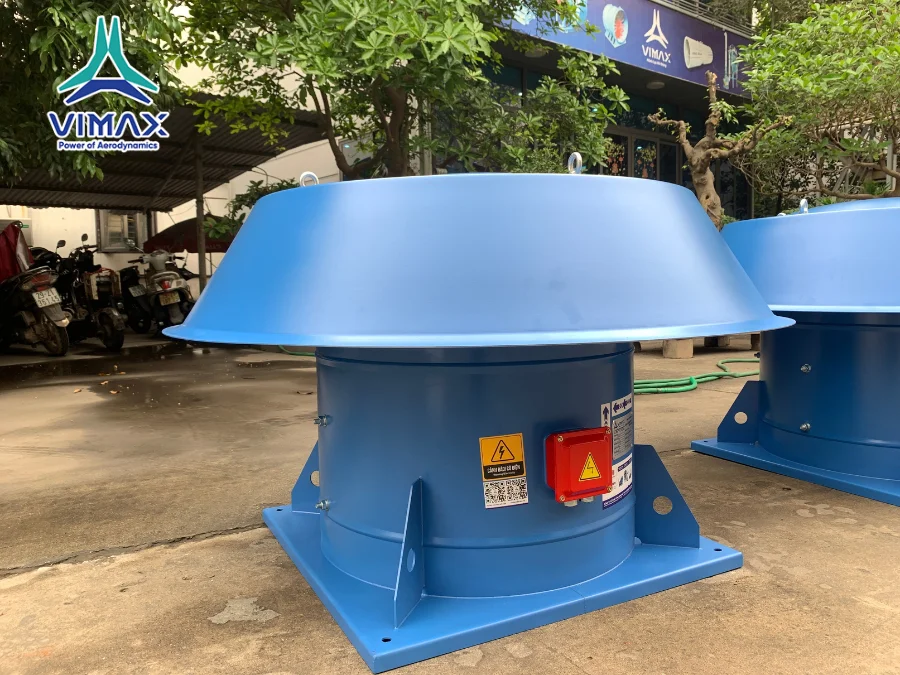
3. Fastener Audits
Industrial environments are prone to structural vibration. Inspect and retorque all foundational anchors, motor mounts, bearing bolts, and housing fasteners to the specified foot-pounds (ft-lbs) torque rating.
Semi-Annual to Annual Tasks
1. Bearings and Lubrication Management
Bearings bear the brunt of mechanical stress. Lubricate bearings according to the manufacturer’s schedule using high-grade, compatible grease.
- Caution: Avoid over-greasing. Excessive grease builds up pressure inside the bearing housing, blowing out inner seals and trapping friction-induced heat.
2. Vibration Analysis and Dynamic Balancing
Continuous vibration monitoring via casing switches or bearing sensors is highly recommended. However, a professional dynamic balance test should be scheduled annually. Vibration velocities exceeding standard ISO 10816 thresholds indicate an out-of-balance wheel, bearing degradation, or structural resonance that must be addressed immediately.
Read more: Guide to Selecting Heat-Resistant and Corrosion-Resistant Industrial Fans
3. Direct-Drive vs. Belt-Driven Industrial Fans: Maintenance Differences
Your fan’s drive configuration significantly changes its maintenance checklist:
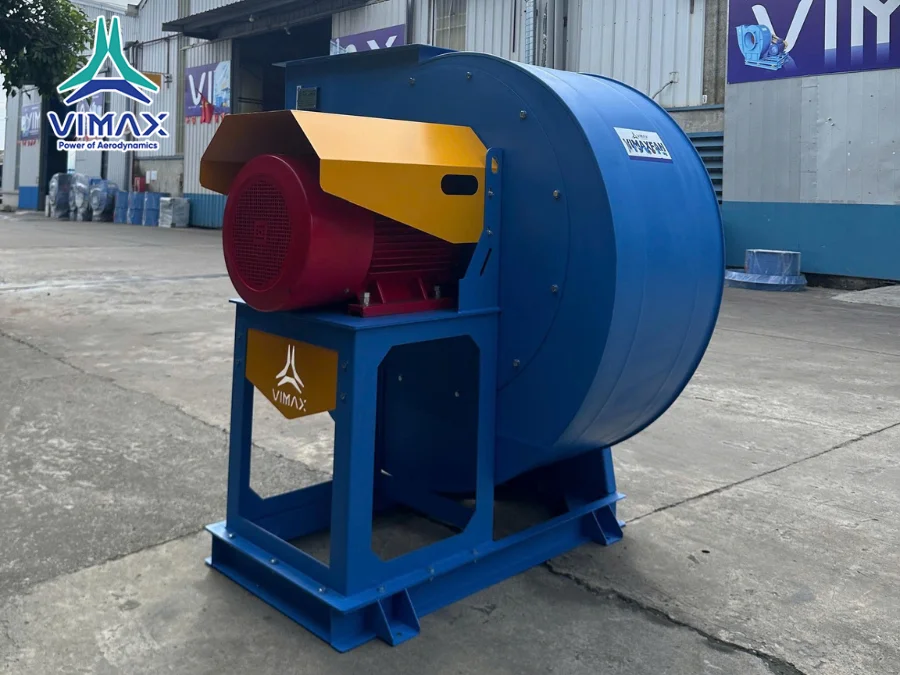
| Maintenance Metric | Belt-Driven Fans | Direct-Drive Fans |
| Component Fatigue | High (Belts stretch, pulleys wear out over time) | Low (Fewer moving parts, direct coupling) |
| Lubrication Needs | Shaft bearings + Motor bearings require separate care | Focus is heavily localized on motor bearings |
| Alignment Complexity | Sheave/pulley parallel alignment must be checked | Coupling alignment requires precise laser tools |
| Uptime Vulnerability | Belts can snap unexpectedly; requires spares on hand | Highly reliable, though motor failure halts operation |
4. Troubleshooting Common Industrial Fan Issues
If your fan begins underperforming, check for these common mechanical culprits:
- High Vibration Levels: Look for dust buildup on the impeller, a bent shaft, loose foundation bolts, or worn-out bearings.
- Excessive Noise (Squealing/Rumbling): Squealing usually indicates slipping V-belts. Low rumbling often points to structural resonance, airflow turbulence, or internal bearing wear.
- Decreased Air Performance: Verify that the impeller is rotating in the correct direction (a common issue after electrical work). Check for clogged filters, closed dampers, or excessive system resistance (static pressure) beyond design specifications.
Read more: Evaluation of Activated Carbon Air Filtration Systems: Are They Truly Effective?
Optimize Your Industrial Ventilation Strategy with Vimax Global
Don’t let improper fan maintenance disrupt your production line or drain your energy efficiency. At Vimax Global, we engineer and manufacture heavy-duty industrial fans and air filtration systems built to withstand the most demanding operational environments. Whether you need custom OEM solutions or engineering guidance on system balancing, our technical team is ready to support your facility. Contact Vimax Global Today to speak with a ventilation specialist and request a custom configuration quote!
