


In the demanding world of construction and industrial operations, concrete dust is an ever-present challenge, posing significant health risks from respirable crystalline silica and impacting operational efficiency. Choosing the right concrete dust collector is no longer just an option; it’s a critical investment in safety, compliance, and productivity.
This comprehensive guide delves into the essential technical factors, types, and best practices for selecting and utilizing the most effective concrete dust collection systems.
Key Takeaways
- Safety First: Effective dust collection is vital to protect against silica risks and ensure OSHA compliance.
- Technical Excellence: Focus on high CFM, HEPA 14 filtration, automatic cleaning, and Longopac® bagging systems.
- Tailored Solutions: Select systems based on project scale, budget, and brand reliability.
- Operational Value: Quality equipment boosts productivity, cuts maintenance costs, and extends tool lifespan.
- VIMAX GLOBAL: Your trusted provider for advanced, reliable, and safe concrete dust solutions.
1. Why Concrete Dust Collectors Are More Critical Than Ever
1.1. The Hidden Danger of Concrete Dust: Silica and Severe Health Impacts
Concrete dust is far more than just a job site nuisance; it is a significant health hazard. The primary culprit within this dust is Respirable Crystalline Silica (RCS) – a tiny particle that packs a devastating punch to the human respiratory system.
Crystalline silica is a common mineral found in materials like sand, stone, and concrete. When these materials are cut, ground, or drilled, they release clouds of extremely fine dust. These particles are often 100 times smaller than ordinary sand, making them “respirable.” This means they are small enough to bypass the body’s natural filters and settle deep within the lung tissue.
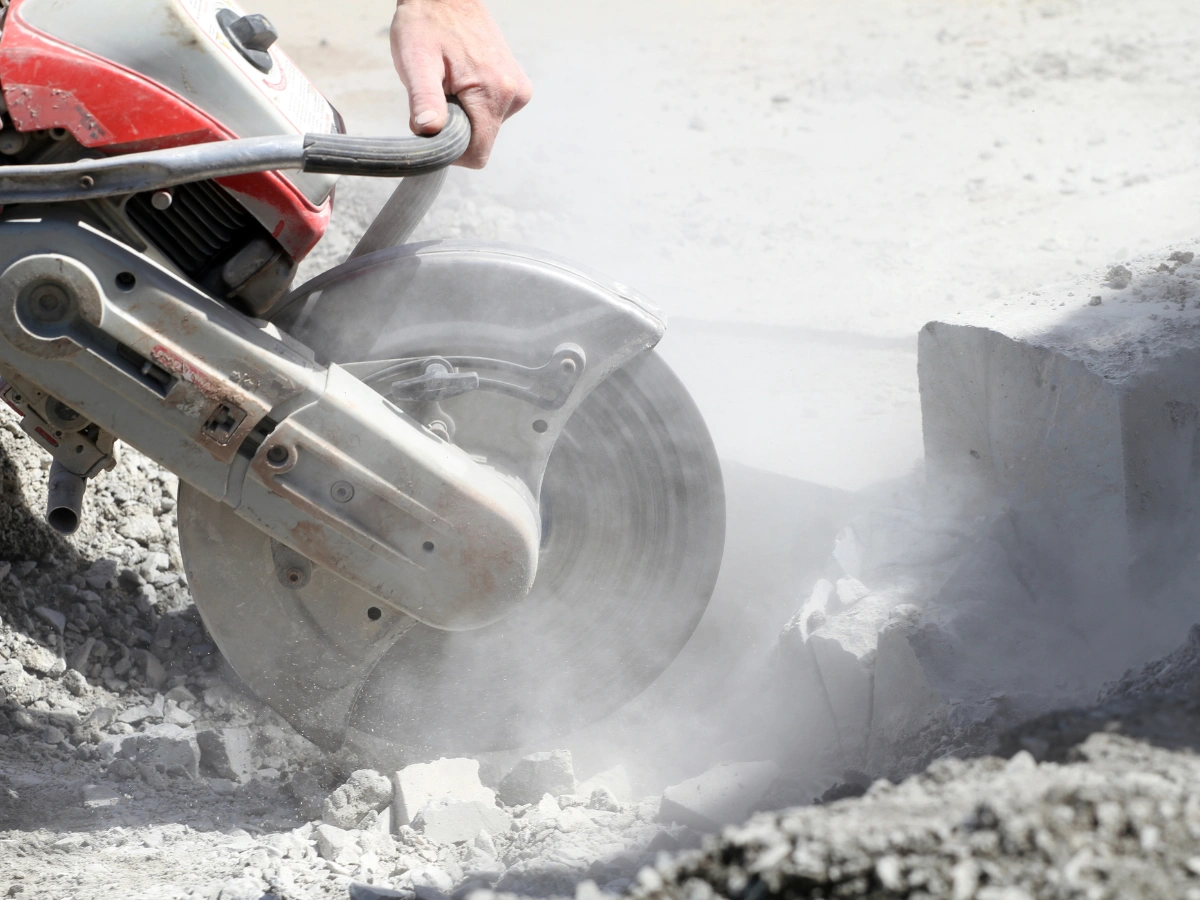
Long-term exposure to RCS is linked to several life-altering and fatal diseases:
- Silicosis: An irreversible, progressive disease where the lung tissue becomes scarred and hardened, making it increasingly difficult to breathe.
- Lung Cancer: Professional health organizations (such as IARC) classify crystalline silica as a Group 1 carcinogen.
- Chronic Obstructive Pulmonary Disease (COPD): Exposure leads to chronic bronchitis and emphysema, severely limiting airflow and physical capability.
- Kidney Disease & Immune Systems: Recent studies also link silica inhalation to chronic kidney disease and autoimmune disorders.
In the modern construction landscape, managing silica dust is not optional – it is a critical pillar of workplace safety and legal operation. Prioritizing health through dust suppression and high-efficiency particulate air filtration ensures a healthier, more productive crew and reduces long-term liability.
1.2. Regulatory Compliance: OSHA and Other Safety Standards
Adhering to safety standards is not just about checking a box; it is a legal mandate designed to prevent life-threatening illnesses. Governments worldwide have established strict frameworks to control silica exposure, with OSHA (Occupational Safety and Health Administration) leading the way in the United States.
Key Regulations for Concrete Dust Control
To protect workers, regulatory bodies have implemented specific requirements that every contractor must follow:
- Permissible Exposure Limits (PEL): OSHA’s current PEL for respirable crystalline silica is 50 micrograms per cubic meter of air (50 μg/m³), averaged over an 8-hour shift. This limit is strictly enforced to ensure that even invisible dust concentrations remain below hazardous levels.
- Table 1 Requirements: OSHA’s “Table 1” provides a clear blueprint for compliance. It matches common construction tasks (like sawing or grinding) with specific dust control methods, such as integrated water delivery systems or HEPA-filtered vacuum extraction.
- Written Exposure Control Plans: Employers are often required to maintain a written plan that describes the tasks involving silica, the engineering controls used, and the housekeeping measures in place to limit exposure.
2. Common Types of Concrete Dust Collectors
Selecting the right dust collection system is a balance between your project scale, budget, and mobility needs. Below is a breakdown of the three most common systems used in the concrete industry to help you make an informed decision.
2.1. Portable Industrial Dust Collectors
Portable units are the “workhorses” of the construction site, designed for contractors who move from one location to another.
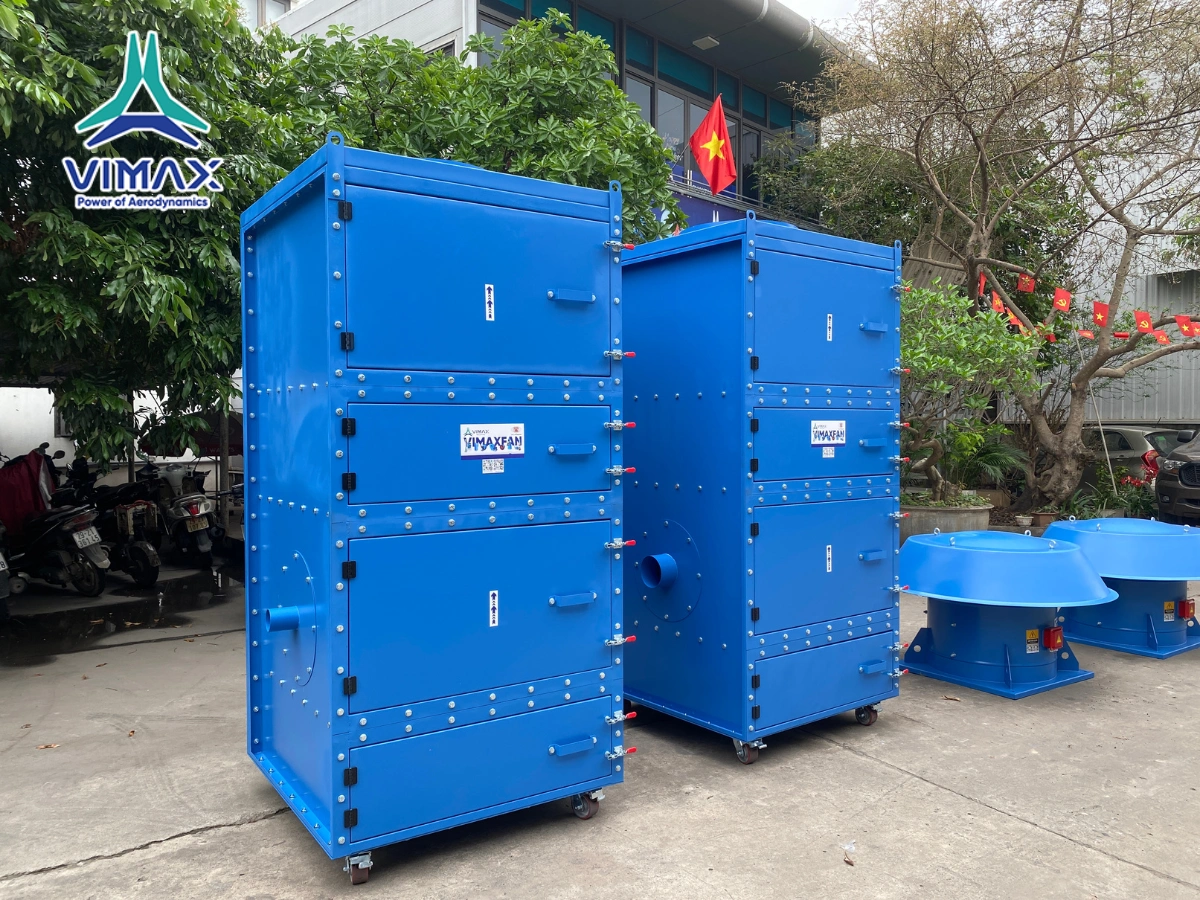
- Advantages: These units offer maximum flexibility. They are easy to transport between floors or job sites and are perfect for small to medium-sized projects like residential remodeling or floor prep.
- Disadvantages: Due to their size, they have a limited waste capacity. This means more frequent downtime for emptying bags or cleaning filters.
- Key Features to Look For: Prioritize a compact design for tight spaces, sturdy non-marking wheels for easy transport, and intuitive operation (simple on/off switches and easy-access filters).
View more: Centrifugal Dust Extractor Fan
2.2. Centralized Dust Collection Systems
For permanent facilities, a centralized system is the gold standard for air quality management.
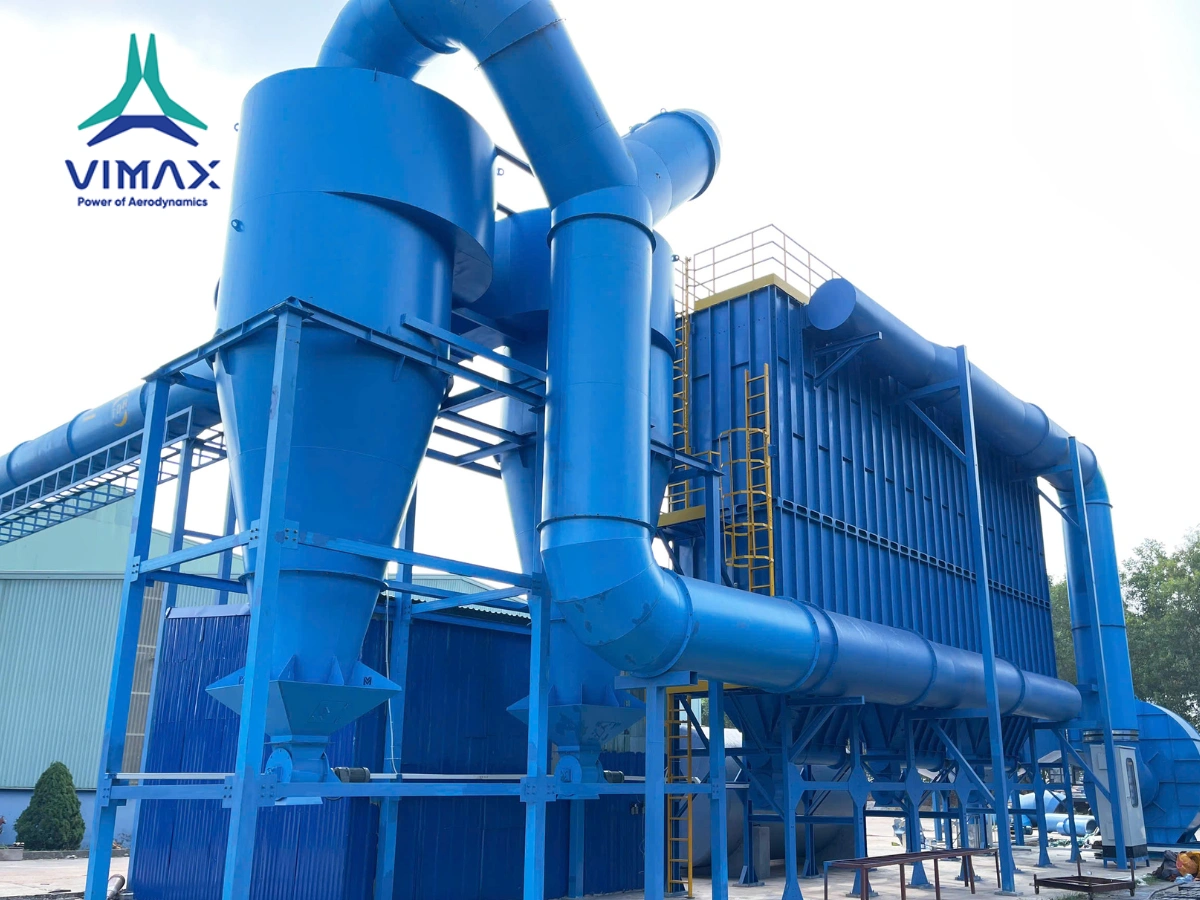
- Advantages: These systems offer massive capacity and the highest filtration efficiency. They can run continuously without the need for constant maintenance, making them ideal for high-volume environments.
- Disadvantages: The “barrier to entry” is high. They require a significant initial investment and a complex installation involving ductwork and professional electrical setup.
- When to Consider: This is the right choice for large-scale factories, pre-cast concrete plants, or facilities with multiple dust generation points that need to be managed simultaneously.
View more:Check out VIMAX GLOBAL successfully Completed Dust Collection Projects
2.3. On-tool Dust Extraction Systems
Often referred to as “Source Capture,” these systems focus on stopping dust before it ever reaches the air.
- Advantages: This is the most effective way to protect the operator. By capturing dust directly at the point of impact, it minimizes dust dispersion and keeps the workspace remarkably clean.
- Disadvantages: They are highly dependent on the tool. You may need specific shrouds or adapters for each piece of equipment, which can lead to a collection of multiple individual components.
- Best Applications: Essential for handheld power tools such as concrete grinders, masonry saws, and rotary hammers/drills.
3. Key Technical Factors for an Effective Concrete Dust Collector
To ensure a dust collector truly protects your health, complies with stringent safety regulations, and matches the rigorous demands of your job site, you must look beyond basic marketing claims. An effective concrete dust collector is a complex system where multiple technical components must work in perfect harmony. Below are the critical technical factors you need to evaluate before making an investment.
3.1. Airflow (CFM) and Static Pressure: The Power of Suction
Suction performance is the lifeblood of any dust extraction system, and it is defined by two primary metrics that must be considered together: Airflow and Static Pressure.
Airflow (CFM – Cubic Feet per Minute) measures the volume of air moving through the machine at any given time. Higher CFM is essential for capturing dust over a larger surface area or when operating larger tools. As a general rule of thumb, the Occupational Safety and Health Administration (OSHA) requires a minimum of 25 CFM per inch of grinder blade diameter. Therefore, small hand grinders usually require 100–150 CFM, while large planetary floor grinders may demand 300–600 CFM or more to effectively manage the massive volume of particulates generated.
Static Pressure (Water Lift), on the other hand, measures the sheer strength of the suction. It represents the machine’s ability to lift heavy concrete dust and overcome the resistance created by long hoses, bends, or partially clogged filters.
A common mistake is purchasing a machine based solely on a high CFM rating while ignoring static pressure. A high CFM machine with low static pressure will experience a drastic drop in performance as soon as the filter gets slightly dirty or when a long hose is attached. Always choose a unit that maintains a stable balance between volume and lift to ensure consistent performance under heavy load.
3.2. Filtration System: HEPA 14 as the Gold Standard
Not all filters are created equal, and when dealing with hazardous respirable crystalline silica (RCS), standard “shop vac” filters are dangerously insufficient. The filtration system is your primary defense against microscopic particles that can cause severe lung diseases.
Comparison of Filtration Classes:
- M-Class/H-Class: These are European standards designed for medium to high-risk dust environments. While effective, they are often a baseline rather than the pinnacle of protection.
- HEPA 13: This class filters 99.95% of particles down to 0.3 microns, which is generally acceptable but leaves a small margin for error when dealing with highly concentrated silica dust.
- HEPA 14 (The Ultimate Protection): Considered the Gold Standard in the industry, HEPA 14 filters offer an exceptional 99.995% efficiency for particles as small as 0.3 µm. This ensures that even the most microscopic, deeply penetrating silica particles are securely trapped, providing maximum safety for the operator.
Effective industrial systems do not rely on the HEPA filter alone. They utilize a cyclone or pre-filter mechanism to catch 90-95% of the heavier concrete dust before it ever reaches the primary HEPA filter. This two-stage technology prevents premature clogging, maintains optimal airflow, and significantly extends the life of your expensive HEPA filters, thereby reducing long-term operating costs.
3.3. Automatic Filter Cleaning Systems
In a high-volume concrete grinding or cutting operation, a clogged filter means stopped work. Modern, high-end dust collectors solve this productivity killer with integrated automatic filter cleaning systems.
These automated systems are crucial for maintaining constant suction performance throughout the workday. They extend the filter’s lifespan and—most importantly—drastically reduce the need for the operator to open the machine and manually clean the filter. Manual cleaning is a primary source of secondary dust exposure, so automating this process is a significant safety upgrade.
3.4. Safe Dust Bagging SystemsÂ
Capturing the dust is only half the battle; disposing of it safely is equally critical. Emptying a traditional dust bin can easily create a massive “dust cloud” that negates all previous safety efforts and exposes the worker to concentrated silica.
How it Works: Industry-leading extractors utilize continuous bagging systems. This consists of a continuous, heavy-duty plastic tube (often up to 20 meters long) folded into a cassette. As dust fills the bottom section, the operator simply pulls down more plastic, uses zip-ties to seal the top of the full section and the bottom of the new section, and then cuts the bag in between the ties.
This ingenious method ensures zero direct contact with the hazardous silica dust. It makes disposal fast, hygienic, and fully compliant with strict OSHA housekeeping regulations. Furthermore, it allows for predictable disposal costs and eliminates the downtime associated with wrestling with traditional, messy garbage bags.
3.5. Power Source and Portability
Your dust extraction equipment must be as adaptable and mobile as your construction team. The physical design and power requirements dictate where and how the machine can be used.
Power Options: Depending on your typical job site, you must select the appropriate power source:
- Single-Phase (120V/240V): Ideal for smaller jobs, residential work, or when using hand tools where standard outlets are readily available.
- Three-Phase: Necessary for powering the massive suction required by large, industrial floor grinders and scarifiers.
- Propane or Battery-Powered: Essential for remote sites, new constructions without reliable electricity, or outdoor applications where trailing cords are a hazard.
A dust collector is often moved across rough terrain, up ramps, and through tight spaces. Look for machines featuring large, puncture-proof, non-marking wheels. Balanced lift points or forklift eyes are crucial for safely hoisting the unit onto multi-story projects. Finally, a compact footprint ensures the machine can fit through standard commercial doorways or be easily transported in a standard work van.
4. Guide to Choosing the Right Concrete Dust CollectorÂ
Investing in a dust collector is investing in your business’s future. To ensure you don’t overspend on a system that underperforms, or underspend on one that puts your health at risk, follow this comprehensive buying guide.
4.1. Assess Project Scale and Type
The nature of your work dictates the size and power of the machine you need:
- Residential & Small Projects: For minor repairs or home renovations, a compact, single-phase portable unit is usually sufficient for handheld tools.
- Industrial Floors & Large Workshops: Large-scale grinding or polishing projects require heavy-duty, three-phase extractors that can handle high volumes of dust continuously for hours.
- Application Specifics: Match your machine to the task. Cutting and grinding produce fine, airborne dust (requiring high CFM), while demolition might produce larger debris (requiring high static pressure).
4.2. Budget and Operating Costs: Look Beyond the Price Tag
A “cheap” vacuum often becomes expensive very quickly.
- Initial Investment vs. Long-term Costs: Consider the price of replacement filters and bagging systems. A high-quality machine with an efficient pre-separator will save you thousands by extending the life of your HEPA filters.
- Energy Consumption: More efficient motors reduce energy bills and prevent tripped breakers on-site.
- ROI (Return on Investment): Investing in a premium system pays for itself by reducing labor downtime (less cleaning), avoiding OSHA fines, and protecting your team’s long-term health.
4.3. Brand and After-Sales Service
In the industrial world, reliability is everything.
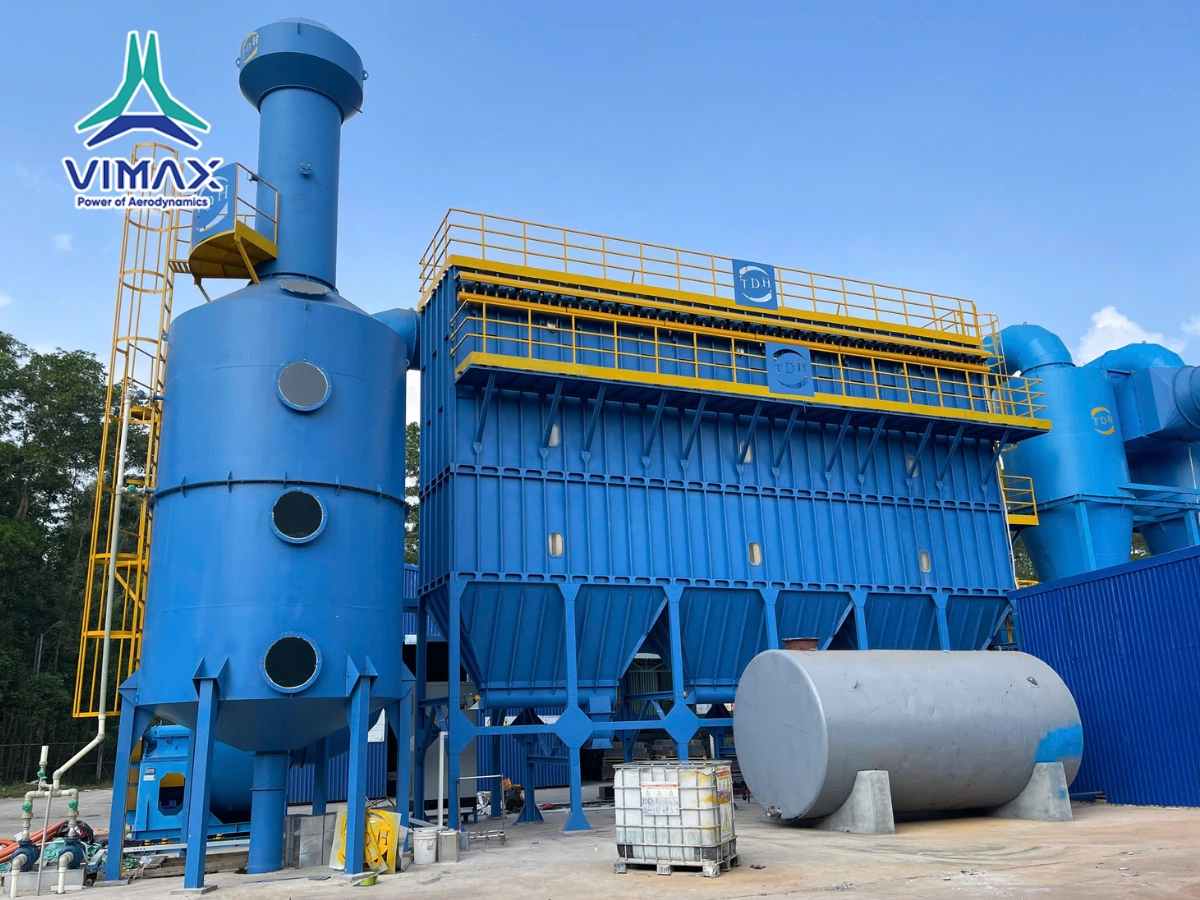
- Reputable Brands: Look for established names like Husqvarna, Depureco, VIMAX GLOBAL. These brands are known for durability and compliance with global safety standards.
- The Importance of Support: Ensure the manufacturer or distributor offers a solid warranty, readily available spare parts (filters, hoses, gaskets), and responsive technical support. Downtime while waiting for a part is lost profit.
4.4. Understanding Technical Specifications: Avoiding Common Mistakes
Many buyers fall into “marketing traps.” Here’s how to avoid them:
- The CFM Trap: Don’t look at CFM alone. High CFM without sufficient static pressure means the suction will drop as soon as the hose gets long or the filter gets slightly dusty. Always check for a balance of both.
- “HEPA-Type” vs. True HEPA: Be careful of filters labeled “HEPA-like” or “99% efficiency.” For silica dust, you must insist on True HEPA (H13 or H14) certification to ensure 99.97% to 99.995% filtration.
- Under-powering: Using a small vacuum for a large floor grinder will burn out the motor and leave the air thick with hazardous dust. Always match the extractor’s CFM to the tool manufacturer’s recommendation.
Conclusion: Investing in Health and Efficiency with VIMAX GLOBAL
VIMAX GLOBAL is a leading expert in industrial air filtration and dust collection solutions in Vietnam. We are proud to be a trusted partner of contractors and manufacturers worldwide, providing high-performance equipment that meets stringent safety standards.
What sets us apart is our commitment to superior value. We understand that superior safety doesn’t necessarily come at a high price. By optimizing our supply chain and focusing on durable, VIMAX GLOBAL offers professional concrete dust collection equipment at competitive prices.
Ready to elevate your dust management strategy and protect your team with the best in class? Explore our comprehensive range of product and discover how VIMAX GLOBAL can empower your projects with unmatched safety and efficiency.Â
Explore more: Cement Dust Collection System by VIMAX GLOBAL
FAQ About Concrete Dust Collectors
Is concrete dust really dangerous?
Yes, absolutely. The most hazardous component is Respirable Crystalline Silica (RCS). These microscopic particles penetrate deep into the lungs, leading to incurable conditions such as silicosis, lung cancer, and COPD. It is often called a “silent killer” because symptoms may not appear until years after exposure.
Do I need a HEPA dust collector for concrete dust?
It is absolutely essential. Standard filters cannot trap the ultrafine silica particles that do the most damage. Using a HEPA 14 filter—the gold standard—ensures that 99.995% of particles as small as 0.3 microns are captured, keeping your breathing air safe and compliant with health regulations.
What is CFM and how much CFM do I need?
CFM (Cubic Feet per Minute) measures the volume of airflow. The amount you need depends on the size of your tool. A common industry rule of thumb for concrete grinding is 25 CFM for every 1 inch of blade/shroud diameter. For example, a 7-inch hand grinder would typically require at least 175 CFM for effective dust extraction.
Can I use a regular shop-vac for concrete dust?
No, it is not recommended. Standard household or shop-vacs lack the high-efficiency filtration (HEPA) required to trap silica dust. Instead of capturing the dust, they often exhaust the finest, most dangerous particles back into the air. Additionally, they lack “pulse” cleaning systems, causing them to clog and lose suction almost immediately.
How much does an industrial concrete dust collector cost?
Prices vary widely based on capacity and technology. Portable units may range from $800 to $3,000, while heavy-duty industrial systems for large grinders can cost between $5,000 and over $15,000. When budgeting, consider the long-term ROI: a high-quality unit reduces filter replacement costs and prevents expensive legal fines.
If you are looking for a balance between high-end performance and budget, Vimax Global offers an ideal solution. By optimizing supply chains and focusing on high-ROI technology, Vimax Global provides professional-grade dust collectors at highly competitive prices. Contact us now for technical advice.
Does a concrete dust collector require frequent maintenance?
Yes. To maintain peak performance, you must perform regular maintenance, including:
- Inspecting hoses for leaks or blockages.
- Replacing dust filters according to the manufacturer’s schedule.
- Ensuring the automatic filter cleaning system is functioning correctly.
- Proper maintenance not only protects your health but also significantly extends the lifespan of the machine.
