


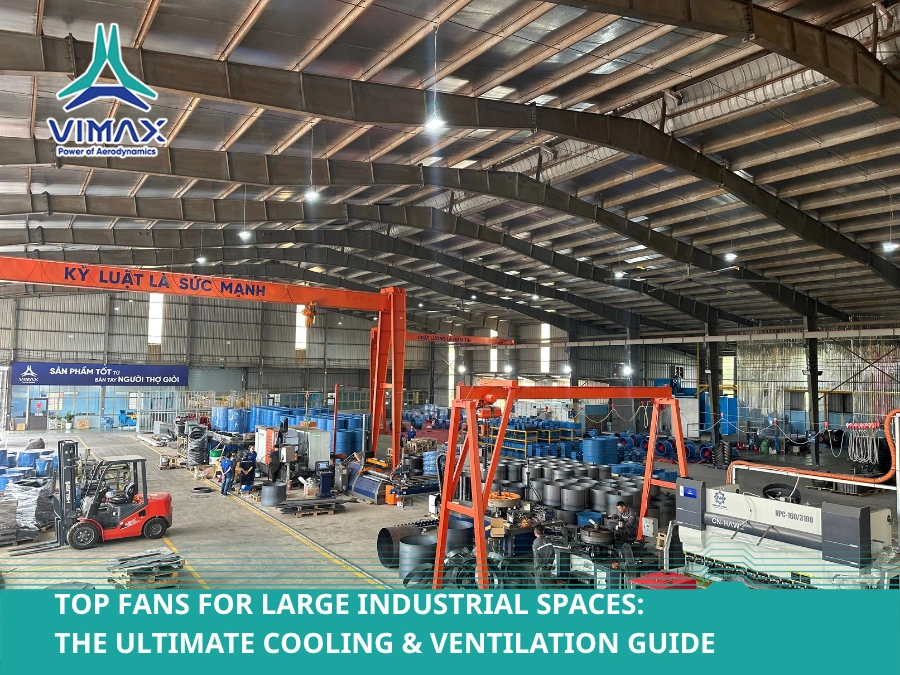
Choosing the right industrial fan is critical to maintaining a comfortable, productive, and cost-effective environment in large spaces like warehouses, barns, and commercial venues. Upgrading to High-Volume, Low-Speed (HVLS) technology or heavy-duty air circulators ensures maximum coverage while drastically cutting cooling expenses.
Comparison of Industrial Fan Types
| Fan Category | Primary Function | Airflow Characteristic | Best Application |
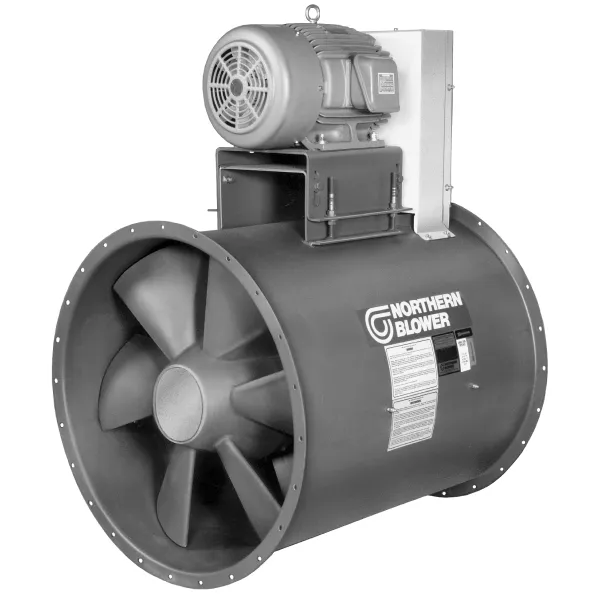
| Centrifugal / Axial (e.g., Vimax) | Fume & dust extraction | High pressure, ducted exhaust | Factories & chemical plants |
| Heavy Drum Fans (e.g., Global Industrial) | Mobile spot cooling | High velocity, concentrated stream | Loading docks & auto shops |
| Wall-Mount Circulators (e.g., TPI) | Space-saving zone cooling | High velocity, oscillating | Machine shops & assembly lines |
| HVLS Overhead (e.g., Big Ass Fans) | Large-area circulation | Low velocity, massive volume | Large warehouses & hangars |
| Jet Fans (e.g., Patterson) | Long-distance directional air | Focused, high-throw column | Narrow aisles & shipping trailers |
Types of Industrial Fans for Large Spaces
Selecting the appropriate fan type is crucial for optimizing air circulation and environmental control in industrial settings. Each category offers distinct advantages tailored to specific needs.
High-Volume, Low-Speed (HVLS) Fans
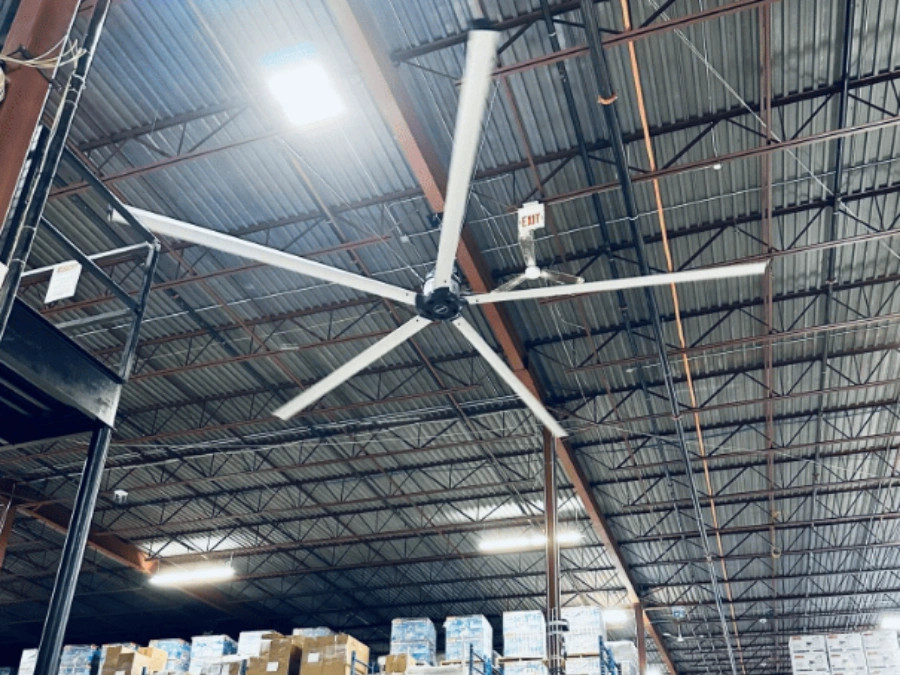
HVLS fans represent a revolutionary approach to industrial air movement. These are characterized by their exceptionally large diameters, often spanning up to 24 feet, which enable them to move an enormous volume of air at a remarkably low rotational speed, typically less than 70 RPM.
The operational principle of HVLS fans involves creating a massive, gentle column of air that descends to the floor and spreads outward in all directions. This process effectively circulates air across vast areas, reaching every corner of a large facility.
The key benefits of HVLS fans are substantial:
- Energy Efficiency: They are highly energy-efficient, capable of reducing HVAC costs by up to 40%. In winter, they perform destratification, pushing warm air from the ceiling down to the occupied zone. In summer, they create a significant wind chill effect, enhancing the effectiveness of evaporative cooling systems.
- Wide Coverage: A single HVLS fan can effectively cover tens of thousands of square feet, making them ideal for expansive open-plan facilities.
- Quiet Operation: Despite their size, HVLS fans operate quietly, typically between 40-50 dB, which is comparable to or even quieter than many office air conditioning units, ensuring minimal disruption to communication and concentration.
Ideal applications for HVLS fans include warehouses, distribution centers, manufacturing plants, gymnasiums, and agricultural facilities. They are the go-to solution for industrial ceiling fans that prioritize energy-efficient fans and destratification.
Industrial Pedestal and Floor Fans
Industrial pedestal and floor fans offer a more localized approach to air movement. These portable or semi-portable units are engineered to deliver high-velocity, targeted airflow. They function by directing powerful air streams to specific areas or individual workstations, providing immediate relief or ventilation where it’s most needed. Their key benefits include:
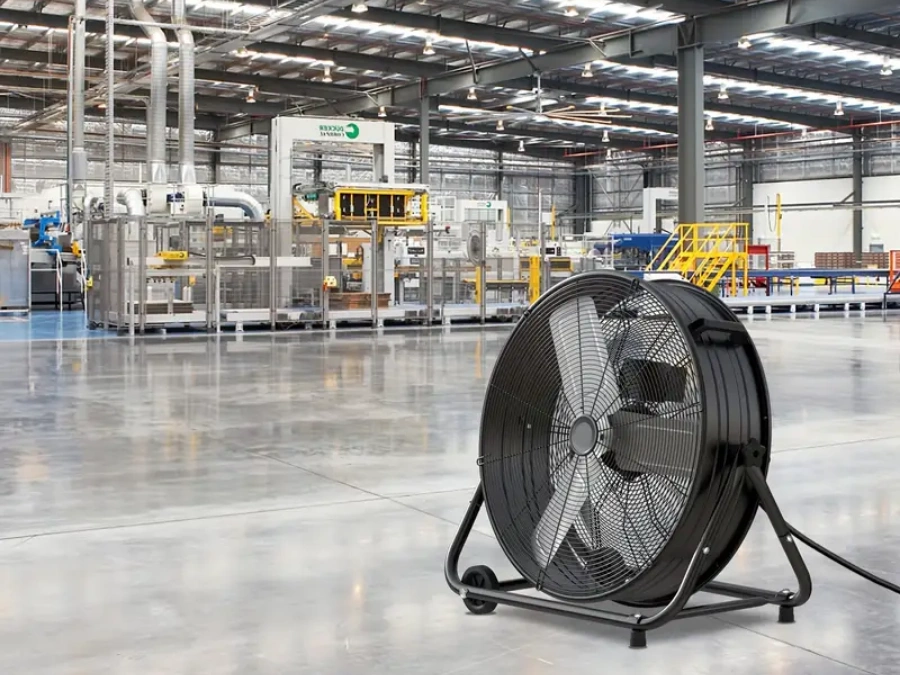
- Targeted Cooling: Highly effective for spot cooling or ventilating particular zones within a larger space.
- Portability: Their design allows for easy relocation, adapting to changing operational layouts or temporary cooling requirements.
- Cost-Effective: They represent a lower initial investment compared to larger, more complex HVLS systems, making them suitable for smaller, targeted needs.
However, they come with limitations, such as restricted coverage for vast spaces, potential for significant noise output, and generally lower energy efficiency when attempting widespread cooling. They are best suited for workstations, loading docks, and addressing temporary cooling needs, serving as effective industrial floor fans, pedestal fans, and solutions for spot cooling or portable industrial fans.
Read more: Industrial Ventilation Fan vs. Exhaust Fan: Ultimate Airflow Strategy for Factories and Warehouses
Other Specialized Industrial Fans
Beyond HVLS and pedestal fans, several other specialized industrial fan types cater to unique ventilation requirements:
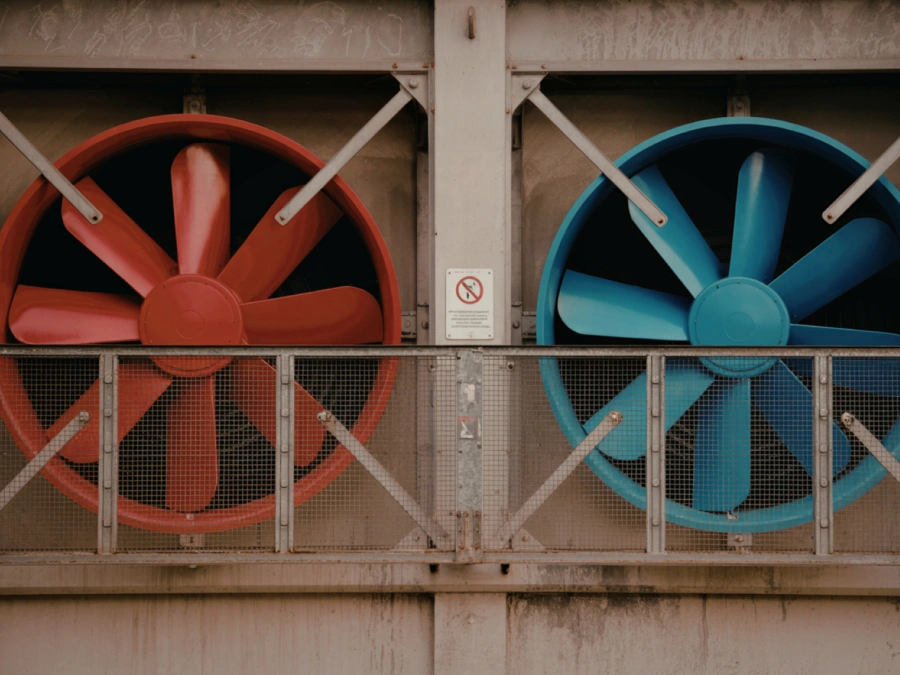
- Duct Fans/Inline Fans: Integrated into ductwork systems, these fans are crucial for exhausting fumes, maintaining negative pressure, or introducing fresh air into specific zones.
- Exhaust Fans: Designed to remove stale air, excess heat, or airborne contaminants from a space, improving overall air quality and safety.
- Wall-Mounted Fans: Offer elevated, fixed-point air circulation, ideal for areas where floor space is limited or overhead obstructions prevent ceiling fan installation.
- Weather-Resistant Fans: Specifically constructed to withstand outdoor elements, making them perfect for applications like loading docks or outdoor work areas.
These categories address specific needs, from industrial exhaust fans and ventilation fans to wall-mounted industrial fans.
Top Fan Models and Brands for Large Spaces
To help you decide, we have gathered a list of the industry’s leading fan models and manufacturers renowned for their durability, airflow, and energy efficiency.
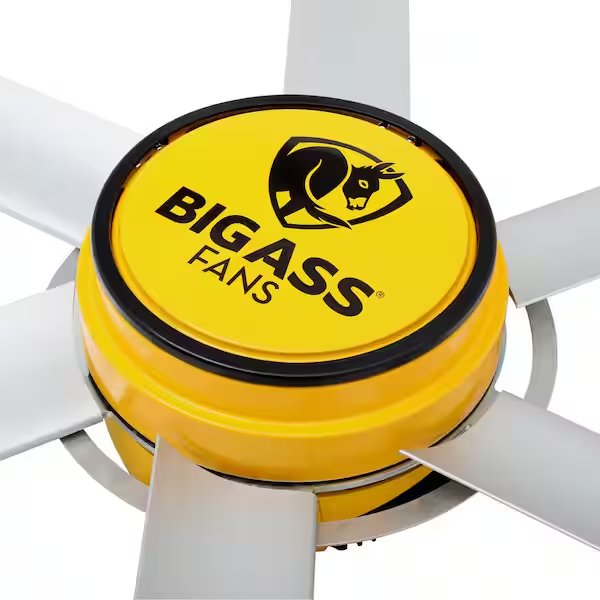
1. Big Ass Fans E-Series
Known as an industry staple, the Big Ass Fans E-Series is a premier choice for indoor spaces up to 2000+ square feet.
- Key Features: Features a high-efficiency, sensorless direct-drive motor that operates virtually silently (under 35 dBA). The 7-foot airfoil span circulates as much air as up to 29 standard residential ceiling fans.
- Best For: Garages, indoor workshops, and commercial open-concept spaces.
2. Vimax Global Industrial Ventilation Systems
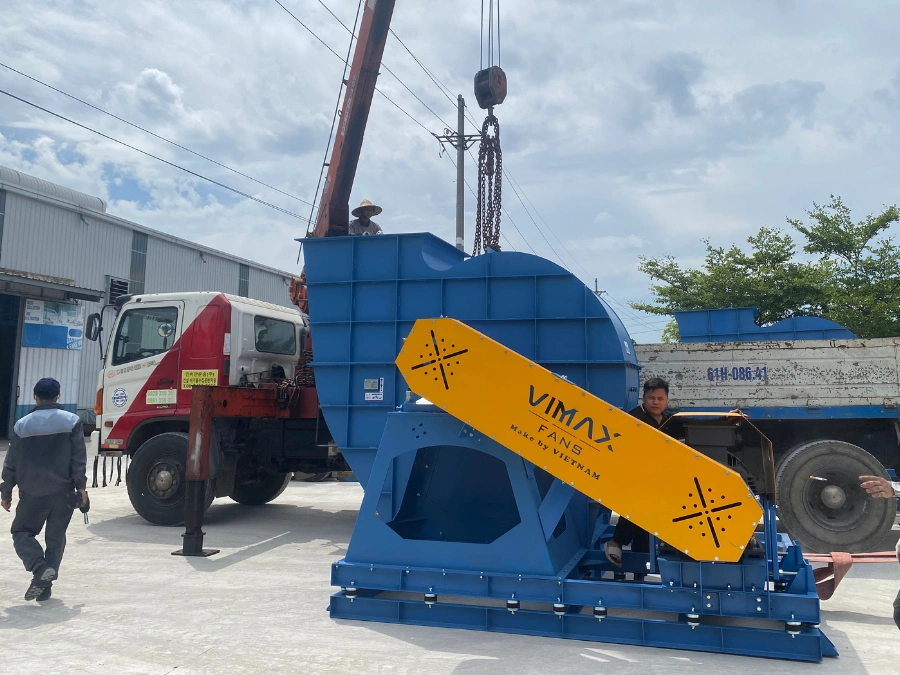
Vimax Global supplies specialized industrial fans for heavy manufacturing plants, foundries, and chemical processing zones. Unlike standard ceiling fans, Vimax specializes in heavy-duty centrifugal and axial flow fans designed for extreme environments.
- Key Features: Engineered with high-grade steel, dynamic balancing technology, and explosion-proof motors. They are built to handle high-pressure environments, exhausting toxic fumes, dust, and extreme heat efficiently.
- Best For: Large-scale factories, mining operations, commercial kitchens, and industrial dust collection systems.
Read more: Best Vendors for Heavy-duty Industrial Fans Continuous Operation
3. Cool Boss CB20HVLS Industrial Overhead Fan
If you are operating a massive warehouse or agricultural facility, the Cool Boss CB20HVLS is built to handle the heavy lifting.
- Key Features: Spanning an impressive 20 feet, this commercial giant delivers up to 448,496 CFM (Cubic Feet per Minute), providing sufficient area coverage for over 20,000 square feet. It boasts a single-phase magnet motor that remains low-noise while continuously optimizing the temperature.
- Best For: Factories, expansive warehouses, and agricultural facilities.
4. TPI Corporation (Industrial Wall-Mounted Circulators)
If floor space is limited but high-velocity air movement is still required, TPI Corporation Wall Mount Fans provide a reliable solution.
- Key Features: Equipped with pull-cord switches, totally enclosed ball-bearing motors, and multi-speed settings. The oscillating wall mount design clears floor clutter while delivering targeted cooling across specific work zones.
- Best For: Machine shops, high-traffic shipping areas, and commercial garages.
5. MacroAir 12-Foot Industrial Fans
MacroAir is recognized for pioneering aerospace-inspired engineering in air circulation. Their 12-Foot Industrial Fans are engineered for ultimate reliability.
- Key Features: These fans provide maximum area coverage with minimal energy consumption. They are easy to maintain and offer robust air movement ideal for high-ceiling facilities.
- Best For: Distribution centers, aircraft hangars, and very large commercial facilities.
6. Patterson Fan Company (High-Velocity Industrial Jet Fans)
When air must be pushed through long, narrow corridors or deep inside trailers, Patterson High-Velocity Air Circulators (often called jet fans) are highly effective.
- Key Features: Features a narrow barrel design that focuses airflow into a powerful, tight column. These fans can throw air up to 100 feet away, making them ideal for targeted cooling.
- Best For: Long warehouse aisles, narrow packing stations, and shipping container ventilation.
Key Factors to Consider When Choosing an Industrial Fan
Selecting the right industrial fan requires matching the equipment to the specific needs of your layout:
- CFM (Cubic Feet per Minute): This metric measures the volume of air a fan moves. High-CFM drum or HVLS fans are necessary for large warehouses, while high-pressure centrifugal fans are required to move air through ductwork.
- Static Pressure Resistance: If your facility produces smoke, paint fumes, or dust, you need a system like Vimax Global that can push air through filters and long ducts without losing power.
- Durability and Environment: Hazardous or damp areas require specialized equipment. Look for fans with TEFC (Totally Enclosed Fan Cooled) motors, explosion-proof certifications, or corrosion-resistant coatings.
- Mobility vs. Permanent Installation: Determine if your facility needs fixed ventilation (wall/ceiling mounts) or flexible spot cooling (portable drum fans) that can be moved as production lines change.
Equipping a large industrial space with the correct fan configuration improves safety, legal compliance, and energy efficiency.
For general air circulation across expansive areas, heavy-duty floor fans or overhead HVLS units provide effective cooling. However, if your facility requires smoke extraction, dust filtering, or high-pressure ventilation, investing in custom industrial systems from engineering brands like Vimax Global is the best way to secure your infrastructure.
