


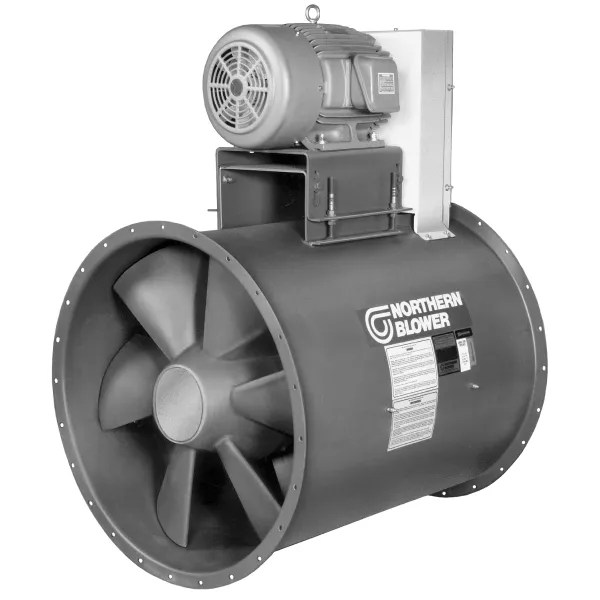

The kitchen exhaust fan is the part of a commercial kitchen that fire inspectors, energy auditors and chefs all care about. It pulls heat, smoke and grease-laden vapour out of the building. If it is undersized, poorly listed or hard to clean, the result is a failed inspection, a hot and smoky kitchen, or a duct fire.
Two trends make brand choice matter more in 2026. Energy codes now push large kitchens toward demand-controlled ventilation, and fire codes keep tightening access and cleaning rules for grease fans. This guide profiles seven manufacturers, compares them side by side, and explains how to size and specify a fan for your project.
Disclosure: this guide is published by Vimax Global, which appears as company #7. Profiles of other manufacturers are based on their own published information.
Why the manufacturer matters
- Code compliance. A grease exhaust fan must meet NFPA 96 installation rules and carry a restaurant-exhaust listing (UL/cUL 705 Supplement SC, formerly UL 762, in North America). Reputable makers ship fans with hinge kits, clean-out ports and grease boxes ready to pass inspection.
- Durability. Grease, heat up to roughly 150°C (300°F) in the airstream and weather on the roof all wear fans down. Spun-aluminium housings, motors outside the airstream and sealed bearings extend life.
- System balance. Every cubic metre of air exhausted must be replaced. Brands that engineer hoods, exhaust fans, make-up air units and controls together avoid negative pressure, slamming doors and pilot lights blowing out.
- Energy cost. Kitchen ventilation is often the largest energy user in a foodservice building. Variable-speed fans and demand control can cut fan and HVAC costs sharply.
How we evaluated the companies
We looked at five criteria: product range (hoods, fans, make-up air, controls, fire suppression), certifications and listings, energy-saving technology, engineering and after-sales support, and the type of project each company serves best. The ranking reflects best fit for different project types, not a single quality score.

The top 7 commercial kitchen extractor fan companies
1. CaptiveAire Systems: the turnkey package leader

Founded: 1976 by Bob Luddy · HQ: Raleigh, North Carolina, USA · Ownership: private
CaptiveAire describes itself as the largest US maker of commercial kitchen ventilation. It reports more than 2,100 employees, 125+ sales and engineering offices across North America, six US plants (NC, IA, OK, CA, PA, FL) and two R&D labs.
- What it sells: complete packages of hoods, upblast and utility exhaust fans, direct-fired make-up air heaters, grease duct, fire suppression, filters, utility distribution and controls.
- Signature tech: a demand-control system that varies exhaust and make-up air fan speed with cooking load. The company states it meets the 50% turndown required by ASHRAE 90.1 and IECC for kitchens over 5,000 CFM. Its CASLink building management platform and CORE fire system add remote monitoring.
- Best for: chain restaurants, franchise roll-outs and fast-track builds that want one supplier and short lead times.
- Watch-outs: coverage is strongest in North America; projects elsewhere should confirm local service.
2. Accurex (Greenheck Group): engineered systems with big-group backing
Parent founded: 1947 · HQ: Schofield, Wisconsin, USA · Ownership: division of privately held Greenheck Group
Accurex is the dedicated kitchen ventilation brand of the Greenheck Group, which began as a small sheet-metal shop in Schofield. Greenheck now builds fans, make-up air units, energy recovery and dampers, with plants in the US, China, Mexico and India.
- What it sells: hoods, grease exhaust fans, make-up air and controls designed as one system.
- Signature tech: Vari-Flow variable-volume control paired with EC (Vari-Green) motors. Greenheck-family upblast fans carry UL/cUL 705 Supplement SC listing and AMCA-licensed performance ratings.
- Best for: schools, hospitals, universities and institutional kitchens where engineers want published data and selection software.
- Watch-outs: sold through rep networks; pricing and lead time depend on the local rep.
3. Halton Group: efficiency and smart controls

Founded: 1969 · HQ: Finland · Ownership: family-owned, global
Halton is a Finnish indoor-air company with a strong foodservice division serving hotels, cruise ships and high-end restaurants worldwide.
- Signature tech: Capture Jet hoods use small air jets to contain the plume, which Halton says lowers required exhaust by 30–40%. M.A.R.V.E.L. demand control uses IRIS infrared sensors that read cooking surfaces directly. Halton states the combination reduces exhaust by up to 64%.
- Best for: resorts, luxury hotels, green-certified buildings and large central kitchens where energy payback matters most.
- Watch-outs: premium price; the savings case is strongest in long-hours, air-conditioned kitchens.
4. Gaylord Industries: heavy-duty and water-wash specialists
Founded: 1936 · HQ: Tualatin, Oregon, USA · Ownership: Illinois Tool Works (ITW) since 1999
Asa Gaylord invented the Gaylord Ventilator in 1936. The company joined ITW’s Food Equipment Group in 1999, alongside Hobart, Vulcan and Traulsen. Products are built in Tualatin and in Mississauga, Ontario.
- Signature tech: water-wash hoods that clean grease from the exhaust plenum automatically, Quencher fire protection, utility distribution systems and pollution control units for smoke and odour.
- Best for: high-volume and heavy-smoke kitchens such as hospitals, casinos, stadiums, institutional cafeterias, char-broil and wok operations.
- Watch-outs: engineered systems carry higher first cost; the payback comes from lower cleaning labour.
5. North American Kitchen Solutions (NAKS): budget-friendly packages

Founded: 1987 · HQ: Elyria, Ohio, USA
NAKS builds pre-engineered Type 1 and Type 2 hood packages, ventless hoods, concession and food-truck packages, exhaust and supply fans, and fire suppression. It sells mostly online through retailers such as WebstaurantStore and its own HoodMart store.
- What you get: a typical package pairs a stainless hood with a matched upblast fan (for example a 28D fan at about 2,200 CFM), a supply fan, curbs and controls, often with a 2-year warranty.
- Signature tech: UL 710B ventless hoods for electric ovens where a roof duct is impossible.
- Best for: independent restaurants, cafés, food trucks and tight budgets.
- Watch-outs: limited on-site engineering; the buyer or contractor must handle code review, installation and balancing.
6. Streivor: custom fabrication and retrofits
HQ: Livermore, California, USA · Licensed contractor since: 1991
Streivor combines engineering with in-house stainless steel fabrication. It holds a California sheet-metal contractor licence, so it can design, build and install.
- Signature tech: patented ExtractAire grease filtration, SmartAire hoods and UV-light self-cleaning hoods.
- Best for: hotel and restaurant retrofits, odd-shaped kitchens and projects needing custom stainless work.
- Watch-outs: regional focus on the US West Coast.
7. Vimax Global: industrial-grade fans and smoke extraction
Founded: 2016 · HQ: Hanoi, Vietnam · Offices: Hanoi and Ho Chi Minh City · Factories: Me Linh (Hanoi) and Phu Tho Province

Vimax Global is a Vietnamese maker of industrial fans, air filtration and dust collection systems, and has expanded exports in 2026. In kitchens, it serves the heavy end of the market where standard restaurant fans run out of capacity.
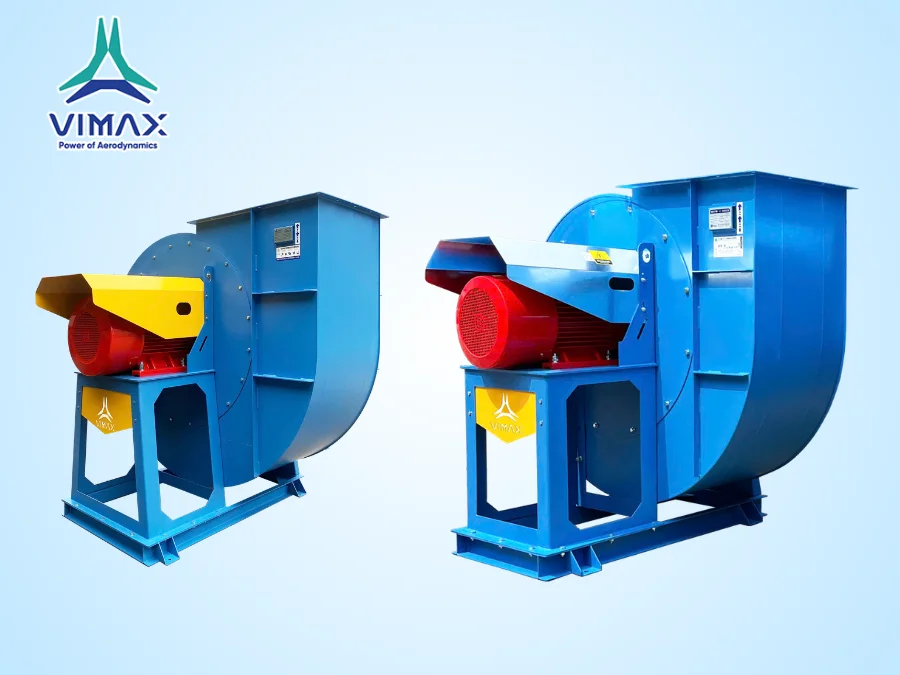
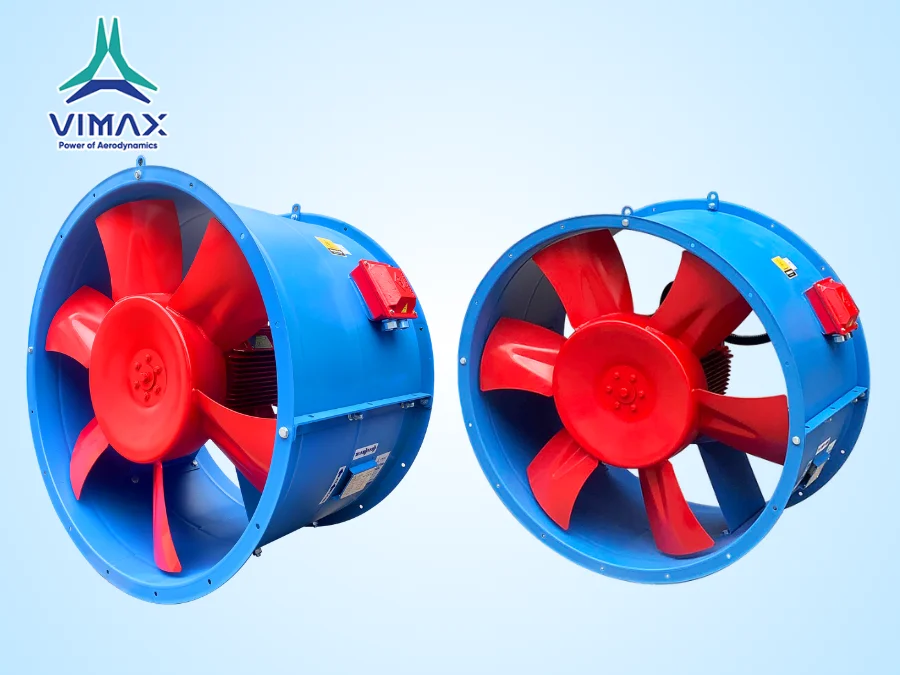
- What it sells: high-capacity centrifugal fans and utility sets, heat-resistant axial and inline fans, and smoke exhaust fans rated for emergency operation at up to 250°C.
- Signature service: airflow simulation (3D/CFD) and full engineering drawings before fabrication, plus custom sizes and materials.
- Best for: industrial food processing, central and airline kitchens, large bakeries, hotel and mall food courts, and buildings that combine kitchen exhaust with fire smoke extraction.
- Watch-outs: for North American projects requiring a UL-listed restaurant fan, confirm the listing for the specific model.
Side-by-side comparison
| Company | Founded / HQ | Core strength | Technology highlight | Best project match | Typical budget |
| CaptiveAire | 1976 / Raleigh, USA | Turnkey packages, fast delivery | Demand-control ventilation, CASLink monitoring | Chains, franchises, fast-track builds | Mid |
| Accurex (Greenheck) | 1947 (parent) / Schofield, USA | Engineering data and support | Vari-Flow + EC motors, UL 705 SC fans | Schools, hospitals, institutions | Mid–high |
| Halton | 1969 / Finland | Energy efficiency | Capture Jet + M.A.R.V.E.L. infrared DCKV | Resorts, hotels, green buildings | High |
| Gaylord | 1936 / Tualatin, USA | Heavy-duty engineering | Water-wash hoods, pollution control units | High-volume, heavy-smoke kitchens | High |
| NAKS | 1987 / Elyria, USA | Price and availability | Pre-packaged hood + fan kits, ventless hoods | Independents, food trucks | Low |
| Streivor | 1991 (licence) / Livermore, USA | Custom stainless fabrication | ExtractAire filtration, SmartAire hoods | Hospitality retrofits | Mid–high |
| Vimax Global | 2016 / Hanoi, Vietnam | High-capacity and custom fans | 250°C smoke fans, CFD simulation | Food processing, central kitchens, combined smoke extraction | Low–mid |
Budget bands are indicative for a comparable scope and vary by region, dealer and specification.
Types of commercial kitchen extractor fans
| Fan type | Where it mounts | Grease (Type I) use? | Pros | Cons |
| Centrifugal upblast | Roof or wall, on a curb | Yes, the standard choice | Throws grease and heat away from the roof; motor outside the airstream | Needs hinge kit, grease box and roof access |
| Downblast | Roof | No | Low profile, cheap | Directs grease onto the roof; for Type II (steam, heat) only |
| Inline (mixed-flow or tubular) | Inside the duct run | Only if listed for grease | Hidden, quieter, good where roof fans are not allowed | Needs access panels within reach of both ends for cleaning |
| Utility set | Roof, plant room or ground | Yes, when listed and drained | High pressure and airflow for long ducts, scrubbers or multiple hoods | Larger footprint, belt maintenance |
| Heat-resistant / smoke exhaust | Roof, plant room, duct | Dual-duty designs | Can also serve as fire smoke extraction | Must be certified for the stated temperature and time |
Codes and standards you must check
NFPA 96 (USA and many international projects). Upblast grease fans with motors in the airstream path must be hinged, with a flexible cable and a hold-open retainer so the wheel and duct can be cleaned. Manufacturers’ install guides typically call for an 18-inch minimum curb height, a 40-inch discharge height above the roof, a grease collection box and a clean-out port. Inline fans need cleaning access within 3 ft (0.9 m) of each end.
UL/cUL 705 Supplement SC (formerly UL 762). This is the North American listing for power ventilators handling grease-laden restaurant exhaust. UL merged UL 762 into UL 705, so newer nameplates may show “UL 705 SC” instead of “UL 762”.
ASHRAE 90.1 and IECC (energy). When total kitchen hood exhaust exceeds 5,000 CFM (about 8,500 m³/h), the kitchen must use one of the compliance paths. The main ones are at least 50% transfer air for replacement, or demand ventilation on at least 75% of the exhaust that can cut airflow by 50% or more. California’s Title 24 adds limits on fan power.
EN 16282 (Europe and many Asian specifications). This series covers kitchen hoods, ceilings, ducts, aerosol separators and fire suppression. Part 1 was revised in 2026 and includes an airflow calculation method; it excludes solid-fuel appliances such as charcoal grills.
Local fire codes. In Vietnam, for example, buildings must also meet the national fire safety regulation (QCVN 06). Where one fan also serves fire smoke extraction, specify fans tested to EN 12101-3 or an equivalent at the required temperature class.
How to size a kitchen exhaust fan
- List the appliances and their duty. Light (ovens, steamers), medium (fryers, griddles, ranges), heavy (gas charbroilers, woks) or extra heavy (solid fuel).
- Pick a hood airflow rate. For an unlisted wall canopy, common minimums are about 200, 300, 400 and 550 CFM per linear foot of hood for light, medium, heavy and extra-heavy duty. Listed hoods and Capture Jet-style designs can run lower; use the maker’s data.
- Multiply by hood length. A 12 ft wall canopy over fryers and a charbroiler (heavy duty) needs about 12 × 400 = 4,800 CFM (≈ 8,150 m³/h).
- Calculate static pressure. Add hood, filter, duct, fittings and any pollution control unit losses. Keep grease duct velocity at or above 500 fpm (2.5 m/s); 1,500–1,800 fpm is a common design range.
- Plan make-up air. Replace about 80–90% of the exhaust with tempered make-up air so the kitchen stays slightly negative.
- Check the energy threshold. If the building total goes above 5,000 CFM, plan for demand control or transfer air from the start.
- Select from fan curves. Choose the fan where the duty point sits in the efficient middle of the curve, not at its edge.
Buyer’s checklist
- Fan carries a restaurant exhaust listing (UL 705 SC / UL 762) or the local equivalent
- Hinge kit, grease box, clean-out port and curb height meet NFPA 96 or local code
- Duty point confirmed: airflow (CFM or m³/h) and static pressure (in. wg or Pa)
- Direct drive with EC motor or VFD for small/medium fans; belt drive only where high pressure demands it
- Make-up air unit sized and interlocked with the exhaust fan and fire suppression
- Demand control included if total exhaust exceeds 5,000 CFM
- Rated temperature matches the cooking load (and smoke-mode rating if dual duty)
- Noise data at the nearest neighbour and roof wind/seismic ratings checked
- Local service, spare parts and warranty terms confirmed in writing
Maintenance: keeping the fan safe and efficient
Grease build-up in the fan and duct is the main fuel for kitchen exhaust fires. NFPA 96 links inspection and cleaning frequency to cooking volume:
| Kitchen type | Inspection / cleaning frequency |
| Solid-fuel cooking (wood, charcoal) | Monthly |
| High volume (24-hour, charbroiling, wok cooking) | Quarterly |
| Moderate volume | Every 6 months |
| Low volume (churches, seasonal sites, day camps) | Yearly |
Between cleanings, check belt tension and wear monthly on belt-drive fans, empty the grease box, listen for bearing noise and confirm the fan starts automatically when the hood or fire system calls for it.
Frequently asked questions
What is the difference between a Type I and a Type II hood fan?
Type I systems handle grease and smoke and need a listed grease fan, usually an upblast. Type II systems handle only heat and steam (dishwashers, some ovens) and can use simpler fans.
Direct drive or belt drive?
Direct-drive fans with EC motors need almost no maintenance and allow easy speed control, which suits most restaurants. Belt-drive fans reach higher pressures and larger airflows, so they suit long duct runs and large kitchens, but belts need regular checks.
Is demand-controlled kitchen ventilation worth it?
It pays back fastest in kitchens with long operating hours, high exhaust rates and air-conditioned make-up air. Above 5,000 CFM it is often required by energy code anyway.
Can one fan handle both kitchen exhaust and fire smoke extraction?
Yes, if the fan is certified for the smoke temperature and duration required by local fire code and the controls switch modes safely. This needs careful design and authority approval.
How long does a commercial kitchen exhaust fan last?
A well-maintained fan commonly lasts 10–15 years. Motors and bearings may need replacement sooner in heavy-duty kitchens.
Conclusion
There is no single “best” kitchen exhaust fan maker; there is a best fit for each project. CaptiveAire and NAKS suit fast or budget restaurant builds, Accurex and Gaylord suit engineered institutional and heavy-duty kitchens, Halton leads on energy savings, and Streivor excels at custom retrofits. For industrial food processing, central kitchens and projects that combine exhaust with smoke control, Vimax Global offers high-capacity, heat-resistant fans backed by airflow simulation and full engineering drawings.
Planning a kitchen ventilation or smoke extraction project? Contact the Vimax Global engineering team for a free consultation, fan selection and 3D airflow simulation.
