


In the global manufacturing landscape of 2026 the margin for error in facility design has vanished. Whether you are operating a high tech electronics cleanroom in Vietnam or a heavy duty mining operation in Australia the air handling system serves as the facility respiratory system.
Many suppliers view industrial fans as simple commodities consisting of bent metal and a motor. At Vimax Global we recognize that an improperly specified fan is a financial liability. It manifests in three primary pain points including excessive energy draw and premature mechanical failure as well as regulatory non compliance. True value is found in the long effort of precision engineering. This guide deep dives into the physics and the logic plus the strategic choices that define world class industrial ventilation.
Airflow Dynamics and the Square Law of Resistance
While basic guides often stop at simple volume measurements a professional engineer must account for the interaction between the System Curve and the Fan Curve.
The Physical Reality of System Resistance
Think of your factory ductwork like a straw. The longer and more twisted the straw the harder you have to blow to move air. In engineering this resistance follows a Square Law where if you want to double the speed of the air you actually need four times the pressure.
Many designers make the mistake of calculating resistance for a brand new clean system. However theU.S. Department of Energy DOE Fan System Performance Sourcebook provides specific evidence that the system effect can reduce fan efficiency by as much as 30 percent if inlet and outlet conditions are not optimized. In industries like wood processing where ducts accumulate dust your system resistance is a living variable. If your fan isn’t designed to handle this dirty state your airflow will drop exactly when your workers need it most.
Mapping and Avoiding the Stall Region
Every fan has a danger zone on its performance chart known as a stall or surge region. Operating in this zone causes the air to become turbulent and bounce off the impeller blades. This leads to massive vibration and loud pulsing noises plus eventually the structural failure of the impeller. At Vimax we use Advanced Simulation to map these zones ensuring our global clients operate in a Peak Efficiency window which maximizes the lifespan of the bearings and the drive motor.
The Impact of Environmental Variables on Air Mass
Air is not a constant. Its mass changes based on temperature and humidity as well as altitude. This is a critical consideration for Vimax international export partners who operate in diverse climates.
Temperature Impact and Cold Start Protection
Temperature impact occurs because cold air is denser and heavier than hot air. A fan moving cool air at 20 degrees Celsius requires much more power than a fan moving hot gas at 150 degrees Celsius. If you do not adjust the motor horsepower for a cold start the motor will trip or burn out before the system reaches operating temperature.
Altitude Density Correction
Altitude impact is equally vital. At high altitudes the air is thinner. While the fan moves the same volume of air it moves less actual mass. For cooling processes this loss of mass can cause machines to overheat even if the fan is spinning at the correct speed. We apply density correction factors to every Vimax Industrial Axial Fan project to ensure the fan performs perfectly in its destination climate.
Material Science Engineering Against Corrosion and Wear
A high value asset must discuss the chemistry of the air. Not all steel is created equal and the long effort in our manufacturing involves selecting materials that resist the specific pain of your industrial environment.
Austenitic versus Duplex Steels
For food processing or mild chemical exhaust standard Stainless Steel 304 or 316 is often sufficient. However for environments with high salt or chloride content common in coastal manufacturing we utilize Duplex 2205 steel. TheWorld Steel Association provides evidence that selecting the correct alloy for the environment can triple the service life of industrial equipment. Duplex steel offers twice the strength of standard stainless allowing for thinner and lighter impellers that move more air with less energy.
Fighting Abrasive Dust
In industries like glass recycling or mining the air acts like sandpaper. We utilize specialized liners such as Hardox 450 or Tungsten Carbide coatings on the leading edges of our fan blades. This is a high cost and high effort process but it prevents the pain of frequent replacements and keeps the Vimax High Efficiency Centrifugal Fans operational in the harshest conditions.
The Physics of Filtration and Pressure Drop
In 2026 fans are almost always coupled with filtration systems. This is where the engineering struggle becomes most apparent.
Managing the Delta P
As a filter captures dust the Pressure Drop or Delta P increases. Most basic suppliers select a motor based on a clean filter. As the filter loads up the performance drops and dust begins to settle inside your pipes creating a fire hazard. The Vimax solution involves specifying fans based on the End of Life pressure of the filter. We ensure the motor has enough Brake Horsepower to maintain safety right up until the filter needs replacing. This foresight is built into every Vimax Industrial Air Filtration System.
Acoustic Engineering Solving Noise Pollution
Noise is no longer just an annoyance but a regulated pollutant. High decibel environments lead to worker fatigue and legal liabilities. Fan noise is tied to the Tip Speed of the blades. To reduce noise Vimax engineers prioritize larger diameters at lower RPMs rather than small fans spinning at high speeds. This results in a softer sound frequency that is much easier to block with standard factory silencers. We provide full sound power data across all frequency bands as defined in theISO 13347 standard so your consultants can plan your facility layout with confidence.
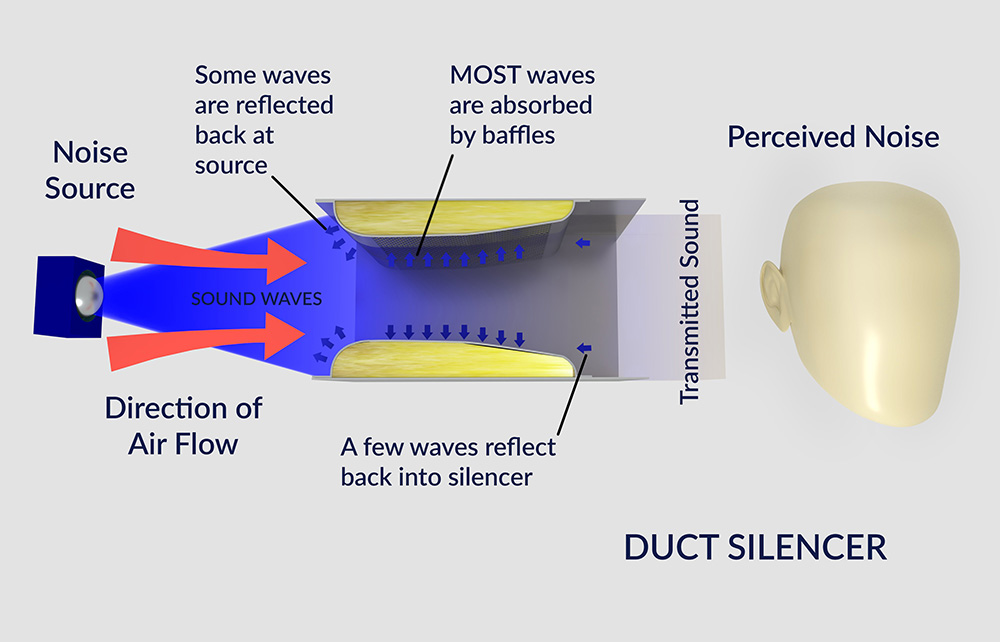
Acoustic Engineering Solving Noise Pollution
Modular Engineering for Global Logistics
Shipping air is an expensive mistake. A fully assembled industrial fan is essentially a large and hollow box. If you ship it assembled from Vietnam to the US or Europe the freight costs can be massive.
The Bolt Together Architecture is a key Vimax innovation. To provide top trade value we have pioneered a modular design. We laser cut our fan housings so they can be shipped in segments and nested inside each other. Precision Alignment is achieved through CNC machined flanges to ensure that when the fan arrives at your site it bolts together with factory level precision. This reduces global shipping costs by up to 60 percent.
Power Infrastructure The IE4 and VSD Revolution
Energy is the largest lifetime cost of a fan often making up 90 percent of the total cost of ownership. TheInternational Energy Agency IEA confirms in their 2024 Energy Efficiency report that deploying IE4 Super Premium Efficiency motors is a primary strategy for industrial decarbonization. Vimax fans are built to be VSD Ready. Running a fan at 80 percent speed doesn’t just save 20 percent energy but can save nearly 50 percent of the power consumption because of the Fan Affinity Laws.
Conclusion The Trade Value of Engineering Effort
The pain of a failed bearing or a collapsed duct is a cost no modern business should bear. At Vimax Global our philosophy is rooted in the belief that long term effort in the design phase prevents short term failure in the production phase. Industrial ventilation is an investment in your facility future. When you choose an asset built on precision you aren’t just buying a fan but the certainty that your air will move exactly as designed for the next twenty years.
Read more: Precision Engineering and Visual Excellence in Industrial Fans
