


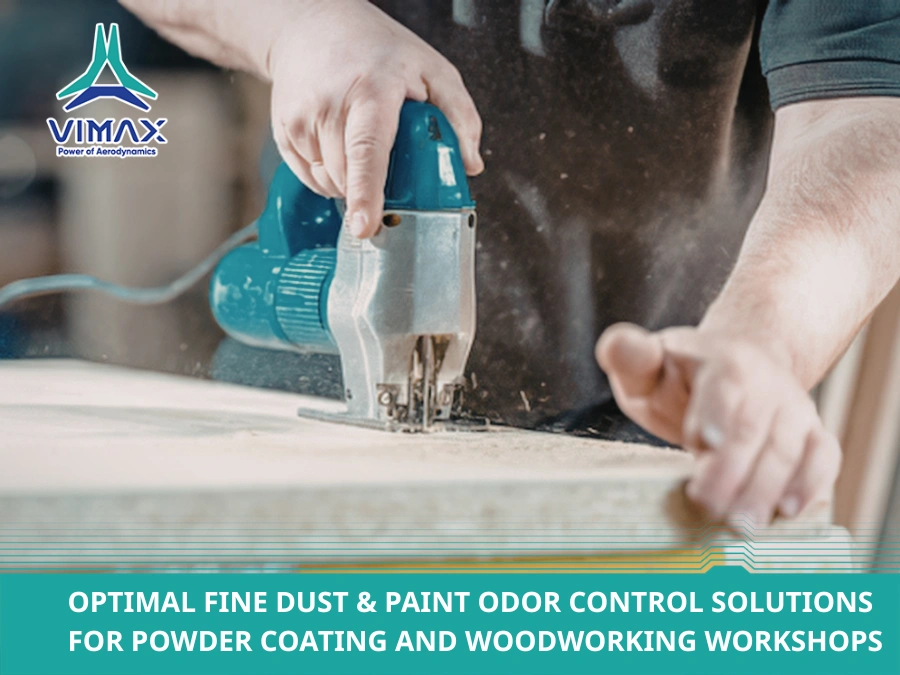
In the furniture manufacturing and powder coating industries, controlling fine dust and paint fumes is a prerequisite for sustainable operation. Sanding and spray painting processes release large amounts of fine dust and toxic volatile organic compounds (VOCs). To thoroughly address this challenge, Vimax Global’s combined Cartridge Dust Collector and Activated Carbon Gas Filtration System is currently the optimal technology, helping businesses standardize their production processes according to current green standards.
Major Challenges in Exhaust Gas Treatment for Wood and Powder Coating Workshops
The Complex Nature of Paint and Sanding Dust
Dust generated from rough/fine sanding in wood workshops and powder coating processes shares a common characteristic: an extremely fine particle size, mostly under 1µm. Due to this microscopic size, dust particles easily remain suspended in the air, penetrating deep into workers’ respiratory systems and causing chronic occupational diseases such as pneumoconiosis and bronchitis.
More dangerously, powder coating dust is highly adhesive and electrostatic. When using traditional coarse filtration methods or open bare-bag dust collectors, these fine dust particles quickly clog the filtration membranes after a short period of use. This leads to a severe drop in the system’s suction pressure, causes fan impeller jamming, wastes electrical energy, and demands exorbitant maintenance and replacement costs.
The Toxic Nature of Solvents and Chemical Odors (VOCs)
Aside from the fine dust challenge, paint odor is an invisible yet equally destructive threat. Exhaust gas from spray booths and curing ovens contains high levels of volatile organic compounds (VOCs) such as Toluene, Xylene, and Benzene, along with mild acid-base vapors from adhesives and pigments.
These are molecular-level toxic gases. They cannot be captured by conventional mechanical meshes or standard dust filters. Simply using extraction fans to vent them directly outside will disperse paint odors into surrounding residential areas, leading to severe environmental conflicts and legal violations. Eliminating VOCs strictly requires specialized physicochemical treatment methods.
Direct Impact on Production: Airborne fine dust can settle back onto wet product surfaces, causing surface pitting blemishes, reducing gloss, and increasing defect rates. Therefore, a compliant exhaust treatment system not only protects the environment but also directly enhances a business’s competitive edge.
Read more: Best Vendors for Heavy-duty Industrial Fans Continuous Operation
Solution 1 – Fine Dust Mitigation via Cartridge Dust Collectors
Why Cartridge Filters?
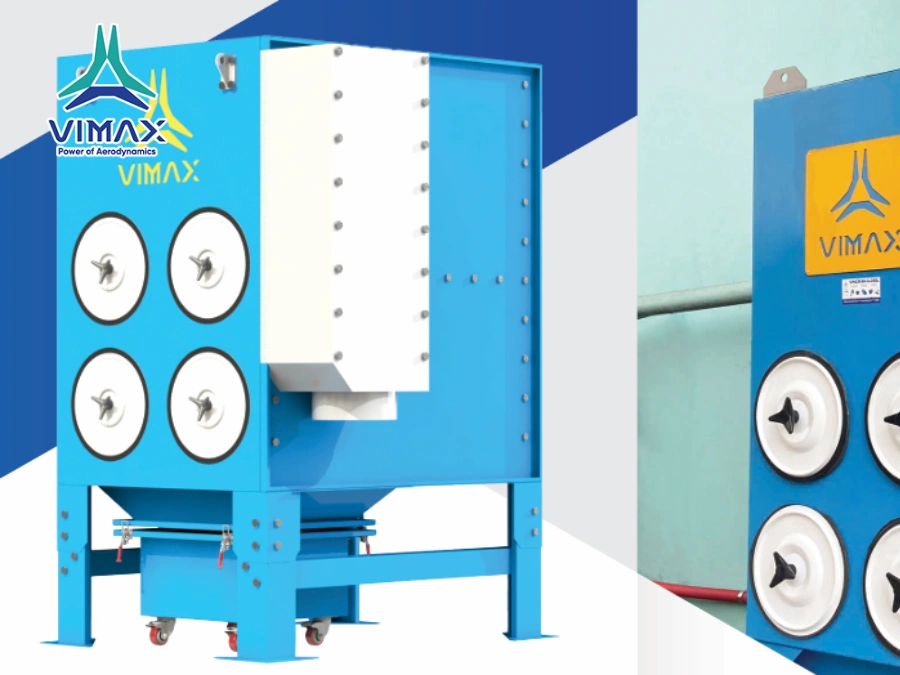
For the specific sub-micron fine dust of the paint and wood industries, traditional fabric bag filtration technology has revealed clear limitations in surface area and efficiency. The Cartridge Dust Collector (pleated filter media) emerged as a revolution. Thanks to the smart pleated design, cartridge filters increase the total filtration surface area by 3 to 5 times compared to conventional filter bags within the same structural footprint. The equipment delivers an astonishing filtration efficiency of >99.5% for microscopic dust particles.
Automatic Cleaning Mechanism (Pulse Jet)
The system operates based on negative pressure principles and automatic compressed air pulses:
- Filtration Principle: An industrial centrifugal fan generates powerful suction, gathering dust-laden air from the hoods into the collector body. Here, the airflow is forced to pass through the cartridge filters from the outside in. All fine dust is retained on the outer surface of the media, while the completely clean air enters the core and exits upward.
- Pulse Jet Automatic Cleaning: To maintain continuous 24/7 operation without clogging, the unit integrates a solenoid valve system and a compressed air manifold. When differential pressure sensors detect a heavy dust cake on the filter surface, the system automatically triggers high-pressure compressed air blasts (4-6 bar) at supersonic speeds down the center of the cartridge. This burst vigorously shakes the pleats, shedding the accumulated dust directly into the hopper below.
Outstanding Advantages for Powder Coating Booths
Implementing cartridge dust collectors yields two direct economic benefits for powder coating facilities:
- Material Reclamation: Oversprayed powder coating dust drawn into the collector remains uncontaminated. Thanks to the completely dry pulse-jet cleaning mechanism, businesses can easily reclaim the powder accumulated in the hopper for subsequent batches, saving significant material costs each month.
- Space Optimization: The filters feature a flexible modular design (either vertical square body or horizontal arrangement). This gives cartridge dust collectors an exceptionally compact footprint, saving installation space—perfect for workshops with limited room or low ceilings.
Solution 2 – Odor and VOC Elimination via Activated Carbon Systems
The Essence of Adsorption Technology
Once the exhaust stream has been thoroughly cleared of fine dust in Phase 1 (to safeguard the odor control system from clogging), the gas stream carrying toxic odor molecules and VOCs is channeled into the activated carbon adsorption tower. Here, specialized physicochemical odor removal takes place.
Capillary Adsorption Mechanism
Activated Carbon is renowned as the “king of odor removal” due to its dense network of capillaries and micro-pores. The specific surface area of activated carbon reaches impressive metrics: from 800 to 1500 m²/g (just one gram of activated carbon possesses a surface area equivalent to a football field). As toxic odor molecules and organic solvents pass through this media layer, Van der Waals forces trap and lock the toxins inside the micro-pores, allowing only completely clean air to pass through.
Explore more: Industrial Ventilation Fan vs. Exhaust Fan: Ultimate Airflow Strategy for Factories and Warehouses
Specialized Odor Filtration Media at Vimax Global
To optimize odor control for various workshop scales, Vimax provides specialized filtration media lines:
- Honeycomb Activated Carbon: This premium media features a geometric honeycomb structure with straight air passages. This design allows smooth airflow, creating ultra-low system static pressure, saving fan power, and pushing odor/VOC removal efficiency to 80% – 95%.
- Flat/Box Activated Carbon Panels: Secured in heavy-duty standard aluminum or stainless steel frames. The modular panel structure allows technicians to easily install, maintain, and periodically replace the carbon media once it reaches odor saturation.
Overall Operational Flow of the Optimized Hybrid System
A high-standard environmental control system does not run on isolated components; it must be a harmonious coordination along a closed 4-stage technological chain:
- Stage 1: Source Capture (Specialized Hoods) At pollution-generating points like sanding machines and powder coating booths, capture hoods or downdraft benches are engineered with precise face velocities to capture all dust and odors, preventing them from escaping into the workshop.
- Stage 2: Fine Dry Filtration (Cartridge Dust Collector) The raw air carrying dust and odors enters the cartridge collector. Here, over 99.5% of fine dust is captured and automatically pulsed into the collection hopper. The air leaving the collector is dry and completely dust-free.
- Stage 3: Deep Odor Removal (Activated Carbon Adsorption Tower) The dust-free air, still carrying toxic odors, proceeds into the carbon tower. VOC molecules and organic solvents are fully trapped within the capillaries of the premium honeycomb carbon.
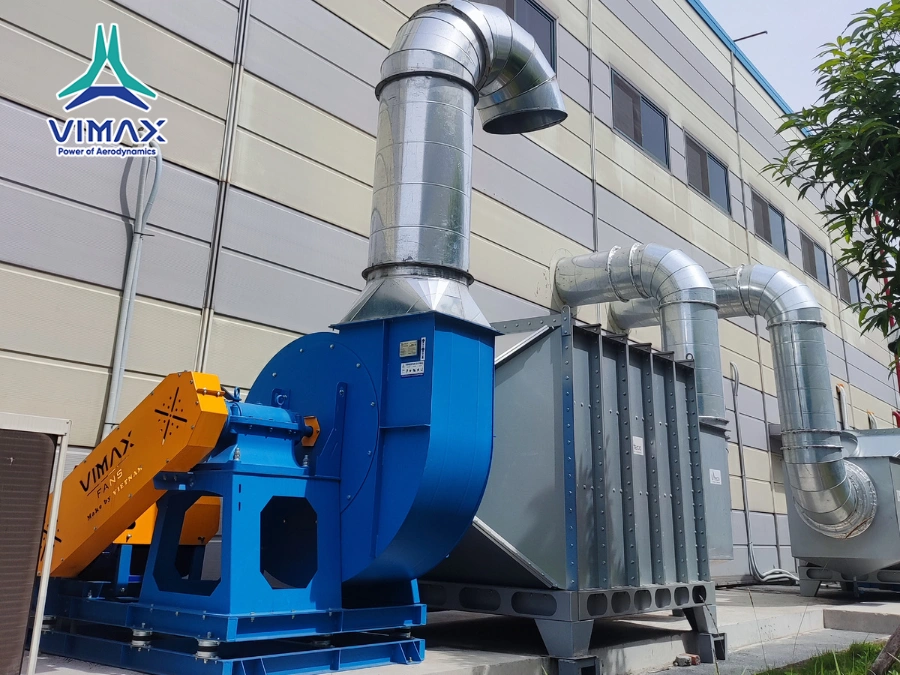
- Stage 4: Safe Discharge (Centrifugal Fan & Stack) A belt-driven centrifugal fan (designed to resist chemicals, with the motor isolated from the airflow to eliminate explosion risks) serves as the primary prime mover. It expels the 100% purified air into the atmosphere through an exhaust stack built to height regulations set by the Ministry of Natural Resources and Environment.
Read more: Steel Production Dust Control: Guide to Choosing Efficient Collection Systems
Conclusion & Solutions by Vimax Global
Investing in an integrated filtration system combining a Cartridge Dust Collector and an Activated Carbon Adsorption Tower is far more than a mere compliance measure for environmental inspections. It represents a sustainable investment strategy that solidifies corporate reputation, protects the invaluable asset of workers’ health, minimizes material waste through powder reclamation, and elevates the finishing quality of woodwork and mechanical products to a new standard.
ARE YOU LOOKING FOR THE OPTIMAL DUST AND PAINT ODOR CONTROL SOLUTION?
Do not let fine dust and chemical odors compromise your productivity and brand reputation. Contact the experienced engineering team at Vimax Global today for a free site survey, consultation, and a custom-engineered system design that optimizes your ROI!
