


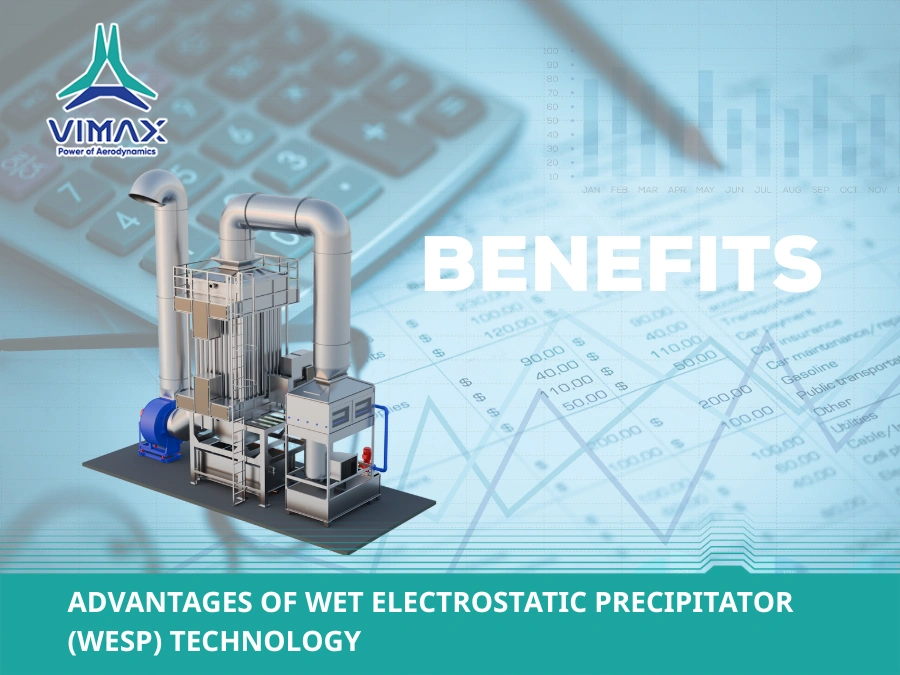
An Industrial Wet Electrostatic Precipitator (WESP) system represents the pinnacle of modern air pollution control technology, specifically engineered to capture sub-micron particulate matter, sticky aerosols, and acid mists. While traditional air filtration methods struggle with high-humidity or highly corrosive flue gases, WESP technology excels.
By utilizing electrostatic forces combined with a continuous water wash, this technology achieves unmatched collection efficiencies. Understanding the unique operational advantages of WESPs—and how they compare directly to alternative treatment methods—is critical for industries striving to meet stringent modern environmental regulations.
What Makes Wet Electrostatic Filtration Technology Unique?
The core differentiator of wet electrostatic filtration technology lies in its cleaning and collection mechanism. Traditional dry filtration systems rely on physical barriers or mechanical shaking to dislodge dry dust. In contrast, a WESP charges incoming pollutants using a high-voltage corona discharge, drives them to a grounded collection surface, and continuously flushes them away using water.
This continuous liquid irrigation eliminates the common points of failure found in dry systems, such as dust re-entrainment, filter blinding, and localized electrical insulation (back corona). As a result, WESP systems maintain a highly stable, low-pressure drop operation while removing particles as small as 0.01 micrometers with up to 99.9% efficiency.
Exlore more: What is a Wet Electrostatic Precipitator? WESP Working Principle
5 Outstanding Advantages of WESP Technology
WESP technology delivers distinct operational and economic benefits for facilities managing complex, saturated exhaust streams.
Superior Collection Efficiency for Sub-Micron Particles
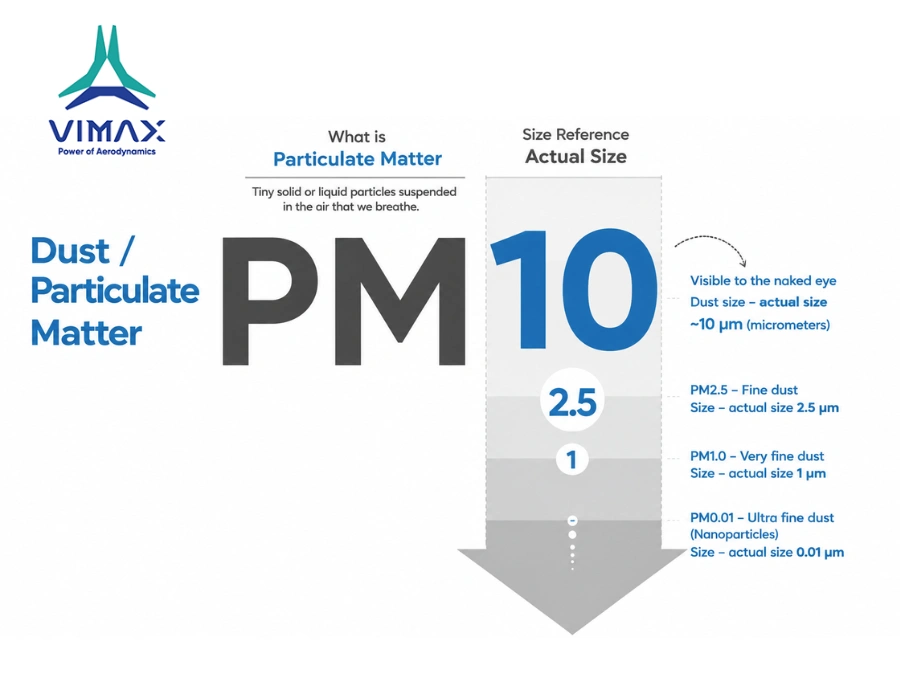
Standard mechanical collectors fail when particle sizes drop below 2.5 microns PM2.5. WESPs utilize intense localized electrical fields that forcefully charge and capture sub-micron particulates, heavy metal fumes (such as lead, arsenic, and cadmium), and condensable organic compounds that easily slip through other systems.
Elimination of Particulate Re-entrainment
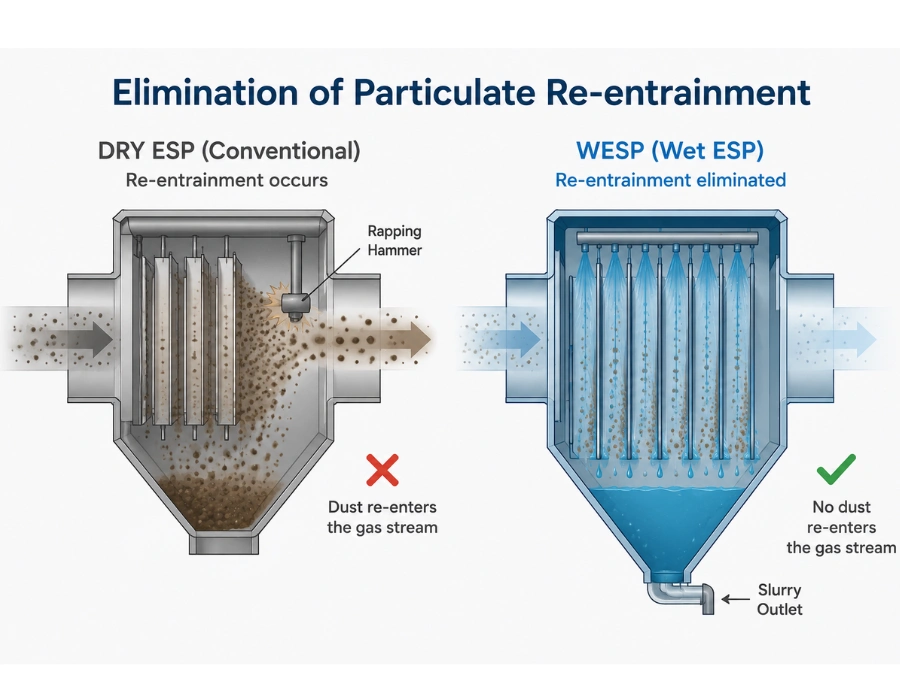
In dry precipitators, the mechanical rapping hammers used to knock dust off collection plates inevitably cause a fraction of the dust to re-enter the gas stream. Because WESPs use a gentle, continuous sheet of water to wash particles into a bottom slurry hopper, particulate re-entrainment is completely eliminated.
Ability to Process Wet, Sticky, and Corrosive Streams
Exhaust streams containing sticky resins, tars, oils, or highly saturated moisture quickly blind fabric filters and render dry systems inoperable. WESPs thrive in these conditions. The water wash prevents sticky materials from baking onto the electrodes, while corrosion-resistant alloys or fiberglass reinforced plastics (FRP) protect the structure from acid attack.
Low Pressure Drop and Reduced Energy Consumption
Forcing large volumes of industrial gas through dense fabric bags requires massive, energy-intensive fan systems. A WESP features an open tubular or plate geometric design, resulting in an incredibly low pressure drop (typically less than 250 Pa). This translates directly into lower long-term electrical costs for the plant’s induced draft (ID) fans.
Effective Mitigation of “Blue Plume” (Acid Mists)
Sulfur trioxide SO3 and sulfuric acid mists pass straight through wet scrubbers and form a highly visible aerosol cloud known as “blue plume” at the stack output. WESP systems act as a final polishing stage, aggressively charging these liquid acid droplets and pulling them out of the gas stream to ensure zero stack opacity.
Head-to-Head Comparison: WESP vs. Other Methods
To highlight why wet electrostatic filtration is increasingly favored, it must be compared directly against the three most common industrial exhaust treatment alternatives: Dry Electrostatic Precipitators (Dry ESP), Fabric Filters (Baghouses), and Wet Scrubbers (Packed Bed/Venturi).
WESP vs. Dry ESP
- Cleaning Method: Dry ESPs use mechanical rapping hammers; WESPs use a continuous water wash.
- Dust Resistivity Issues: Dry ESPs suffer from “back corona” when handling high-resistivity dusts (like low-sulfur coal ash), which drastically drops efficiency. WESPs eliminate resistivity issues entirely because the water film keeps the collecting surface highly conductive.
- Gas Constraints: Dry ESPs require gas temperatures to stay safely above the acid dew point to prevent catastrophic corrosion. WESPs operate optimally on cooled, fully saturated gases downstream of scrubbers.
WESP vs. Fabric Filters (Baghouses)
- Maintenance & Downtime: Baghouses require frequent, costly filter bag replacements due to physical wear, chemical tearing, or chemical blinding. WESPs contain no moving parts or consumable barrier filters within the collection zone, drastically reducing maintenance intervals.
- Moisture Tolerance: If moisture enters a baghouse, the dust turns to mud, “blinding” the bags and spiking the pressure drop until the system chokes. WESPs require moisture to operate effectively and are completely immune to blinding.
Read more: Mastering Woodworking: Essential Tips on How to Dust Collection Woodworking
WESP vs. Wet Scrubbers
- Sub-Micron Capture: Wet scrubbers rely on physical impaction between water droplets and dust particles. For sub-micron particles, the gas streamlines simply carry the particles around the water droplets, leading to poor capture rates. WESPs use electrical forces that act directly on the sub-micron particles, driving them across gas streamlines regardless of size.
- Pressure Drop Costs: Venturi scrubbers require massive pressure drops (up to 7,500 Pa) to atomize water and capture fine particles, leading to immense power consumption. WESPs achieve better fine-particle removal at a fraction of the pressure drop.
Read more: The Ultimate Guide to Wet Dust Collectors: Choosing the Right System
Summary Comparison Matrix
| Technical Metric | Wet ESP (WESP) | Dry ESP | Fabric Filter (Baghouse) | Wet Scrubber |
| Sub-micron PM_2.5 Efficiency | Excellent (>99.9%) | Moderate (85-95%) | Good (95-99%) | Poor (70-90%) |
| Acid Mist / Aerosol Removal | Excellent | Poor | Damages the filter membrane | Moderate |
| Pressure Drop (Energy Cost) | Very Low | Very Low | Moderate to High | High to Very High |
| Adhesion resistance (Toxic dust/Oil) | None | High | Completely block | Moderate |
| Risk of fire and explosion in the filter membrane | Zero | Low | High | Zero |
| Cost of replacing filter media | None | None | High (Bag replacement) | Low |
When evaluating industrial exhaust gas treatment options, alternative methods like baghouses, wet scrubbers, and dry ESPs each face distinct physical and operational bottlenecks when dealing with ultra-fine, wet, or sticky pollutants. Wet Electrostatic Filtration Technology cleanly bypasses these limitations.
By replacing mechanical cleaning with an engineered water film and utilizing targeted electrostatic forces, WESPs maximize sub-micron collection efficiency while lowering pressure drop and maintenance overhead. For modern industrial facilities aiming for future-proof environmental compliance, WESP remains the definitive high-performance choice.
Partner with Vimax Global for Leading Environmental Solutions
Ready to elevate your emission control system and achieve peak environmental compliance? Vimax Global is your trusted partner in delivering cutting-edge, custom-engineered WESP solutions tailored to your specific industrial needs.
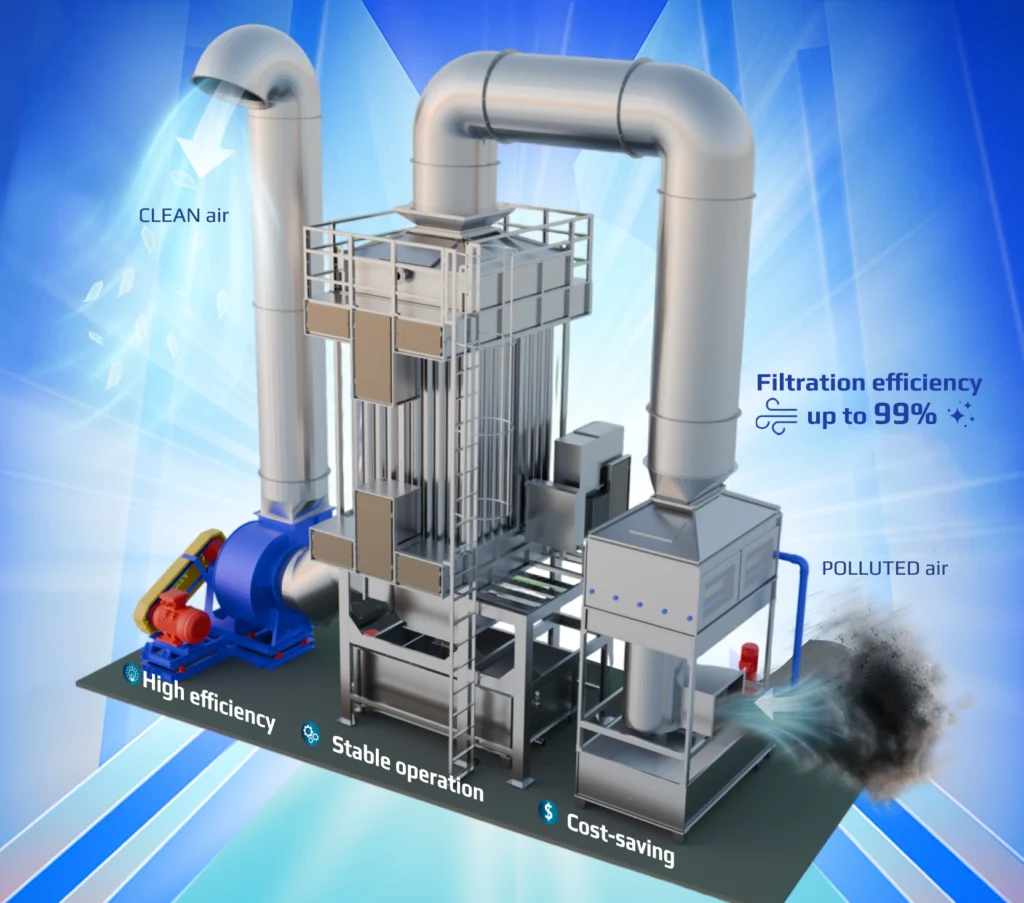
Take action today! Contact Vimax Global to consult with our team of experts, receive a comprehensive technical assessment, and discover how our advanced WESP technology can optimize your production line.
Website: https://vimaxfan.com/
Email: contact@vimaxfan.com
Whatsapp: 0588551234
