


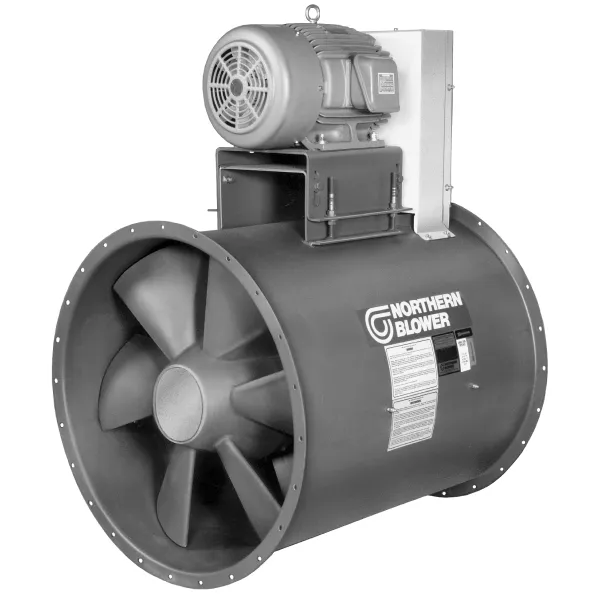
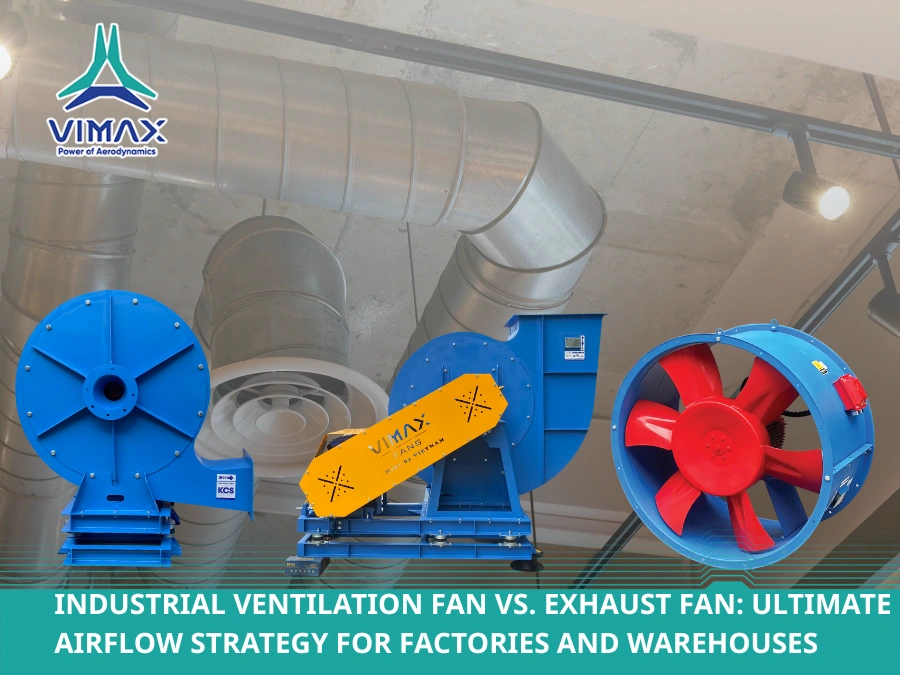
In an industrial setting, air management is not a matter of comfort—it is a critical factor for operational safety, regulatory compliance, and workforce productivity. When dealing with large-scale factories, warehouse complexes, or chemical processing plants, mixing up a Ventilation Fan and an Exhaust Fan can lead to dangerous accumulation of toxic gases, hazardous negative pressure pockets, and catastrophic failures in HVAC efficiency.
While residential fans handle simple moisture and odors, industrial fans manage heavy thermal loads, airborne particulate matter, and strict air exchange regulations. Understanding the distinct mechanics of these two systems is vital to engineering an efficient industrial facility.
1. The Core Difference Between a Ventilation Fan and an Exhaust Fan (10-Second Summary)
The fundamental distinction lies in how these heavy-duty systems manipulate air pressure and air direction across massive square footages:
- Industrial Exhaust Fan: Operates as a localized, high-velocity point-source extraction system. Its main duty is to grab heat, hazardous fumes, chemical vapors, or combustible dust directly from the production line and violently blast it out of the building before it can diffuse into the general work floor.
- Industrial Ventilation Fan: Operates as a dilution and air-exchange system. It focuses on volumetric ambient air replacement. It continuously pushes stale, heated indoor air out while simultaneously pulling in massive volumes of treated or ambient fresh outdoor air to lower the overall facility temperature and restock oxygen levels.
Industrial Comparison Matrix
| Operational Criteria | Industrial Exhaust Fan | Industrial Ventilation Fan |
| Primary Industrial Function | Localized source capture (fumes, welding smoke, chemical vapors, heavy dust). | General ambient air exchange, building-wide cooling, and thermal comfort. |
| Pressure Dynamic | Generates intense Negative Pressure if uncompensated. | Focuses on Balanced or Positive Pressure to keep contaminants out. |
| Airflow Capacity (CFM) | Lower volume but exceptionally High Static Pressure to push air through long duct networks. | Massive Volume (High CFM) but lower static pressure, optimized for open areas. |
| Regulatory Drivers | Driven by OSHA / Environmental safety laws regarding toxic exposure thresholds. | Driven by building codes regarding structural longevity and worker heat stress. |
2. Deep Dive Into Industrial Applications: When & Where?
Industrial Exhaust Fans: Source Capture and Hazard Containment
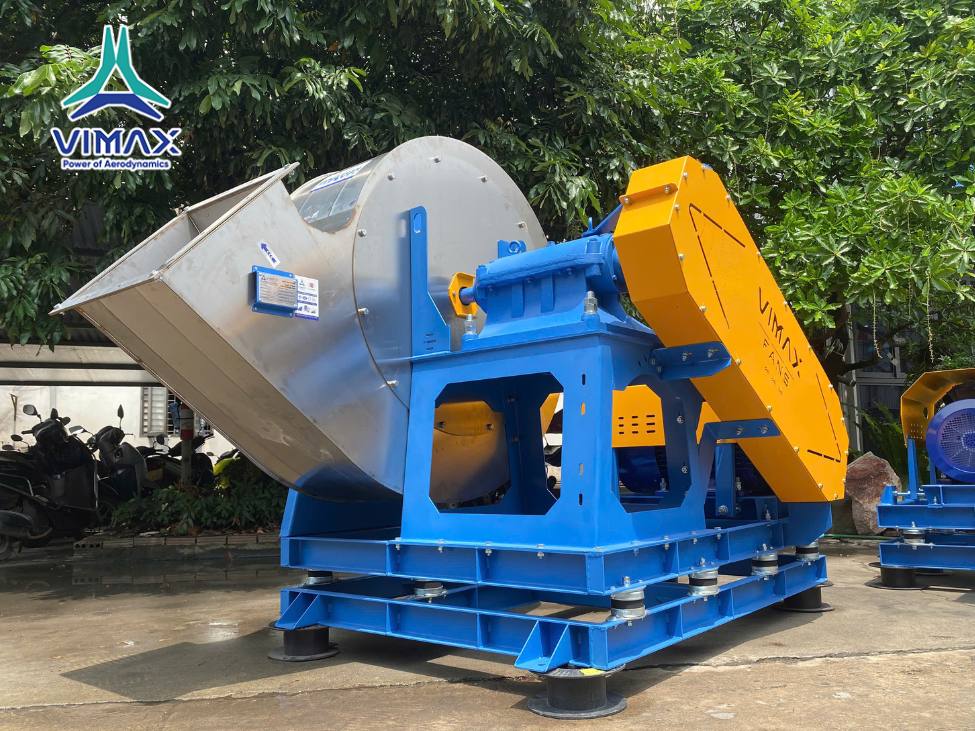
Industrial exhaust systems are safety-critical installations. They are deployed at the exact points where manufacturing contamination occurs:
- Welding and metal fabrication bays: Exhaust hoods pull toxic manganese and zinc oxide fumes straight up from the welding arc, preventing workers from inhaling dangerous particulates.
- Chemical mixing & painting booths: Volatile Organic Compounds (VOCs) and flammable solvent vapors are heavier than air. Heavy-duty explosion-proof exhaust fans draw these fumes downward or outward to mitigate explosion risks.
- Boiler rooms and high-heat zones: They quickly pull out extreme, localized radiant heat generated by heavy machinery or furnaces before it cooks the surrounding electrical infrastructure.
Industrial Ventilation Fans: Building-Wide Dilution and Thermal Control
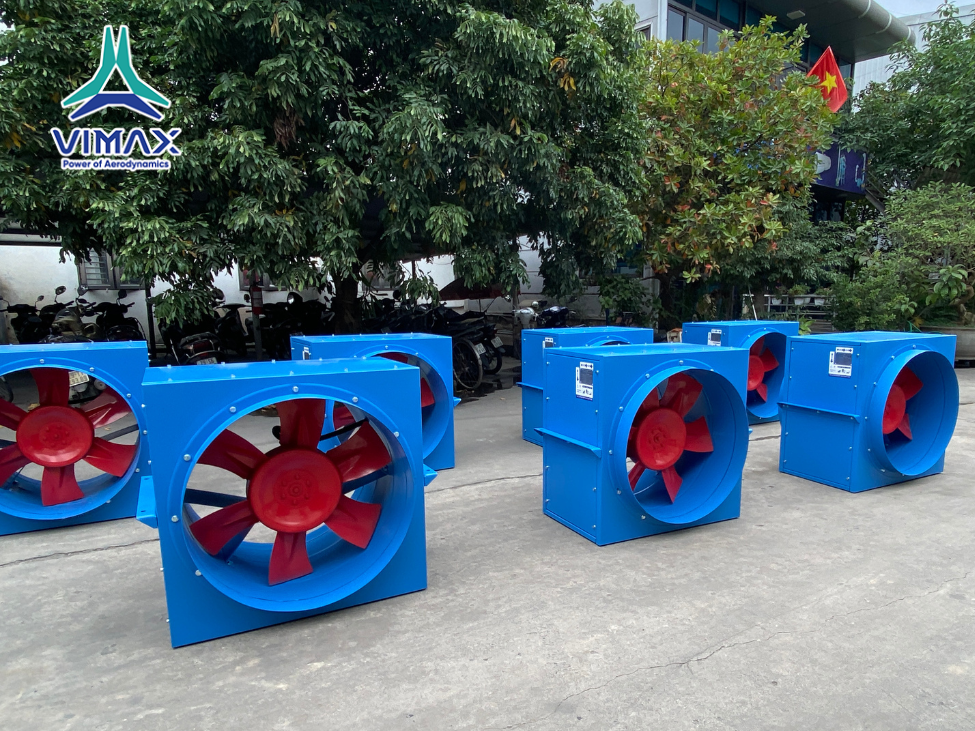
Instead of targeting a single machine, industrial ventilation fans handle the macro-climate of the entire warehouse or assembly plant:
- Massive distribution warehouses: Large facilities often trap radiant heat under metal roofs, creating a greenhouse effect. High-Volume, Low-Speed (HVLS) or heavy axial ventilation fans continuously sweep this hot air out, keeping inventory at stable temperatures.
- Assembly lines with high worker density: In tightly packed manufacturing lines, metabolic heat and CO2 build up fast. Ventilation systems continuously introduce fresh outdoor oxygen to keep workers sharp, hydrated, and productive, preventing heat exhaustion.
- Garment and footwear factories: Places with a high density of workers, requiring a large and continuous supply of oxygen to reduce fatigue.
- Closed-system livestock farms: Continuous regulation of temperature and humidity and removal of ammonia gas.
Explore more: Indirect Wall Mounted Square Axial Fan Manufacturing by VIMAX
3. Real-World Engineering Disasters: 3 Critical Mistakes Factory Managers Make
In large-scale facilities, air balance errors can cost tens of thousands of dollars in wasted electricity, structural damage, and safety fines.
Uncompensated Negative Pressure
The most common disaster occurs when a plant installs massive wall-mounted exhaust fans to pull out heat but provides zero mechanical intake ventilation.
- The Result: The factory becomes a giant vacuum. The negative pressure grows so intense that exterior bay doors become nearly impossible to pull open, emergency exit doors whistle violently, and the exhaust fans begin to stall because they are fighting a vacuum.
- The Danger: Instead of venting bad air, the exhaust fans start back-drafting combustion gases from gas-fired water heaters or furnaces right back into the factory floor, causing carbon monoxide hazards.
- The Engineering Fix: For every 1 CFM of air exhausted, you must supply at least 0.95 to 1 CFM of fresh “makeup air” through a corresponding industrial intake ventilation fan or louvers.
Ignoring Static Pressure in Duct Design
When building an industrial exhaust line for grinding dust or chemical fumes, contractors often treat ducts like simple water pipes.
- If your duct network has long runs, multiple branches, and numerous bends, it creates massive Static Pressure Resistance (measured in inches of water gauge, WG).
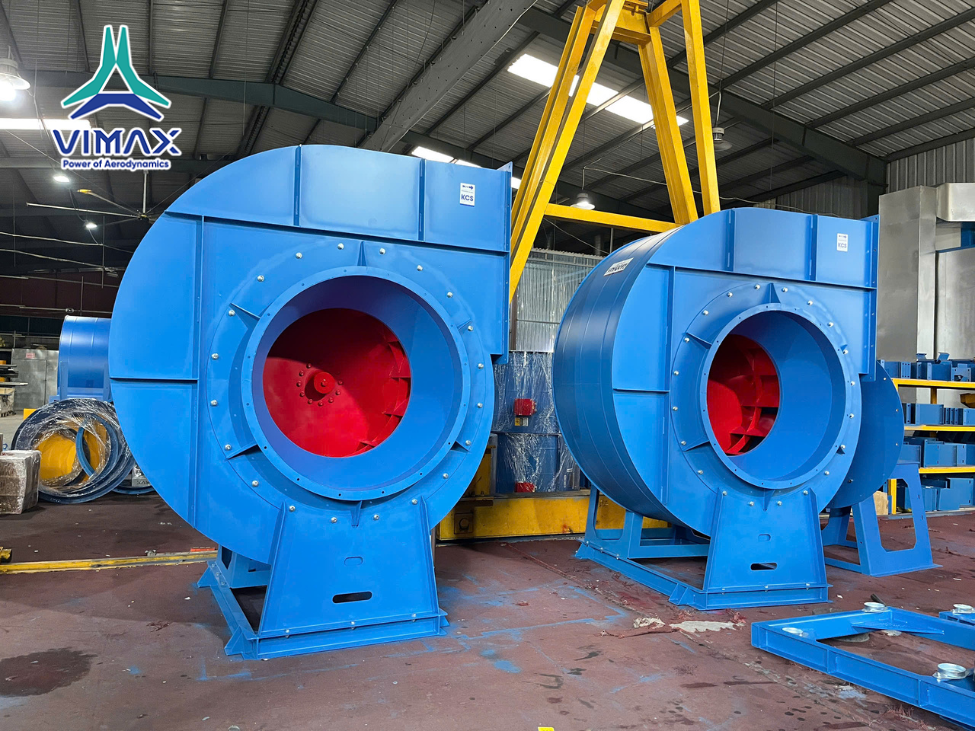
- If you buy a high-CFM fan designed for open-air ventilation and attach it to a complex duct system, the airflow drops to near zero. Dust will settle inside the ducts, creating a severe fire hazard. Industrial exhaust systems require specialized centrifugal fans or vane-axial fans engineered explicitly to slice through high static resistance.
Placing Intake Vents Next to Exhaust Stacks (Short-Circuiting)
This is a classic architectural oversight. A factory places an exhaust fan on the roof to dump chemical fumes out, and installs a fresh-air intake ventilation fan just 10 feet away on the exact same roofline.
- The Flaw: The fresh air intake immediately sucks the highly concentrated toxic exhaust fumes right back down into the building. This is called short-circuiting.
- The Rule: Exhaust stacks must extend vertically well above the roof line, and intake vents must be positioned upwind or at a significant lower elevation on the windward side of the building to guarantee pure air capture.
Read more: Top Centrifugal Air Blower Manufacturers
5. Which Type of Fan Should Businesses Choose?
To optimize costs and operational efficiency, businesses need to base their choice on the specifics of their production:
Choose exhaust fans when: Your factory has processes that generate hazardous waste (smoke, dust, chemical odors) or machinery that emits high heat. You need to isolate and expel these immediately.
Choose ventilation fans when: Your factory has an enclosed space, a large workforce, machinery that emits heat evenly (not excessively hot), and the main goal is to lower the overall temperature and provide fresh air to improve worker productivity.
Optimal solution: Most modern factories today combine both types. They use exhaust fans in production lines that generate pollution, and use wall/roof-mounted ventilation fans to cool the entire common space.
Looking for the Perfect Ventilation Solution for Your Factory?
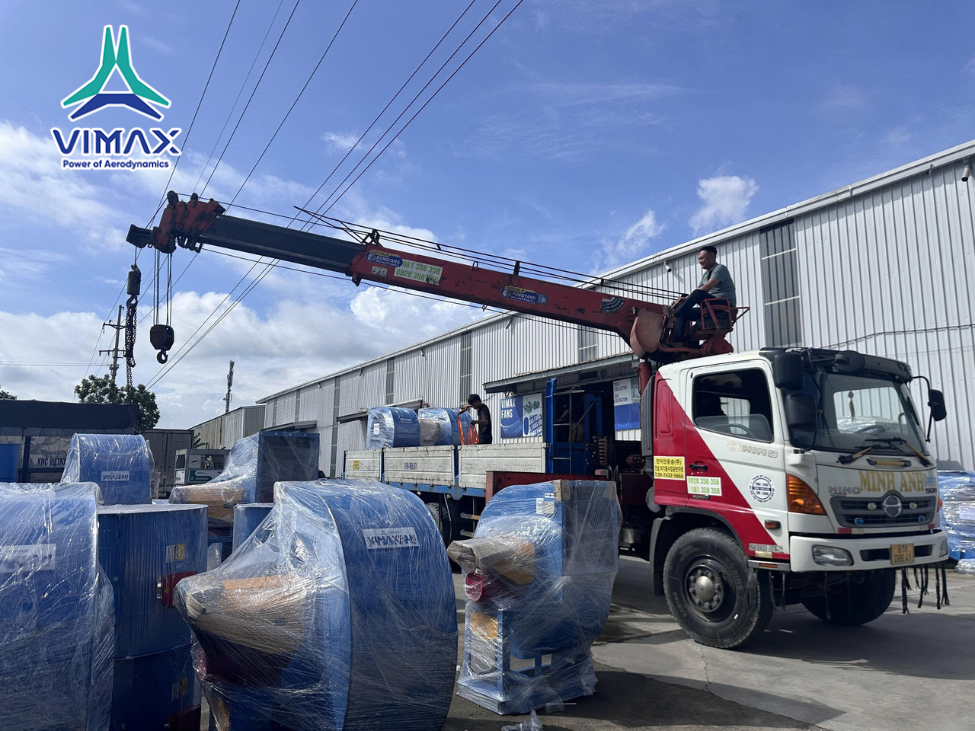
From high-capacity centrifugal exhaust fans to comprehensive negative pressure ventilation and cooling systems, VIMAX GLOBAL has the right solution for every type of factory and warehouse. We are committed to providing high-quality, durable products at the most optimal investment cost.
Contact Vimax Global today to receive a special quote and exclusive ventilation system design drawings for your business!
FAQs
What are Explosion-Proof (XP) fans and when are they legally required?
Explosion-proof exhaust fans feature completely sealed, spark-resistant motors (often built with aluminum blades rather than steel to prevent friction sparks). They are legally mandated by NFPA codes anywhere flammable vapors, gases, or combustible dusts (like grain dust, sawdust, or aluminum powder) are present in the airstream.
Can an HVLS (High-Volume, Low-Speed) ceiling fan replace an exhaust fan?
Absolutely not. An HVLS fan is a destratification tool—it mixes and moves air within the room to create a cooling breeze, but it does not physically pull air out or push air into the building. It should be used in tandem with an exhaust/ventilation system to distribute the fresh air evenly.
Can industrial exhaust fans cool a factory?
Exhaust fans only cool by removing hot air from a specific point. They are not capable of cooling a large area without a convection fresh air intake system on the opposite side.
Why is the room still stuffy even with a high-powered industrial exhaust fan installed?
Because the room is too airtight; the fan sucks out all the air, creating a negative pressure environment, but there is no way for fresh air to enter. You need to open more ventilation windows or install additional fresh air supply fans.
Why do industrial exhaust fans lose suction power quickly after a period of use?
There are three main reasons:
Dirt buildup: Thick layers of dirt and grease accumulate on the fan blades, altering their aerodynamic shape and increasing the load on the motor.
Belt slippage: With indirect drive fans, the belt loosens after a period of operation, reducing the rotational speed of the blades.
Leaky ducts: The air duct system becomes dented or leaks at the joints, causing a loss of suction pressure.
