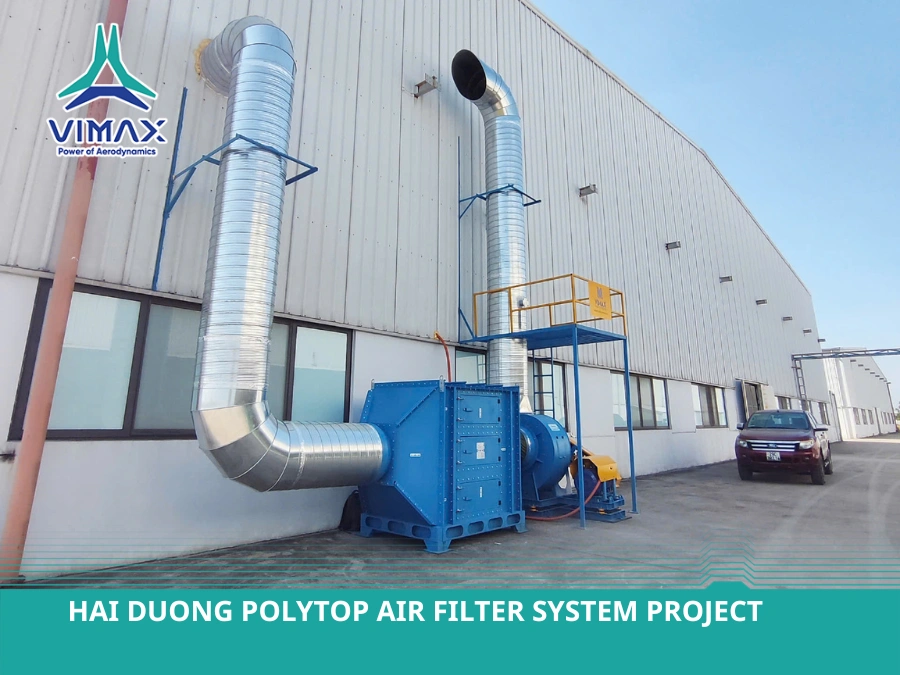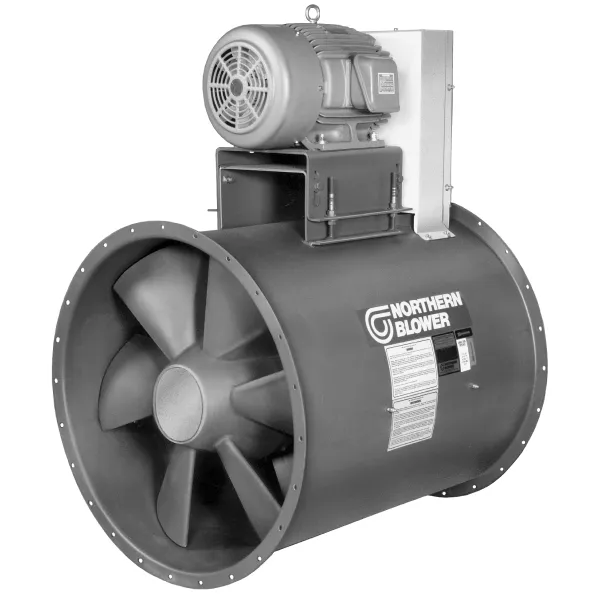
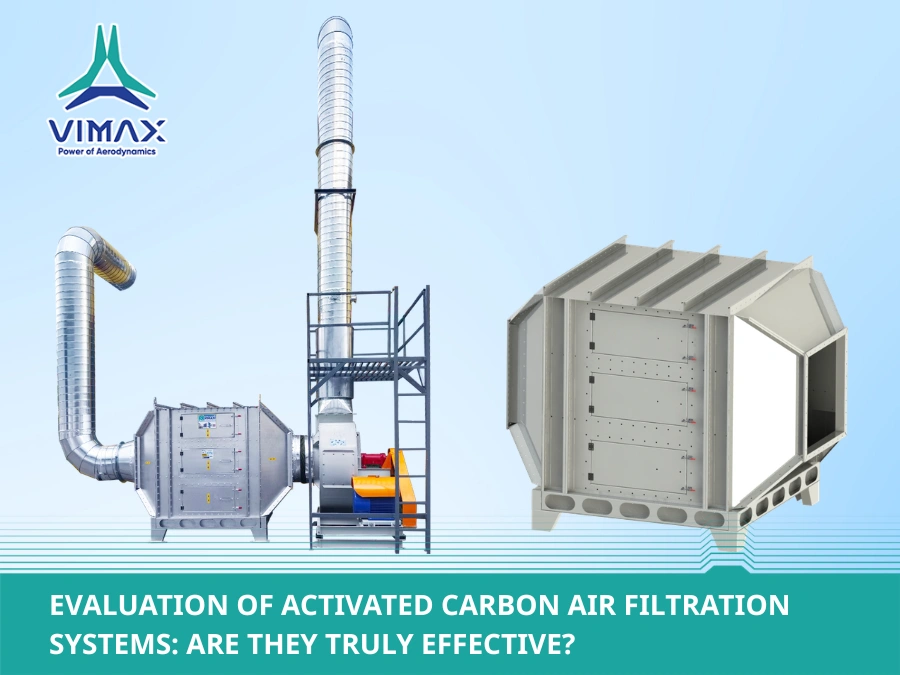
In the context of increasingly stringent environmental regulations, controlling odors, toxic solvent vapors, and gaseous pollutants in manufacturing plants and treatment facilities has become a mandatory challenge. Among current technologies, activated carbon air filtration systems are always the first solution mentioned.
However, is this solution truly as effective as claimed? How does its operating principle work, and what should businesses keep in mind before investing? Let’s analyze and evaluate it in detail in the article below.
Quick Answer: Are Activated Carbon Air Filtration Systems Effective?
For readers looking for a quick summary, the table below highlights the key facts.
| Question | Answer |
| Are activated carbon filters effective? | Yes. They can remove 80–95% of odors and VOCs under properly designed operating conditions. |
| What pollutants can they remove? | VOCs, solvent vapors, paint fumes, organic odors, and some acidic or alkaline gases. |
| Can they remove dust? | No. Activated carbon is designed for gaseous pollutants rather than particulate matter. |
| Do they require maintenance? | Yes. Activated carbon media must be replaced periodically once adsorption capacity is exhausted. |
| Best applications | Spray booths, printing plants, chemical factories, laboratories, hospitals, wastewater treatment plants, and industrial ventilation systems. |
While activated carbon systems are highly effective for gas-phase pollution control, their actual performance depends on proper engineering design, airflow management, pollutant concentration, and routine maintenance.
What Is an Activated Carbon Air Filtration System?
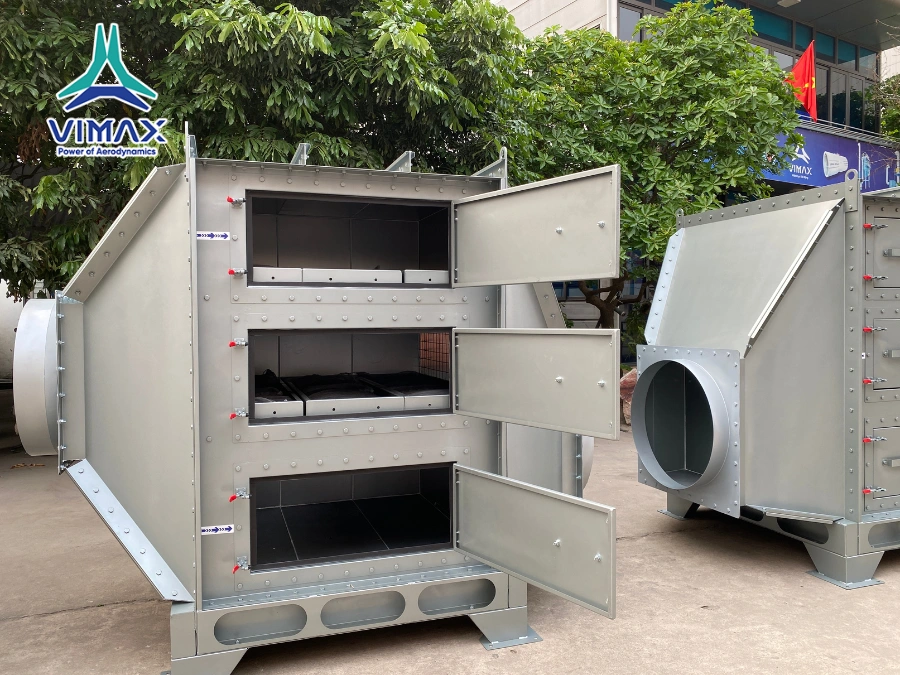
An activated carbon air filtration system is an industrial air pollution control solution that removes odors, chemical vapors, and gaseous contaminants through an adsorption process. Unlike traditional mechanical filters that capture solid particles, activated carbon targets molecules suspended in the air, making it especially effective for treating industrial exhaust containing volatile organic compounds.
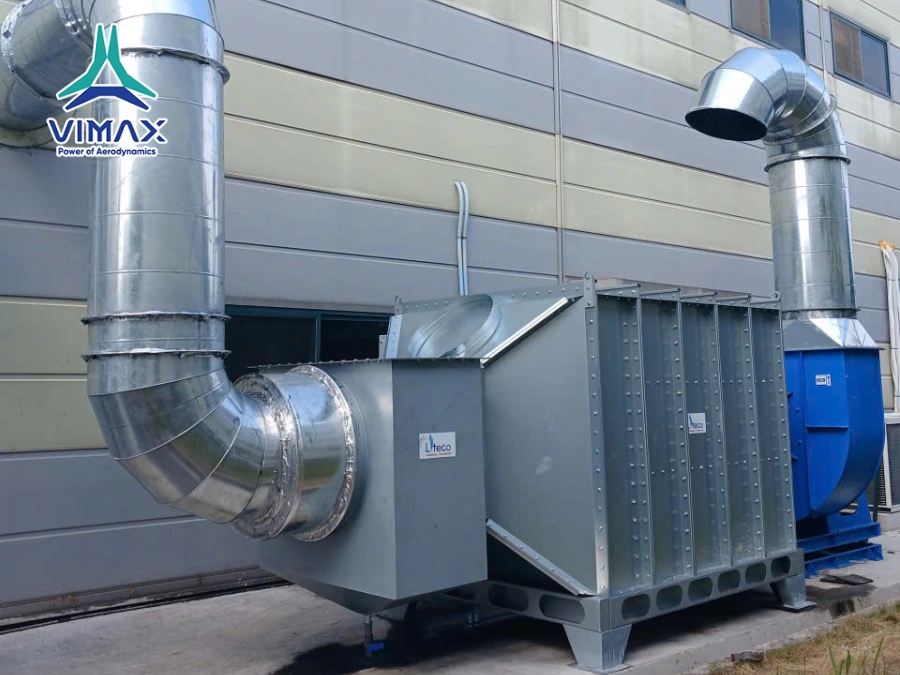
The heart of the system is the activated carbon media, a specially processed material with millions of microscopic pores that create an enormous internal surface area. This highly porous structure enables the carbon to trap contaminants as polluted air passes through the filter bed.
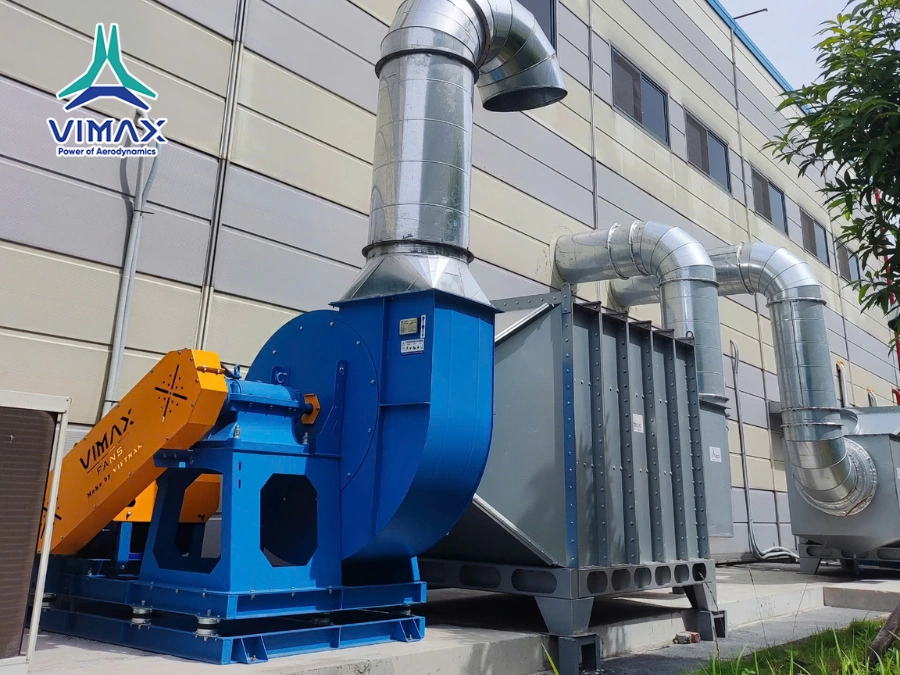
Activated carbon filtration systems are widely installed as standalone units or integrated into larger industrial ventilation and exhaust treatment systems.
Because of its versatility, activated carbon has become a preferred solution in industries where odor control and VOC removal are critical for environmental compliance and workplace safety.
How Does an Activated Carbon Air Filtration System Work?
The operating principle of an activated carbon filtration system is based on adsorption, a physical process in which gas molecules adhere to the surface of activated carbon rather than being absorbed into its structure.
Unlike absorption, where contaminants penetrate the material, adsorption traps pollutants on the carbon’s enormous internal surface.
Typical Airflow Process
A standard industrial activated carbon filtration system follows a relatively simple airflow path:
Pollution Source
│
Extraction Hood
│
Industrial Ductwork
│
Pre-Filter (Optional but Recommended)
│
Activated Carbon Filter
│
Exhaust Fan
│
Clean Air Released
First, contaminated air is captured directly from the pollution source using extraction hoods or local exhaust ventilation systems.
The air is transported through ductwork to the activated carbon filter housing.
As the air flows across the activated carbon bed, gaseous contaminants are adsorbed onto the surface of the carbon media.
Finally, the purified air passes through the exhaust fan before being safely discharged into the atmosphere.
The Science Behind Activated Carbon Adsorption
The exceptional performance of activated carbon comes from its highly porous internal structure.
One gram of activated carbon typically provides 800–1,500 square meters of surface area, equivalent to the size of several tennis courts.
This enormous surface area contains countless microscopic pores that create ideal conditions for attracting and retaining contaminant molecules.
As polluted air travels through the carbon bed:
- VOC molecules collide with the carbon surface.
- Molecular attraction (Van der Waals forces) causes pollutants to adhere to the pore walls.
- Clean air continues flowing through the system.
- Contaminants remain trapped until the adsorption capacity becomes saturated.
Eventually, the available adsorption sites become fully occupied. At this stage, the activated carbon media must be replaced or regenerated to maintain filtration efficiency.
Types of Activated Carbon Media
Selecting the right activated carbon media is one of the most important factors influencing filtration efficiency, airflow resistance, maintenance requirements, and operating costs.
Although many commercial products are available, industrial systems generally use three primary types of activated carbon media.
1. Honeycomb Activated Carbon
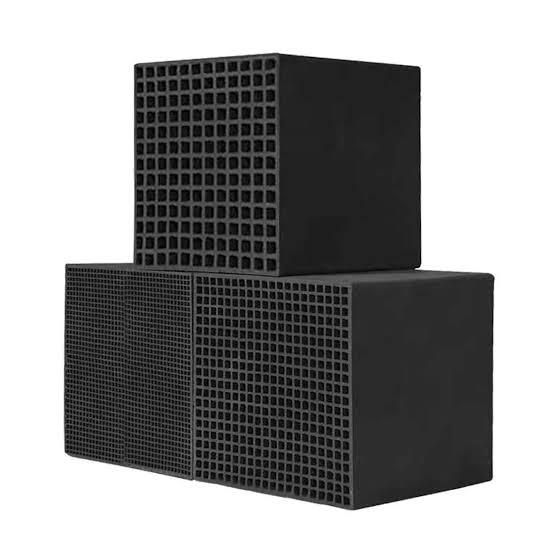
Honeycomb activated carbon is widely regarded as the premium choice for industrial exhaust treatment systems handling large airflow volumes.
Unlike loose carbon granules, honeycomb carbon is manufactured into rigid blocks containing hundreds of straight channels that allow air to pass with minimal resistance.
Structure
Honeycomb carbon is commonly produced from:
- Coconut shell carbon
- Wood-based activated carbon
- Coal-based activated carbon
The carbon is molded into square or hexagonal cells, creating a lightweight structure with exceptionally high airflow capacity.
Typical block dimensions include:
- 100 × 100 × 100 mm
- 100 × 100 × 50 mm
Advantages
Compared with granular carbon, honeycomb media offers several technical advantages:
- Lower pressure drop
- Higher airflow capacity
- Better airflow distribution
- Reduced fan energy consumption
- Easier replacement in modular systems
Typical Specifications
- Surface area: up to 1,500 m²/g
- Iodine value: 400–800 mg/g
- VOC removal efficiency: 80–95%
- Maximum operating temperature: 80–100°C
Honeycomb activated carbon is particularly suitable for paint booths, industrial ventilation systems, and facilities requiring continuous high-volume air treatment.
2. Granular or Pelletized Activated Carbon
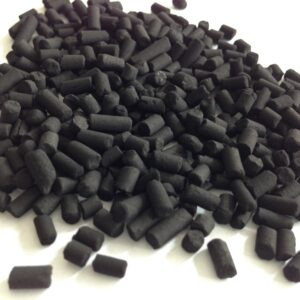
Granular activated carbon (GAC) remains the most commonly used media due to its affordability and flexibility.
It consists of small irregular granules or cylindrical pellets packed into filter beds or adsorption towers.
Raw Materials
Granular carbon is typically manufactured from:
- Coconut shells
- Bituminous coal
- Anthracite coal
- Wood charcoal
These materials undergo thermal or chemical activation to create an extensive pore network capable of adsorbing gaseous pollutants.
Advantages
Granular activated carbon offers several practical benefits:
- Easy transportation
- Flexible loading into filter housings
- Lower initial investment
- Suitable for customized filtration systems
However, because the media is loosely packed, pressure drop may gradually increase as dust accumulates between the carbon particles.
Routine inspection is therefore essential to maintain airflow performance.
3. Activated Carbon Filter Panels
Activated carbon filter panels combine convenience with modular installation.
Rather than filling loose carbon into a filter housing, manufacturers integrate the activated carbon into a removable panel enclosed within a galvanized steel, aluminum, or stainless-steel frame.
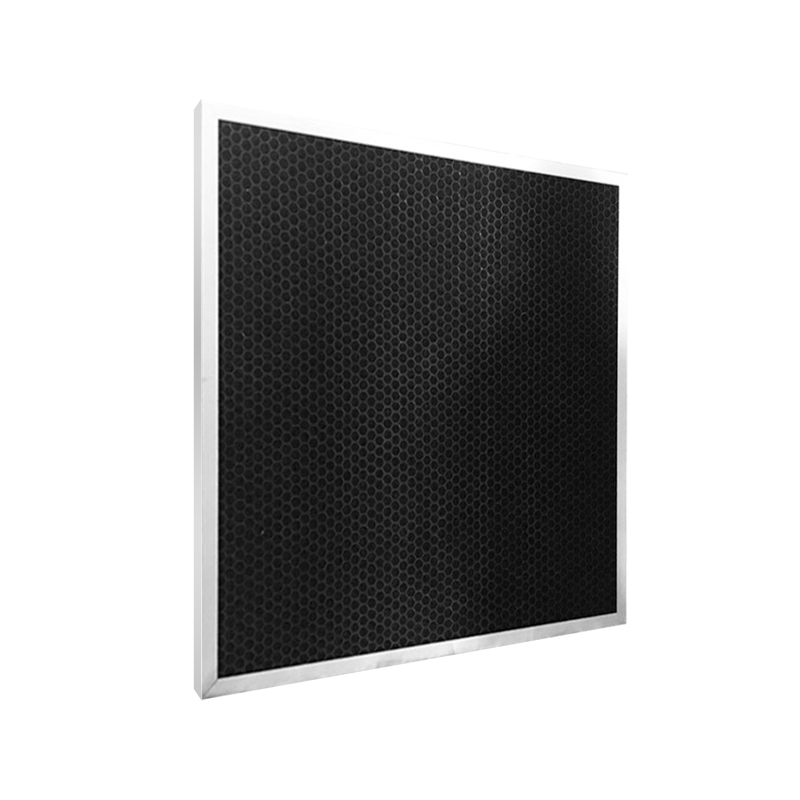
These panels are commonly installed in:
- HVAC systems
- Air handling units
- Clean rooms
- Laboratories
- Commercial ventilation systems
- Small industrial exhaust units
Their primary advantage lies in quick replacement during scheduled maintenance, minimizing system downtime.
Advantages and Limitations of Activated Carbon Air Filtration Systems
Like any air pollution control technology, activated carbon filtration is not a universal solution. While it excels at removing odors and gaseous contaminants, its performance depends on proper system design, operating conditions, and maintenance.
Understanding both its strengths and limitations helps businesses determine whether it is the right investment for their facility.
Advantages of Activated Carbon Air Filtration Systems
1. High VOC and Odor Removal Efficiency
The greatest advantage of activated carbon filtration is its outstanding ability to remove gaseous pollutants that conventional dust collection systems cannot capture.
Under properly designed operating conditions, activated carbon can achieve 80–95% removal efficiency for:
- Volatile Organic Compounds (VOCs)
- Organic solvent vapors
- Paint fumes
- Printing ink emissions
- Adhesive odors
- Smoke and unpleasant industrial odors
This makes it an ideal solution for industries where odor control and environmental compliance are top priorities.
2. Environmentally Friendly Filtration Process
Activated carbon systems rely on physical adsorption rather than chemical reactions.
Unlike wet scrubbers, they do not require:
- Chemical dosing
- Wastewater treatment
- Recirculating chemical solutions
- Additional neutralizing agents
As a result, businesses can reduce secondary pollution while simplifying day-to-day operations.
3. Simple Installation and Easy Integration
Another major advantage is the relatively straightforward system design.
Activated carbon units can be integrated into:
- Existing industrial ventilation systems
- Dust collection systems
- Local exhaust ventilation (LEV)
- Centralized exhaust treatment systems
This flexibility minimizes installation time and makes upgrades easier for existing facilities.
4. Quiet and Energy-Efficient Operation
Activated carbon filtration systems contain very few moving parts. Aside from the exhaust fan, the filtration process itself is passive.
When properly designed with low-pressure-drop media such as honeycomb activated carbon, the system can help:
- Reduce fan energy consumption
- Lower operating noise
- Improve overall ventilation efficiency
5. Modular Design for Flexible Expansion
Many activated carbon filtration systems feature modular construction, allowing businesses to:
- Increase filtration capacity as production grows
- Replace individual filter modules instead of the entire system
- Reduce maintenance downtime
This modularity is especially valuable for facilities planning future expansion.
Limitations of Activated Carbon Air Filtration Systems
Despite their advantages, activated carbon filters are not suitable for every industrial application.
Businesses should understand the following limitations before investing.
1. Activated Carbon Has a Limited Adsorption Capacity
Activated carbon cannot adsorb contaminants indefinitely.
As pollutants accumulate inside the microscopic pores, the available adsorption sites gradually become saturated.
Once saturation occurs:
- Odor removal efficiency decreases.
- VOC emissions increase.
- Environmental compliance may be compromised.
Routine monitoring and timely media replacement are therefore essential.
2. Not Suitable for Heavy Dust Applications
Activated carbon is designed to remove gases—not particulate matter.
If large amounts of dust enter the carbon bed:
- Carbon pores become blocked.
- Airflow resistance increases.
- Adsorption efficiency drops significantly.
- Carbon replacement becomes more frequent.
For this reason, a pre-filter (such as a bag filter or cartridge filter) should always be installed upstream in dusty environments.
Read more: What is a Wet Electrostatic Precipitator? WESP Working Principle
3. Temperature Limitations
Most activated carbon media perform best below 80–100°C.
At higher temperatures:
- Adsorption efficiency declines.
- Contaminants are less likely to remain attached to the carbon surface.
- Carbon lifespan shortens.
Facilities handling high-temperature exhaust should include a cooling stage before the activated carbon unit.
4. High Pollutant Concentrations Can Reduce Service Life
When exhaust air contains extremely high VOC concentrations, activated carbon becomes saturated much faster than under normal operating conditions.
In these cases, businesses may need:
- Larger carbon beds
- Multiple adsorption stages
- More frequent media replacement
- Alternative technologies such as thermal oxidizers
Proper system sizing is therefore critical.
Practical Industrial Applications
Thanks to its flexibility and high odor elimination capacity, activated carbon filtration systems are currently the preferred choice for:
- Spray Booths & Woodworking Shops: Treating paint odors, fine overspray dust, and solvent vapors.
- Printing & Packaging Plants: Treating ink vapors and evaporating solvents.
- Light Chemical, Adhesive, and Plastic Facilities: Controlling toxic chemical fumes.
- Hospitals & Laboratories: Purifying ambient air and filtering disinfectant fumes.
- Wastewater Treatment Stations & Waste Transfer Stations: Eliminating foul odors from organic decomposition (H2S, NH3).
Recommendations for Businesses to Optimize Performance
An activated carbon air filtration system is genuinely highly effective, provided that businesses design it properly according to technical standards:
- Always Install a Pre-filter System Upstream: To trap coarse dust before it reaches and blinds the carbon media.
- Select the Right Media Form: Prioritize Honeycomb Carbon for high-airflow systems to minimize static pressure drop and save fan energy.
- Control Gas Stream Temperature: Ensure the inlet exhaust temperature is cooled below 80–100∘ C before entering the carbon bed.
- Establish a Maintenance Schedule: Replace activated carbon media periodically (typically every 6–12 months depending on pollutant concentrations) to guarantee that discharged gas consistently meets environmental standards.
Upgrade Your Industrial Air Quality with Vimax Global
Struggling with VOC emissions, chemical fumes, or persistent industrial odors?
Vimax Global specializes in designing and manufacturing advanced industrial ventilation and air pollution control systems tailored to your operational requirements. From activated carbon filtration units to complete exhaust gas treatment solutions, our engineering team delivers reliable systems that help manufacturers improve air quality, meet environmental regulations, and optimize long-term operating performance.
Whether you need a standalone activated carbon filter or a fully integrated air pollution control solution, our experts are ready to provide technical consultation, system design, and customized engineering support.
Contact Vimax Global today to discuss your project and discover the most effective solution for cleaner, safer, and more compliant industrial operations.