


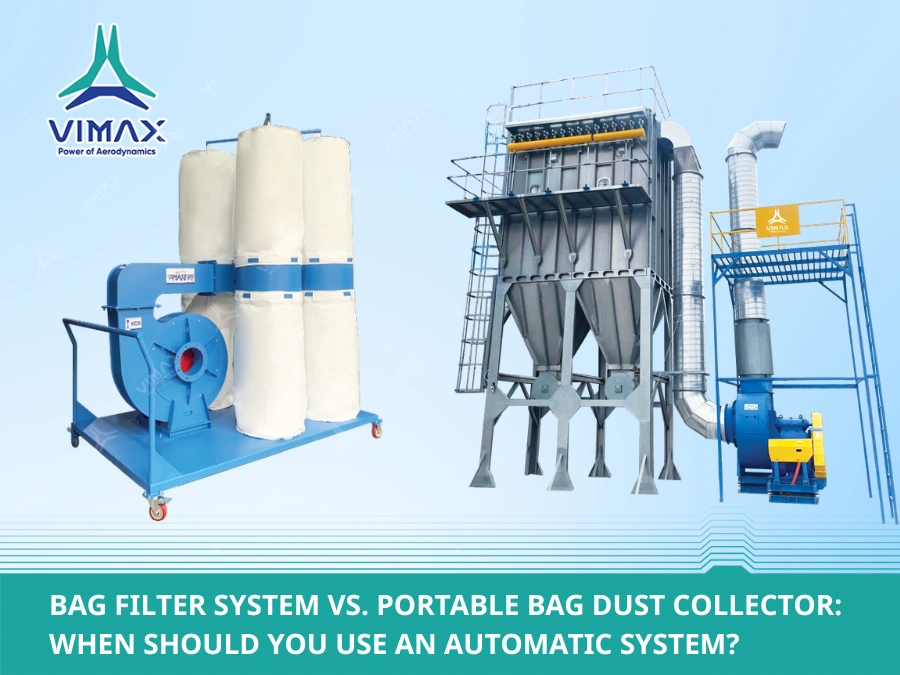
When searching for dust extraction solutions, many business owners and plant managers often confuse Industrial Bag Filter Systems with Portable Bag Dust Collectors.
Although both devices use fabric filter bags to capture dust particles, their operating scale, filtration efficiency, cleaning mechanisms, and investment costs differ significantly. Choosing the wrong equipment can negatively impact your budget and disrupt production operations:
- Using a portable bag collector for a large factory: The unit will quickly become overloaded, clogging the filter media and causing a sharp drop in suction power. Manual cleaning releases fine dust particles back into the facility, causing secondary contamination and interrupting production lines.
- Installing a large bag filter system for a small workshop: This leads to unnecessary capital expenditure, occupies valuable floor space, and wastes energy during operation.
This article clearly distinguishes between these two popular dust collection systems, analyzes their pros and cons, and provides a clear answer: When must a business upgrade to an automatic dust cleaning system?
Basic Concepts of the Two Dust Collection Systems
What is an Industrial Bag Filter System?
An Industrial Bag Filter System is a centralized dust collection solution designed for medium-to-large-scale manufacturing operations. Unlike portable standalone units, all filter bags in this system are completely enclosed inside a heavy-duty metal housing (typically made of thick powder-coated or stainless steel).
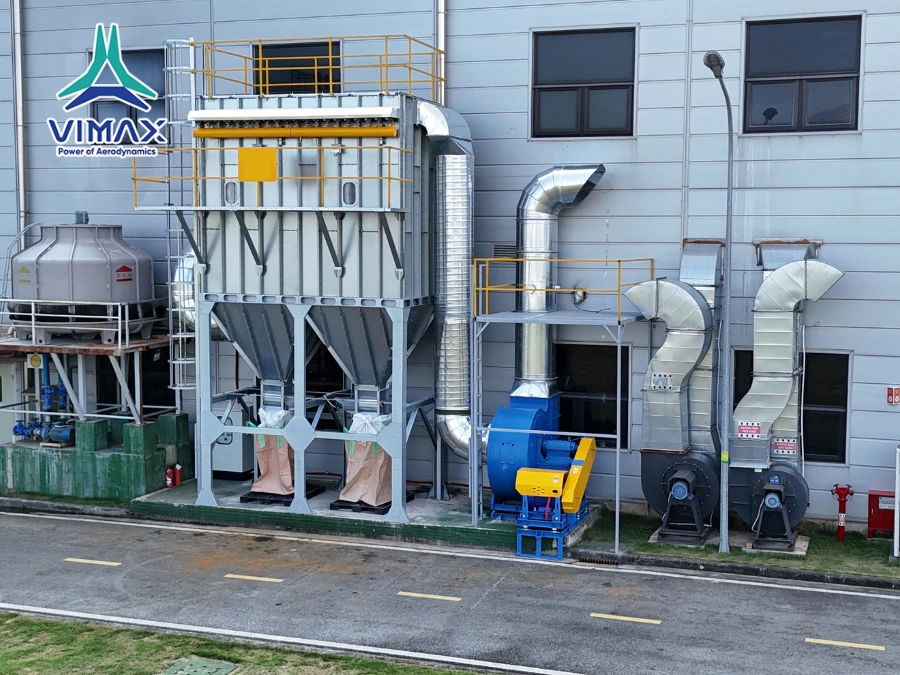
Regarding operational principle, the system features a high-capacity centrifugal fan connected to a network of ductwork that extracts dust directly at source points. Its most critical feature is the automatic Pulse-Jet cleaning mechanism (or mechanical shaking). The filter bags are cleaned continuously while the system is operating, eliminating the need for operational downtime.
Read more: Vertical vs. Horizontal Cartridge Dust Collectors: Which One to Choose?
What is a Portable Bag Dust Collector?
A Portable Bag Dust Collector is a simple, mobile dust extraction unit. It consists of a suction fan, open fabric filter bags arranged at the top (hence “open-bag”), and collection bags (fabric or plastic) at the bottom. The entire assembly is mounted on a wheeled frame for easy mobility.
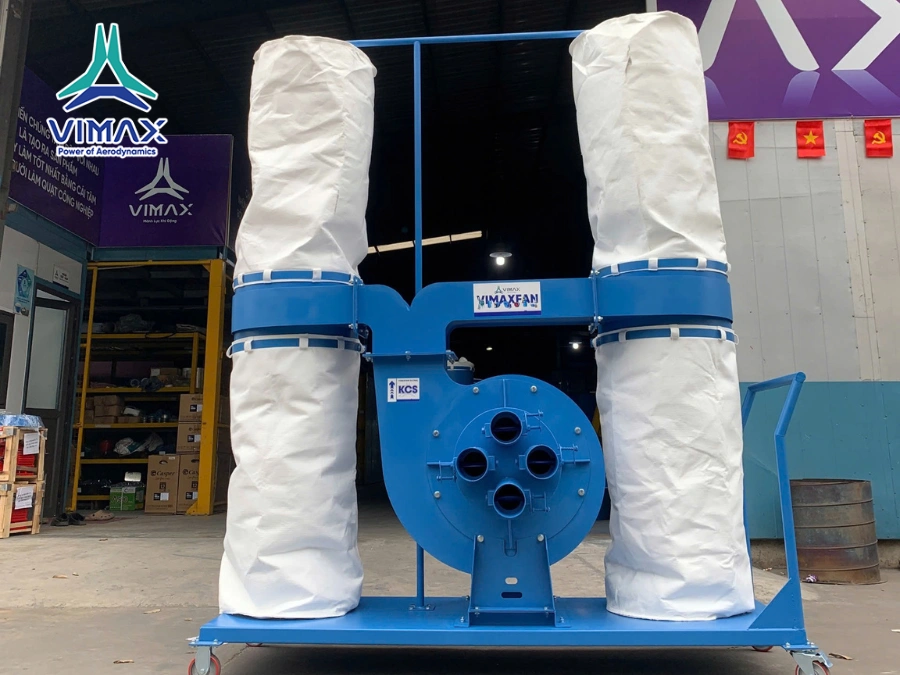
During operation, the fan draws in dust-laden air and blows it directly into the bags. Cleaned air exits through the fabric pores into the ambient space, while dust particles are trapped inside. Maintenance is entirely manual: when the bags are full or clogged, the operator must shut down the machine, remove the bags, and shake or beat them manually to remove dust.
Detailed Comparison: Bag Filter System vs. Portable Bag Dust Collector
To help business owners make an informed choice, below is a detailed comparison table based on practical operating standards:
| Comparison Criteria | Industrial Bag Filter System | Portable Bag Dust Collector |
| Structure & Housing | Fully enclosed within a heavy-duty, corrosion-resistant metal housing. | Completely open-bag structure, lightweight, simple, and mobile. |
| Cleaning Mechanism | 100% Automatic via compressed air pulses (Pulse Jet) at set intervals. | Manual. Operators must remove bags and shake or beat them by hand. |
| Capacity & Airflow | Very high (ranging from several thousand to tens of thousands of m³/h). | Small to medium (typically a few hundred to a few thousand m³/h). |
| Dust Extraction Capability | Extracts dust simultaneously from dozens of collection points via central ductwork. | Typically serves 1 to 4 extraction points close to the unit (single machinery). |
| Environmental Air Quality | Ultra-clean (up to 99.9%). Air meets environmental standards with zero leakage. | Lower. Dust easily leaks back into the workshop during manual bag cleaning. |
| Initial Investment | High initial cost; requires site surveying, ductwork design, and installation. | Very low cost; off-the-shelf purchase, ready to use without installation. |
Read more: Comparing Bag Filters and Cartridge Filters: 11 Key Criteria for the Right Choice
When Should You Choose a Portable Bag Dust Collector?
Portable bag dust collectors are effective solutions when matched with the appropriate operational scale. Businesses should consider this option under the following conditions:
- Small Workshop Scale: Family-owned woodworking shops, small mechanical workshops, laboratories, small garment units, or artisan craft workshops.
- Low Usage Frequency: Only 1 to 3 dust generation points (e.g., a single sliding table saw or a small disc sander) operating intermittently rather than continuously throughout the day.
- Limited Investment Budget: Businesses seeking to minimize upfront capital expenditure and willing to allocate manual labor for periodic bag cleaning.
- Flexible Spatial Layout: Need to move the dust collector across different areas in the shop using built-in caster wheels.
Same topic: 6 Questions Businesses Must Prepare Before Requesting a Dust & Air Filtration System Quotation
When Must You Upgrade to an Automatic Bag Filter System?
As production scales up, continuing to rely on portable bag collectors creates operational bottlenecks, driving up maintenance costs and reducing productivity. Businesses should upgrade to an Automatic Bag Filter System when facing the following operational demands:
1. Medium-to-Large Factories Operating Continuously
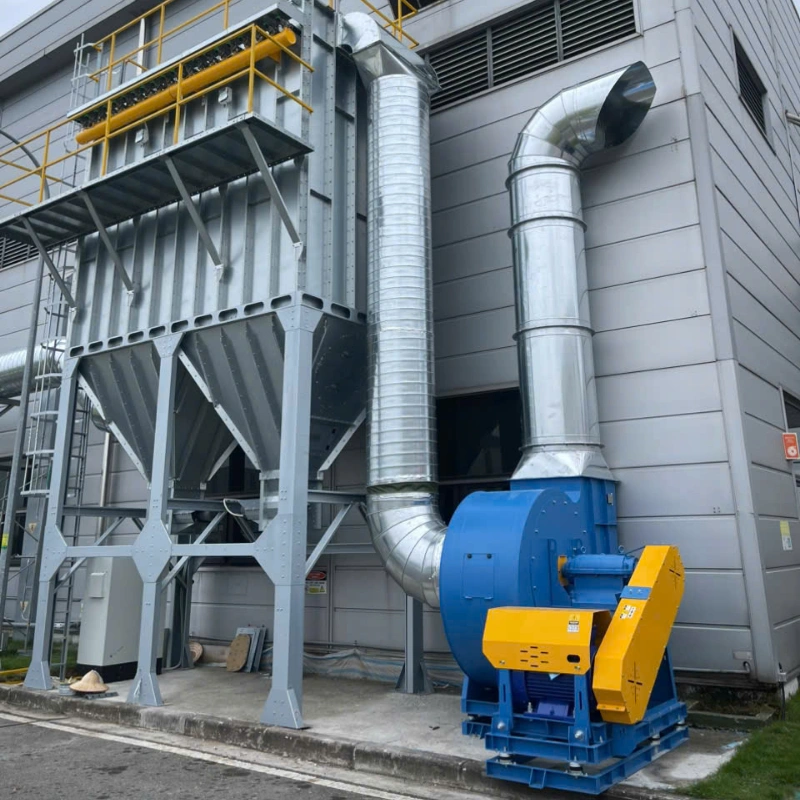
When a factory operates multiple high-capacity machines (CNC routers, brush sanding lines, industrial cutters, packaging lines) across 2 to 3 shifts daily. Stopping production for workers to manually detach and clean filter bags causes line shutdowns, resulting in serious loss of productivity and order delays.
2. High Dust Concentrations & Requirement for Stable Suction Pressure
In high-dust environments, standard filter media clogs rapidly, severely reducing fan suction power. An Automatic Pulse-Jet Bag Filter System uses solenoid valves to release high-pressure compressed air pulses (4–6 bar) into the center of the filter bags. This knocks off accumulated dust cakes into the hopper in milliseconds without stopping the exhaust fan, maintaining 100% consistent airflow and suction pressure.
3. Safeguarding Worker Health & Meeting Emission Standards
Fine dust particles (such as wood sanding dust, cement dust, powder coatings, and chemical powders) pose severe health risks when airborne. A fully sealed bag filter system prevents dust leakage entirely. Collected dust falls into the hopper and is discharged continuously via an automatic screw conveyor and a rotary airlock valve, keeping the manufacturing floor clean and compliant with occupational safety standards.
Portable bag dust collectors offer a cost-effective, temporary solution for small workshops. However, an Automatic Bag Filter System is the ultimate sustainable key for industrial factories to optimize operational efficiency, protect workforce health, and maintain regulatory compliance.
Looking to upgrade your factory’s dust extraction system to improve production efficiency and environmental standards? Contact Vimax today for a free site survey, customized engineering design, and the most competitive quotation!
