


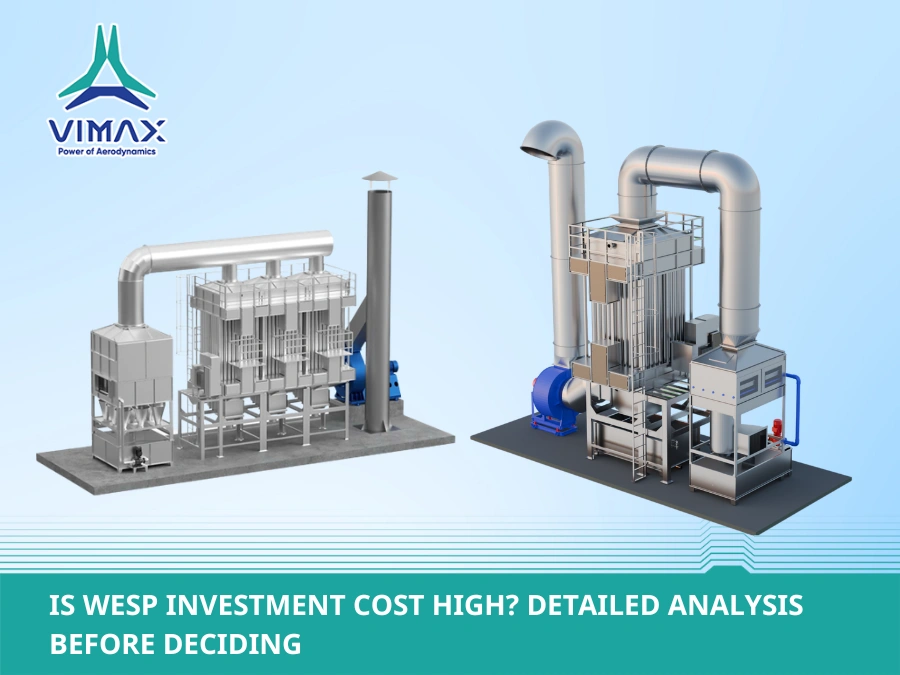
Is WESP Investment Cost High?
To answer directly: The initial capital expenditure (CAPEX) of a WESP system is HIGH compared to traditional dust collection technologies such as baghouse filters, cyclones, or dry electrostatic precipitators (dry ESP).
WESP, short for Wet Electrostatic Precipitator, is an emission control system used to treat fine dust, acid mist, aerosols, and challenging pollutants that are difficult to capture using dry filtration methods.
Read more: What is a Wet Electrostatic Precipitator? WESP Working Principle
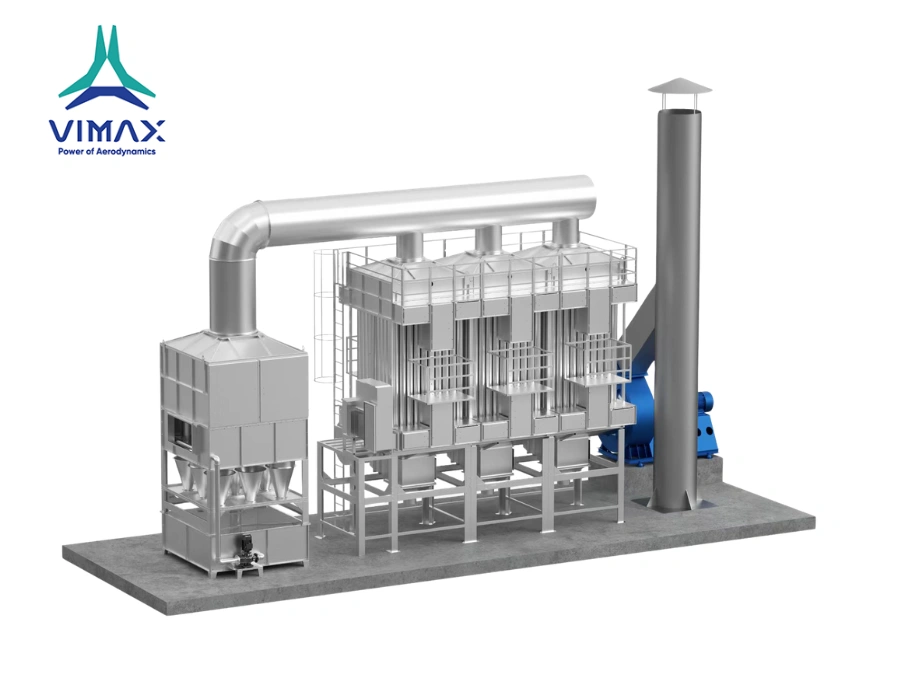
The price of a WESP system depends on numerous factors, including the gas flow rate to be treated, flue gas characteristics, inlet dust concentration, required emission standards, construction materials, level of automation, and scope of supply. Therefore, there is no fixed price tag applicable to every plant.
In other words, the most accurate answer to the question “Is investing in WESP expensive?” is: The initial investment can be substantial, but it is entirely justifiable if your facility deals with complex, corrosive flue gases and requires high treatment efficiency.
Why Does WESP Have a Higher Investment Cost Than Other Systems?
A WESP is not merely a single filtration chamber. A complete system requires the integration of multiple components—from core machinery to auxiliary equipment—to ensure safe, stable, and long-term operation.
1. Equipment Structure and Construction Materials
Because a WESP operates in a moisture-saturated environment and is constantly exposed to toxic, highly corrosive gases and acids (such as SO3, H2SO4), it cannot be built from standard carbon steel. Consequently, the casing, electrodes, piping, pumps, and wetted parts must be constructed from corrosion-resistant materials such as SS316L, SS304, Titanium, Hastelloy C-276, or Conductive FRP (C-FRP). These materials are significantly more expensive than standard structural steel.
2. High-Voltage Power Supply (T/R Set) and Control System
WESP relies on a high-voltage electrostatic field to charge and collect particulate pollutants. Thus, the high-voltage power supply, rectifier transformer, control panels, safety interlocks, and monitoring systems represent critical elements of the equipment configuration.
A system capable of automatic load tracking, spark rate control, fault alerting, and operation data logging will require a higher investment than a basic setup. However, higher automation minimizes manual intervention and helps lower long-term operating costs.
3. Water and Recirculation Treatment System
Unlike dry ESPs that use mechanical rapping, WESP uses water to continuously or periodically wash the collecting surfaces and flush away captured pollutants. Therefore, the system requires pumps, storage tanks, piping networks, spray nozzles, water filters, and wastewater collection/treatment solutions.
If the flue gas contains heavy acidic components, neutralization stages, settling tanks, or water quality conditioning loops may need to be integrated. This must be accounted for during the initial design phase rather than looking strictly at the core vessel.
4. Custom Engineering for Specific Plant Conditions
WESP systems are engineered to order; they are not “one-size-fits-all” off-the-shelf products. Parameters such as gas flow rate, temperature, humidity, particulate composition, system pressure, operating cycles, and available footprint directly dictate the technical solution.
A properly engineered system prevents undersizing, excessive pressure drops, or costly retrofits after commissioning. Consequently, site surveys, engineering calculations, and custom design represent necessary upfront investments to mitigate operational risks.
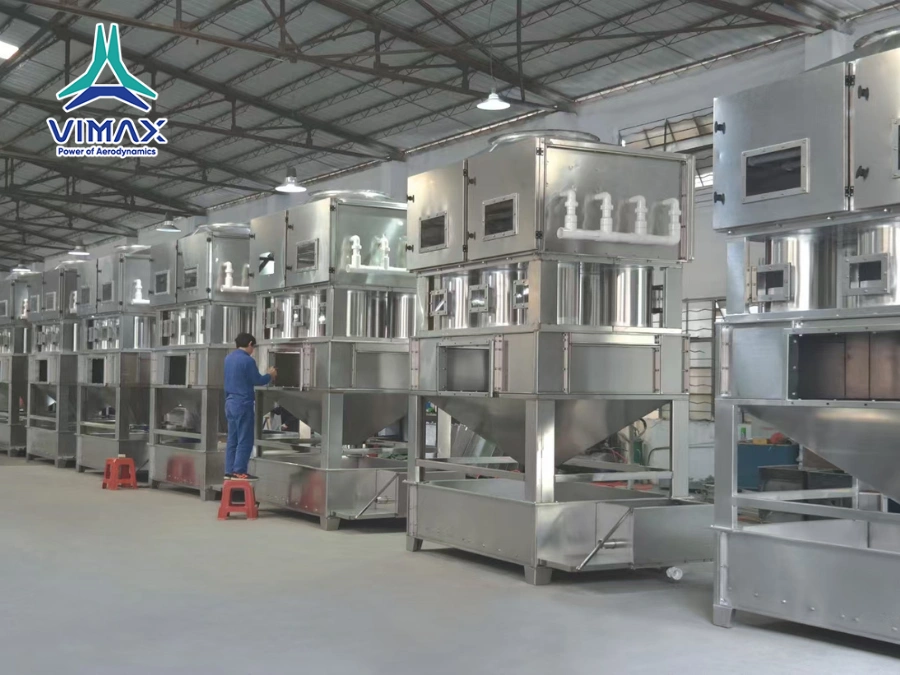
Cost Breakdown to Budget When Investing in WESP
To accurately assess the total cost of a WESP system, businesses should look at the Total Cost of Ownership (TCO) rather than just the standalone equipment quote.
| Item | Scope of Supply | Budget Impact |
| Main WESP Equipment | Casing, discharge electrodes, collecting tubes/plates, internals | High |
| High-Voltage Power Supply | Transformer-Rectifier (T/R) set, control cabinet, protection devices | Medium to High |
| Water System | Pumps, tanks, spray nozzles, piping, recirculation loops | Medium |
| Wastewater Treatment | Sludge collection, neutralization, or post-wash water treatment | Varies by pollutant |
| Fan & Ductwork | ID fan, ducting, dampers, expansion joints, and fittings | Medium to High |
| Structure & Access | Support frame, access platforms, ladders, corrosion coatings | Medium |
| Installation & Commissioning | Logistics, mechanical erection, wiring, calibration, testing | Medium |
| Instrumentation & Monitoring | Sensors, gauges, transmitters, CEMS integration (if required) | Varies by requirement |
Depending on the scope of supply, a quote may cover only the equipment supply or include full Turnkey EPC (Engineering, Procurement, Fabrication, Installation, Commissioning, and Warranty). Buyers should require vendors to itemize deliverables clearly to avoid misleading comparisons.
What Is the Actual Investment Cost of a WESP?
Because systems are 100% customized per project, giving an exact fixed price is not practical. However, environmental engineering market data shows that a complete WESP project typically ranges from several hundred million to tens of billions of VND (depending on scale).
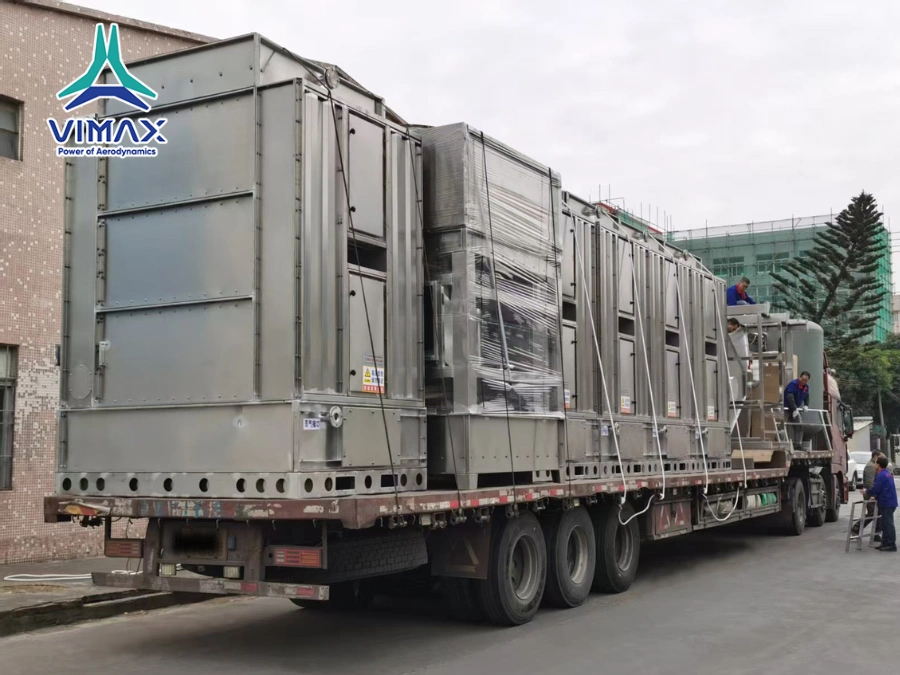
Key factors dictating final contract value include:
- Gas Flow Rate: Larger airflow demands larger shell volumes, higher fan ratings, wider duct cross-sections, and greater wash-water volumes.
- Pollutant Characteristics & Loading: Sub-micron dust, sticky aerosols, moisture saturation, and corrosive acids require specialized electrode geometries and premium alloys.
- Emission Limits: Stricter output limits necessitate larger collection surface areas, multi-field configurations, and precise operational controls.
- Material Selection & Lifetime: Selecting cheaper, substandard materials for corrosive applications will dramatically inflate future repair and downtime costs.
- Site Constraints & Civil Conditions: Congested plant layouts, elevated installations, or complex duct routing will increase installation and structural expenditures.
The ROI Equation: CAPEX vs. OPEX
While the initial procurement cost (CAPEX) is high, WESP delivers a major long-term advantage: Extremely low Operating and Maintenance Costs (OPEX). This is key to achieving a compelling Return on Investment (ROI).
Same topic: Advantages of Wet Electrostatic Precipitator (WESP) Technology
Substantial Maintenance Savings
With baghouse filters, operators often replace ripped, blinded, or moisture-damaged filter bags every 1–2 years (or every few months in sticky/oily flue gas), incurring recurring labor and media costs. With WESP, continuous/periodic water washing prevents clogging, abrasion, and back-corona discharge. A well-engineered WESP system can operate for 15 to 20 years with minimal core component replacement.
Ultra-Low Pressure Drop — Massive Fan Power Savings
WESP features an open cross-sectional design where flue gas passes through with minimal resistance (typical pressure drop is very low, around 0.5 – 1.0 inch WC / ~120 – 250 Pa). Compared to fabric filters that create high differential pressures, this saves significant electrical energy on large continuous 24/7 induced draft (ID) fans.
Continuous 24/7 Automated Operation
Fully automated operation eliminates the need for intensive manual cleaning labor or constant shutdown maintenance.
How to Optimize Your Budget When Investing in WESP
- Provide Comprehensive Inlet Data: Provide accurate flue gas volume, operating temperature, moisture content, chemical composition, particulate loading, and target emission standards.
- Request Transparent, Itemized Turnkey Quotes: Distinguish between mandatory core hardware and optional accessories to prevent unforeseen site expenses later.
- Evaluate Vendor Engineering Credentials: Base decisions on real project references, technical fabrication quality, and after-sales support capability rather than choosing solely on the lowest bid.
- Plan for Future Expansion: Factoring in slight design margins today can save major redesign costs if production output increases later.
Accurate Quotation Process for a WESP System
- Site Survey & Gas Characterization: Collecting physical site data and gas stream parameters.
- Engineering Design & Sizing: Calculating collection area, selecting alloys/materials, designing wash sequences, and sizing auxiliaries.
- Technical & Commercial Proposal: Submitting comprehensive documentation outlining design parameters, scope boundary, utility demands (power/water), execution timelines, acceptance criteria, and warranty terms.
Conclusion: Is WESP Expensive?
In summary, while the initial capital cost of a WESP is HIGH, it is COMPLETELY JUSTIFIED AND COSTEFFECTIVE when assessed over the Total Cost of Ownership (TOTEX). The initial expenditure is offset by low electrical power consumption, near-zero filter consumable costs, continuous uptime, and peace of mind during environmental compliance inspections.
If your enterprise is looking for a definitive, long-term air pollution control solution for the next 10–20 years, WESP represents an intelligent and sustainable investment.
Ready to optimize your factory’s exhaust gas treatment system? Contact Vimax Global today to receive support from our leading engineering team for on-site surveys, specialized WESP system design consultations, and the most detailed budget estimates.
Frequently Asked Questions (FAQ)
Does WESP have a fixed standard price?
No. Pricing is determined by volumetric airflow capacity, materials of construction, gas chemistry, automation level, water treatment scope, and installation conditions.
Can we purchase only the WESP vessel without auxiliary systems?
Generally not recommended. A WESP requires a matched high-voltage power system, proper fan sizing, balanced ducting, wash-water conditioning, and safety controls to function safely and reliably. Omitting necessary auxiliaries will compromise performance.
How do I evaluate which WESP quotation is best?
Compare proposals on an equal scope of work, identical design conditions, and guaranteed emission targets. Evaluate material grades, power supply efficiency, expected operating costs, warranty coverage, and technical engineering capabilities.
What does WESP operating cost (OPEX) include?
Main OPEX items include electrical power consumption, makeup water, wastewater neutralization, routine inspections, and minor periodic maintenance.
Should we choose a low-cost WESP?
Avoid deciding based solely on low pricing. Verify material grades, structural fabrication standards, corrosion resistance, and compliance guarantees. Technically sound engineering significantly minimizes long-term operational and failure risks.
