Industrial growth in India is balanced by stringent environmental regulations enforced by the Ministry of Environment, Forest and Climate Change (MoEFCC) and the Central Pollution Control Board (CPCB). To combat rising air pollution, the CPCB has established highly specific stack emission limits for the country’s most polluting sectors, known as the “17 categories of highly polluting industries”.
Understanding these sector-specific limits is crucial for maintaining legal compliance, avoiding heavy environmental compensation penalties, and securing your Consent to Operate (CTO) renewals. Below is a detailed breakdown of the emission standards for India’s key industrial sectors.
1. Coal-Fired Thermal Power Sector
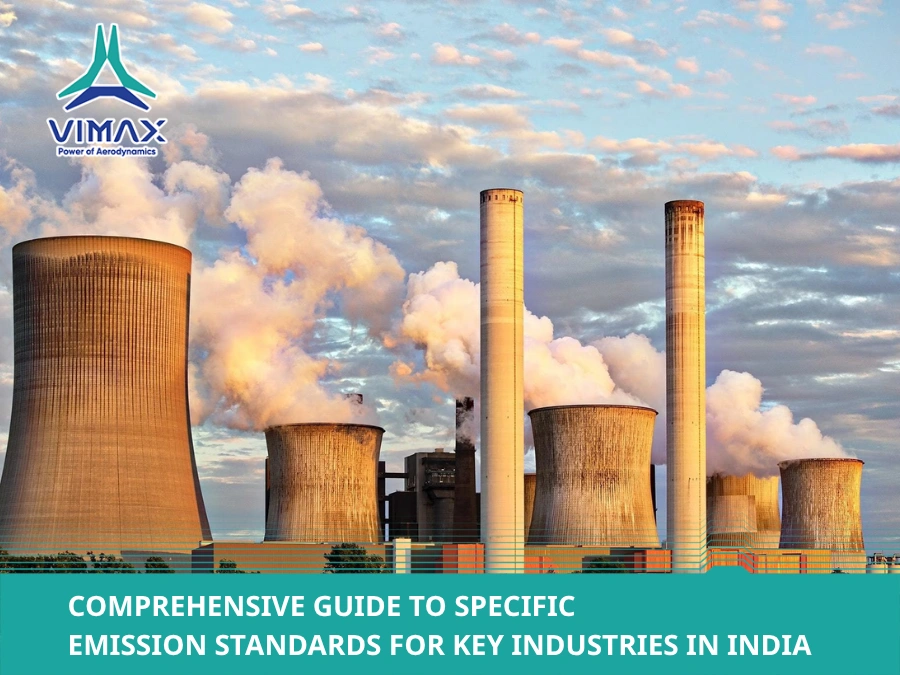
The energy sector—dominated by coal-fired thermal power—accounts for approximately 60% of total particulate matter (PM), 45% of sulfur dioxide (SO2), 30% of nitrogen oxides (NOx), and over 80% of mercury (Hg) emissions within the national industrial emissions profile. The regulatory history of this sector reflects a challenging tug-of-war between the immense need for energy security and the pressure to improve urban environmental quality.
A regulatory turning point occurred in 2015 when the MoEFCC issued an amendment notification, effectively ending an era of lax oversight. For the first time, strict limits were established for SO2, NOx, and mercury, while thresholds for fine particulate matter were tightened to unprecedented levels, compelling the thermal power sector to undertake massive investments in technology.
Emission Standards for Coal-Fired Power Plants (Based on 2015 Regulations)
| Installation Period of Units | PM Dust Limit (mg/Nm3) | SO2 Limit (mg/Nm3) | NOx Limit (mg/Nm3) | Mercury (Hg) Limit (mg/Nm3) |
| Before December 31, 2003 | 100 | 600 (capacity < 500 MW)
200 (capacity > 500 MW) |
600 | 0.03 (only applicable to > 500 MW) |
| From January 01, 2004 to December 31, 2016 | 50 | 600 (capacity < 500 MW)
200 (capacity > 500 MW) |
300 | 0.03 (applicable to all units) |
| From January 01, 2017 onwards | 30 | 100 | 100 | 0.03 (applicable to all units) |
To meet the SO2 emission limit of 100–200 mg/Nm³, combustion optimization alone is insufficient; power plants are required to install Flue Gas Desulfurization (FGD) systems. However, financial barriers are significant. FGD installation costs range from 5 million to 15 million rupees per megawatt of capacity, driving the total capital requirement for the national power grid into the hundreds of billions of rupees. Furthermore, a weak domestic FGD equipment supply chain, compounded by disruptions caused by the COVID-19 pandemic, has severely stalled installation progress.
Due to practical infeasibility, the MoEFCC was compelled to categorize plants into three groups based on geographical sensitivity and has repeatedly issued orders extending completion deadlines:
- Category A: Plants located within a 10 km radius of the National Capital Region (NCR) or megacities with populations exceeding 1 million. The FGD installation deadline has been extended to December 31, 2024 (the Ministry of Power has recently proposed a further extension to 2027).
- Category B: Plants located within a 10 km radius of “Critically Polluted Areas.” The deadline is December 31, 2025 (an extension to 2028 is under consideration).
- Category C: All remaining areas, with a deadline of December 31, 2026 (an extension to 2029 is under consideration).
This leniency has sparked controversy, as allowing the nation’s largest polluters to delay compliance undermines the effectiveness of air quality improvement efforts under the National Clean Air Programme (NCAP).
2. Cement Manufacturing Industry
Cement production involves grinding raw materials and firing clinker at extremely high temperatures, generating significant fine dust emissions. Regulation of this sector was tightened via Notification GSR 612(E), issued in August 2014, which reshaped the technological framework for flue gas treatment.
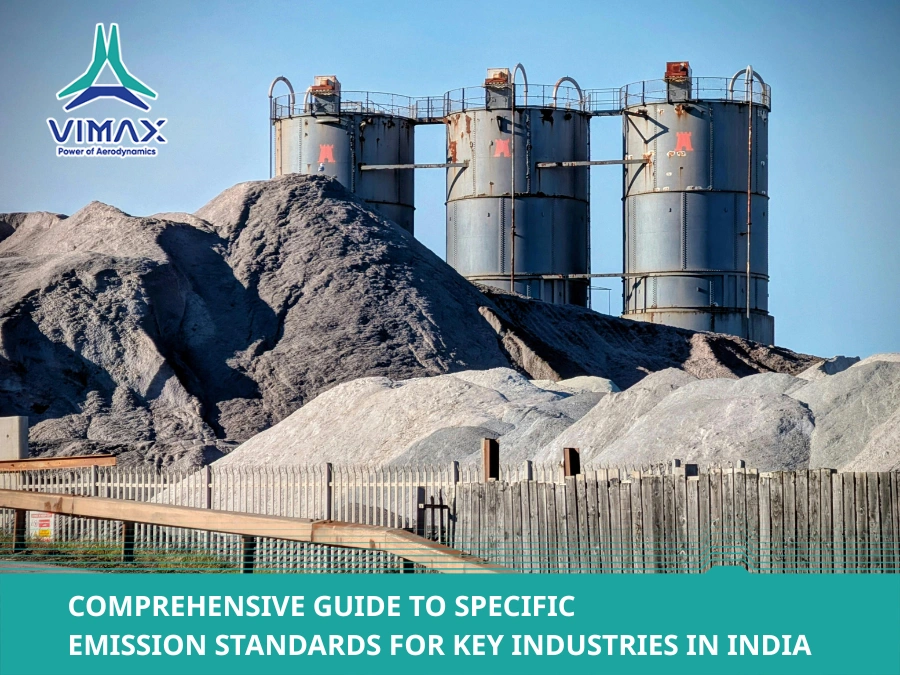
Under these regulations, rotary kilns face stringent standards. For particulate matter (PM), the limit is set at 30 mg/Nm³, compelling plants to replace outdated cooling towers with Electrostatic Precipitators (ESP) for clinker coolers and install extensive bag filter systems at raw material and coal grinding units.
NOx emissions are capped at 600 mg/Nm³ for new kilns (and 800–1000 mg/Nm³ for existing ones), necessitating the integration of Low-NOx burners or Selective Non-Catalytic Reduction (SNCR) systems. Notably, SO2 emission limits are strategically structured to range from 100 mg/Nm³ to a maximum of 1000 mg/Nm³, depending on the natural pyritic sulfur content of the limestone feedstock.
Furthermore, to address the national waste challenge, India encourages the cement industry to engage in the “co-processing” of alternative fuels and raw materials (AFR), such as plastic waste, tires, and hazardous waste. Cement kilns, operating at temperatures exceeding 1400°C, provide an ideal environment for the complete destruction of toxic cyclic molecular structures.
However, when employing co-processing, plants must adhere to extremely stringent limits for trace pollutants due to the risk of toxic gas emissions, including: Hydrogen Chloride (HCl) capped at 10 mg/Nm³, Hydrogen Fluoride (HF) at 1 mg/Nm³, Dioxins/Furans at 0.1 ngTEQ/Nm³, and total Mercury not exceeding 0.05 mg/Nm³. Stack heights must also comply with the formulas H = 14(Q1)⁰.³ or H = 74(Q2)⁰.²⁷ to ensure proper gas dispersion.
3. Integrated Metallurgical Industry (Iron and Steel)
An integrated metallurgical complex is a complex production ecosystem comprising dozens of massive emission sources. The CPCB has established specific emission standards for each constituent unit.
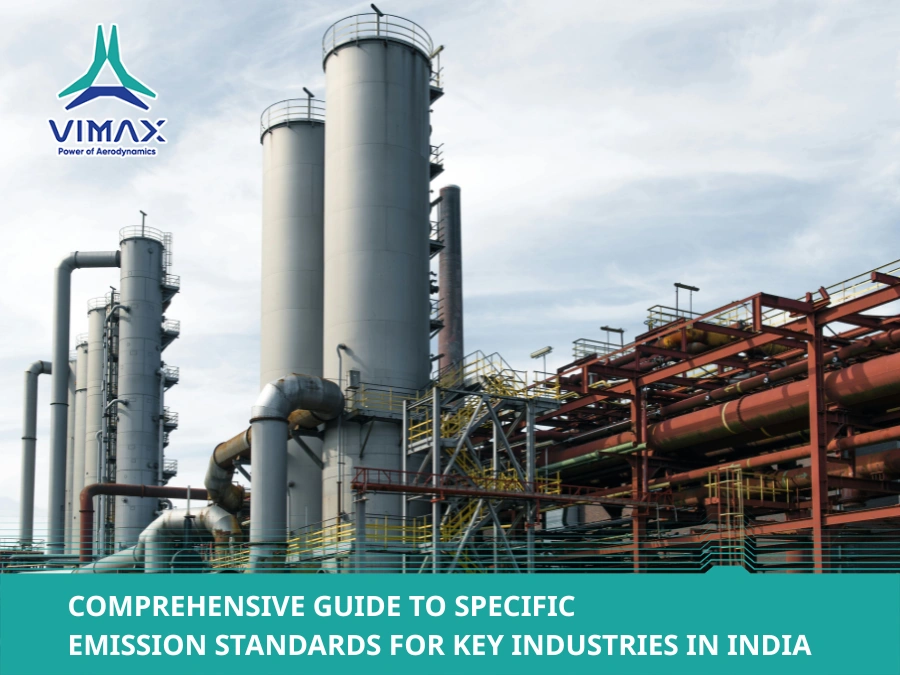
Stationary Emission Sources (Stacks):
Sinter Plant: Where fine ore is sintered into large lumps. Current standards require PM levels of 150 mg/Nm³ (with many states mandating a reduction to 50 mg/Nm³), SO₂ at 600 mg/Nm³, and NOx at 500 mg/Nm³. The adhesive nature of the dust particles makes this unit particularly difficult to control.
Steelmaking Shop (SMS/BOF): The process of converting molten iron into steel generates significant heat and dust bursts. The PM limit is set at 150 mg/Nm³ during normal operations and 400 mg/Nm³ during oxygen lancing cycles in older plants. With modern Gas Cleaning Plant (GCP) technology, a level of 50 mg/Nm³ is mandatory.
Coke Ovens: These pose the greatest risk due to the generation of volatile organic compounds (VOCs), carcinogenic PAHs, NOx, SO₂, and carbon monoxide (CO). The dust limit for coke oven heating stacks is 50 mg/Nm³, and the SO₂ limit is 800 mg/Nm³. CO leakage into the environment must not exceed 3 kg per tonne of coke produced.
Fugitive Emissions:
A characteristic of the steel industry is the volume of dust that escapes directly into the workshop environment rather than through the stack. The CPCB mandates the application of strict Codes of Practice to eliminate fugitive dust emissions. Plants are required to transition from wet quenching systems to Coke Dry Quenching (CDQ) technology to prevent steam from carrying organic compounds into the atmosphere while simultaneously recovering heat for power generation. Raw material storage areas, conveyor transfer stations, and internal roadways must be fully enclosed and paved with concrete, or equipped with continuously operating dry fog dust suppression systems.
Read more: Steel Production Dust Control: Guide to Choosing Efficient Collection Systems
4. Oil Refining and Chemical Industries
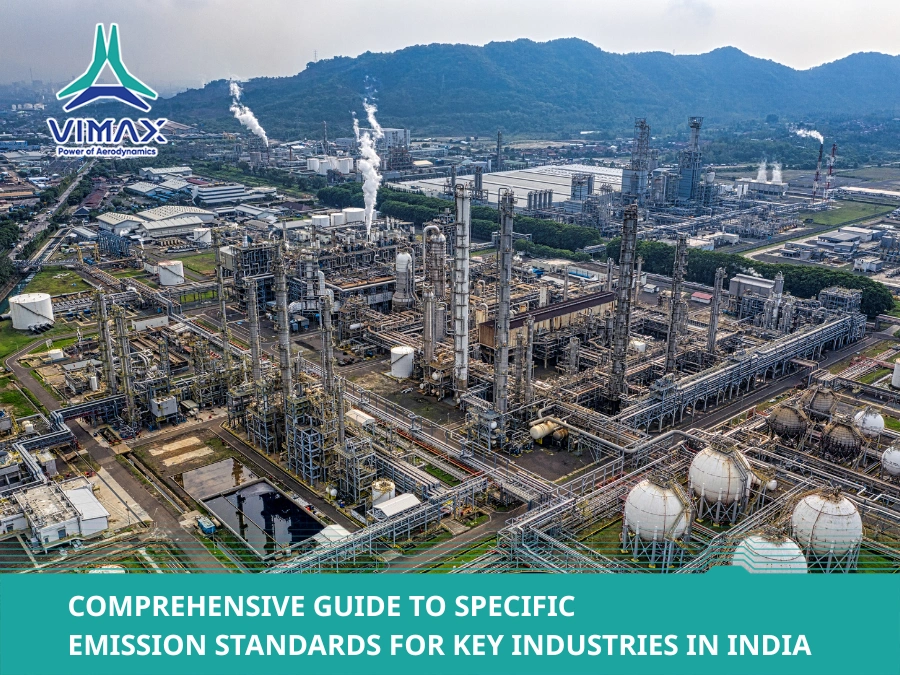
In the oil refining industry, emission regulations depend heavily on the type of input fuel and the age of the facility. For furnaces and boilers using gaseous fuel, the SO2 limit is set at a very low 50 mg/Nm3; conversely, when liquid fuel (residual oil) is used, this limit is relaxed to 1,700 mg/Nm3 for older plants and 850 mg/Nm3 for new ones.
Particulate matter (PM) emissions are subject to similar controls: 5–10 mg/Nm3 for gas combustion and 50–100 mg/Nm3 for liquid combustion. Fluid Catalytic Cracking (FCC) regenerators are major emission sources; they are subject to SO2 limits based on the feedstock treatment process: 500 mg/Nm3 for hydro-treated feedstock and up to 1,700 mg/Nm3 for non-hydro-treated feedstock. Strict quantitative limits are also imposed on Nickel and Vanadium emissions.
Other industries also have their own specific standards, reflecting the chemical characteristics of their emission streams. The synthetic fiber and textile dyeing industries are subject to strict regulations regarding wastewater parameters such as pH (5.5–9.0), suspended solids, and biochemical oxygen demand (BOD). The electroplating industry faces rigorous oversight concerning highly dangerous, bioaccumulative heavy metals, with concentration limits set at 2.0 mg/L for Cadmium, 3.0 mg/L for Nickel, 5.0 mg/L for Zinc, and only 0.1 mg/L for Hexavalent Chromium.
Read more: What is the Best Dust Collection System for Your Workshop?
5. Standard Industrial Boilers and Diesel Generator Sets (DG Sets)
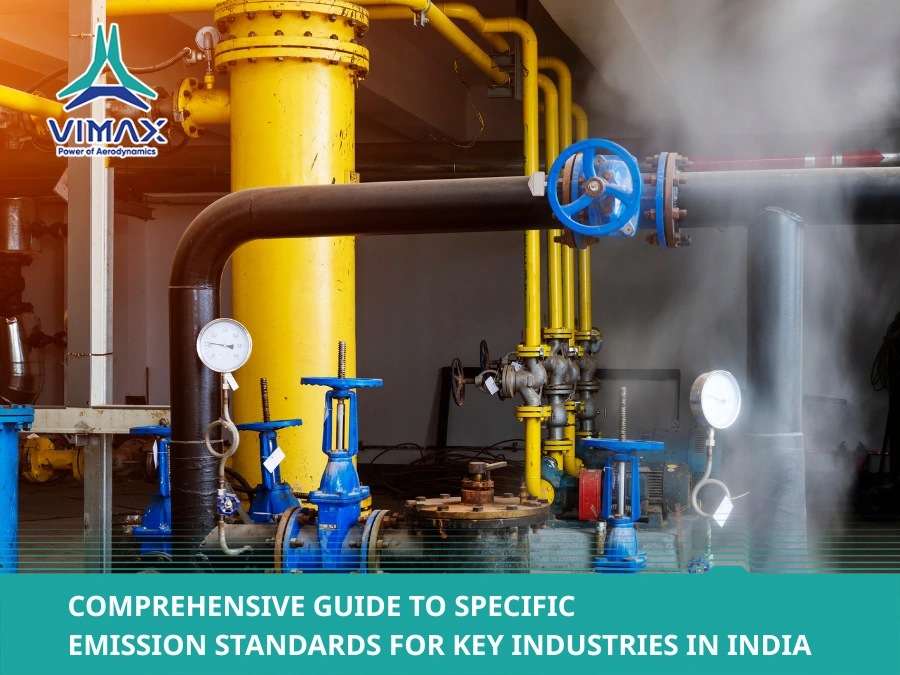
Boilers and backup diesel generator sets (DG sets) are indispensable auxiliary units in any factory. To prevent smoke accumulation in nearby residential areas, the CPCB has issued mandatory mathematical formulas governing the aerodynamic design of exhaust stacks.
The stack height for generators is determined based on capacity using the formula: H = h + 0.2 × √KVA, where H is the minimum total height in meters, h is the height of the nearest building, and KVA is the generator’s capacity. Regarding stack emission limits, standard boilers must maintain particulate matter (PM) levels not exceeding 150 mg/Nm³, SO₂ at 40 mg/Nm³, NOx at 25 mg/Nm³, and CO at no more than 1%.
Meeting India’s increasingly stringent CPCB stack emission standards—particularly the ultra-low limits for particulate matter (PM), SO2, and NOx—requires more than just routine operational tweaks; it demands advanced and reliable air pollution control technologies.
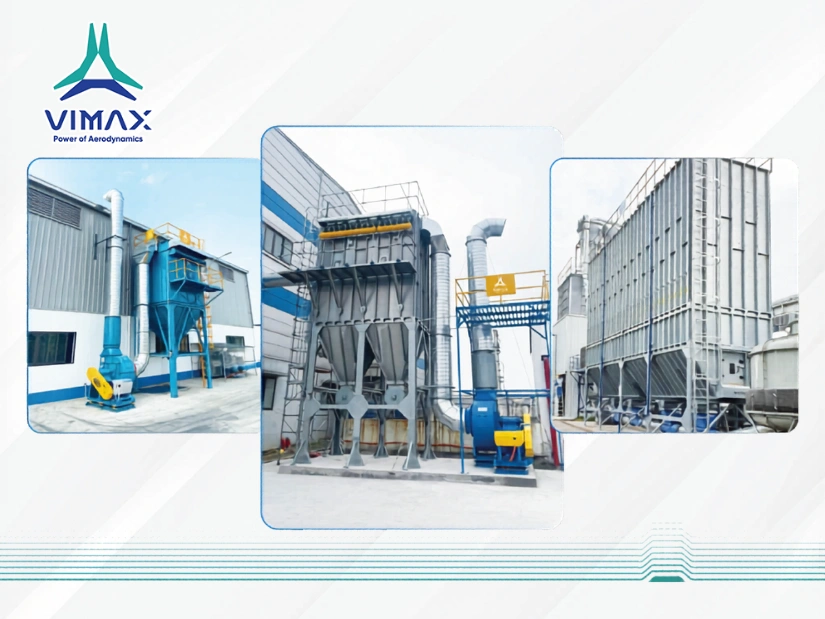
As a premier manufacturer specializing in high-performance industrial ventilation and environmental solutions, Vimax Global provides state-of-the-art equipment designed to tackle complex heavy-industry emission challenges.
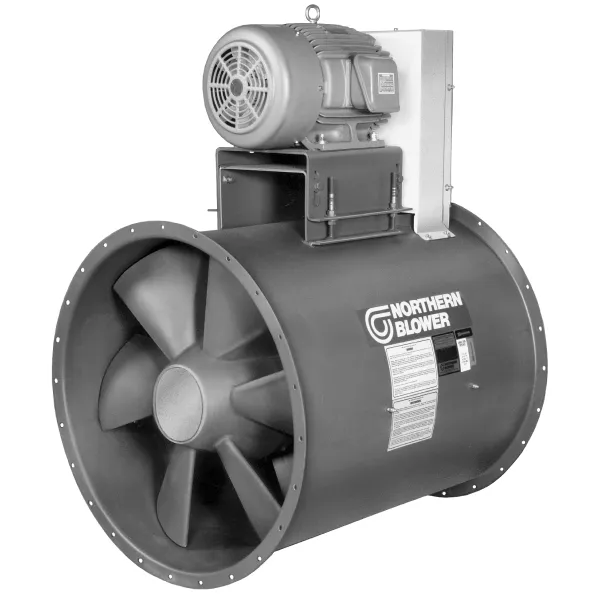
Whether your facility needs robust centrifugal fans, custom-engineered electrostatic dust collection systems, or high-efficiency scrubber towers, Vimax solutions are specifically built to capture fine pollutants and neutralize hazardous gases effectively. By integrating Vimax Global’s advanced filtration systems, industrial plants can seamlessly maintain continuous regulatory compliance, avoid costly environmental compensation penalties, and drive sustainable “green” manufacturing for a cleaner future.